







Introduction:Recently, online rumors about Luckin Coffee opening up franchising opportunities have attracted widespread attention from entrepreneurs and consumers, but the official company has firmly denied these claims. This article provides an in-depth analysis of the key points in Luckin’s official statement, clarifies the misinformation surrounding franchising and agency claims, reviews the history of the merger with the Xiaoluchai brand, and highlights common tactics used by counterfeit stores to help you distinguish between genuine and fake outlets and avoid falling victim to franchising scams.
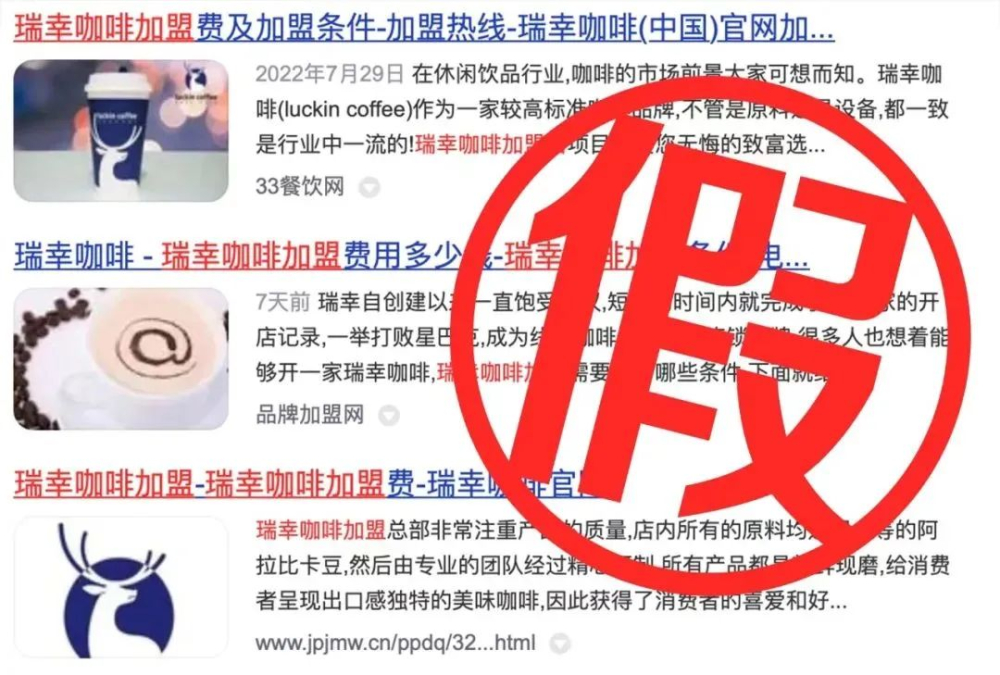
Recently, information about Luckin Coffee opening franchising channels has been widely circulated on social media platforms and discussion forums, sparking enthusiastic discussions among many aspiring entrepreneurs and coffee enthusiasts. However, Luckin responded swiftly, clearly stating that it is not currently offering any form of franchising or agency programs, and all related information is false. Moreover, from counterfeit stores emerging in overseas markets such as Thailand to fraud cases involving accounts using homophonic names online, the issue of imitation brands is rampant, making it difficult for consumers to discern the real from the fake.
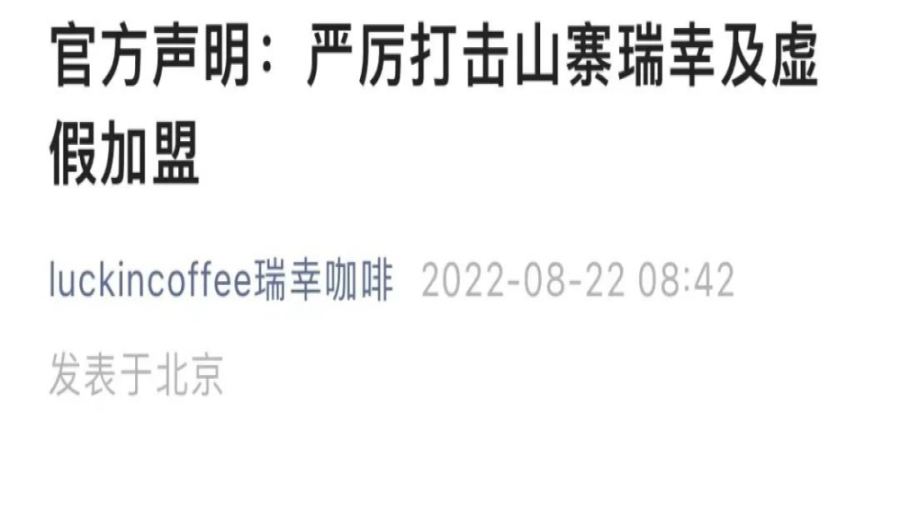
On August 22 of this year, Luckin Coffee issued an official statement addressing the chaos of counterfeit and fake franchising operations in the market, emphasizing that it has temporarily suspended the recruitment of partners and that any future plans, if any, will be announced through official channels. Notably, Luckin has never launched any sub-brands, so all online information regarding franchising or agency opportunities related to Luckin or its so-called sub-brands is false. This statement has led many to recall the “Xiaoluchai” brand that Luckin introduced back in 2019.
Looking back, during a period of financial turbulence, Luckin actively promoted the Xiaoluchai brand and attracted many partners to join. However, as the brand strategy evolved, Luckin advised Xiaoluchai partner stores to gradually transition into Luckin Coffee outlets. By May 2021, the Xiaoluchai brand was officially merged into Luckin, managed uniformly by the headquarters to ensure consistent branding and service standards.
In this statement, Luckin specifically reminded consumers that only accounts verified with the official blue V badge on major social platforms or search engines are recognized as official sources of information. Any unverified “non-V” accounts, as well as stores and social media accounts using similar names such as “瑞辛” (Ruixin), “瑞莘” (Ruxin), “luckoncoffee,” “lckincoffee,” and other variant names, are all imitations. Additionally, Luckin emphasized that the company does not proactively contact users for so-called part-time job recruitment or gift card recharge rebate activities. If you receive such calls or messages, be sure to verify them through the official customer service.
According to an insider cited by The Beijing News, the claim that Luckin has paused franchising may not be entirely accurate. On one hand, the number of previously submitted franchise applications is large, and many are still in the process of being gradually handled, with some new stores already gradually opening. On the other hand, Luckin may be planning to enter new cities, and entering each new market requires advance arrangements for warehousing, logistics, and management systems, which takes time to prepare.
It is worth mentioning that Luckin was once mistakenly reported to have opened its first overseas store in Bangkok, Thailand. According to netizens, the store officially opened on December 20, 2020, with a name and decor that imitated the Luckin style, making it familiar and welcoming to many local Chinese. However, it wasn’t until January 2022 that Luckin clarified via an official video that it had not established any stores in Thailand, and that the outlet was entirely counterfeit.
On August 9 of this year, Luckin once again issued a statement confirming that the “Luckin Coffee” store in Bangkok was fake and had taken legal action to protect its brand rights. In fact, according to Luckin’s second-quarter 2022 financial report, out of more than 7,000 stores, over 2,200 are joint-operation stores, and their expansion rate is significantly faster than that of directly operated stores. The brand’s rapid growth has also prompted counterfeit franchisees and imitation stores to seize opportunities to profit.
In today’s highly competitive coffee and tea beverage market, the battle between genuine products and imitations continues unabated. These pirated counterfeits not only damage brand reputation but can also negatively impact consumer experience and the long-term development of the brand. Therefore, when choosing a store or considering franchising, consumers must stay vigilant, carefully verify brand information, and avoid falling into traps.
The above content is compiled by CoffeeHunters, a coffee news website.


