








Introduction:Delve into the cradle of coffee—Ethiopia—and explore the unique flavor profiles, traditional coffee ceremonies, and optimal roasting and brewing methods of its nine major regions. This article will guide you from regional backgrounds and varietal characteristics to practical pour-over tips, offering a comprehensive appreciation of Ethiopian coffee’s charm.
As the birthplace of coffee recognized worldwide, Ethiopia is home to thousands of native coffee varieties deeply woven into daily life and cultural traditions. From the approximately hour-and-a-half-long coffee ceremony to the distinct flavors of renowned regions like Yirgacheffe and Sidamo, this article systematically unravels the cultural essence and cultivation landscape of Ethiopian coffee, helping you better understand this key origin of specialty coffee.

Located in East Africa, Ethiopia has discovered over five thousand native coffee varieties in the forests of the southern Kaffa region alone. As Africa’s largest coffee producer, only about 60% of its beans are exported, with the rest often used in traditional ceremonies—for example, beverages mixed with coffee beans, pulp, honey, and herbs at weddings, believed to ward off misfortune. Thus, coffee in Ethiopia is not just a drink but an integral part of culture and daily life.
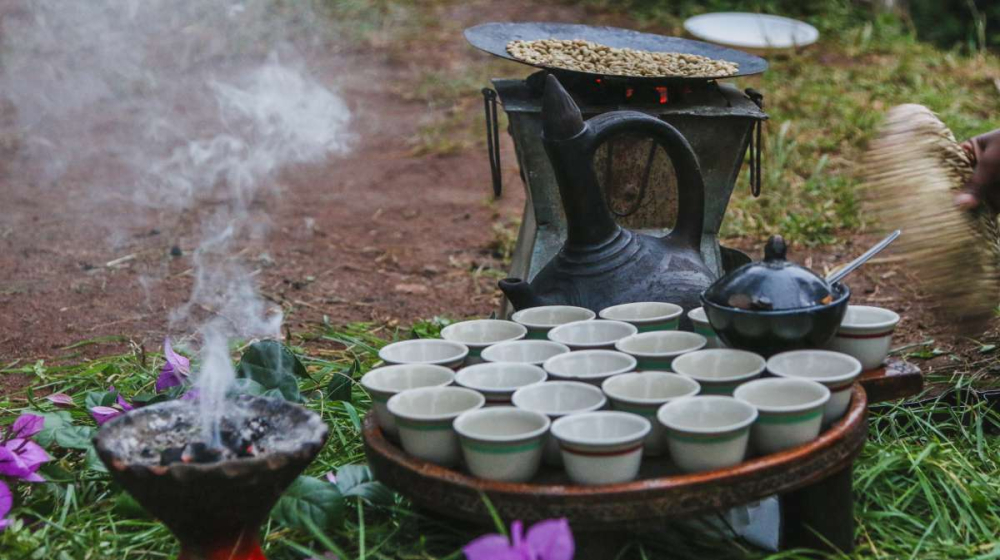
For Ethiopians, coffee is more than a daily beverage; it’s a symbol of faith and culture. Most iconic is the roughly 1.5-hour-long coffee ceremony. This ritual, covering roasting, grinding, brewing, and drinking, resembles Japan’s tea ceremony and embodies spiritual connection. It’s commonly held for significant occasions, such as proposals or resolving family disputes. Led by women, it begins with roasting beans to release their aroma, followed by slow simmering.
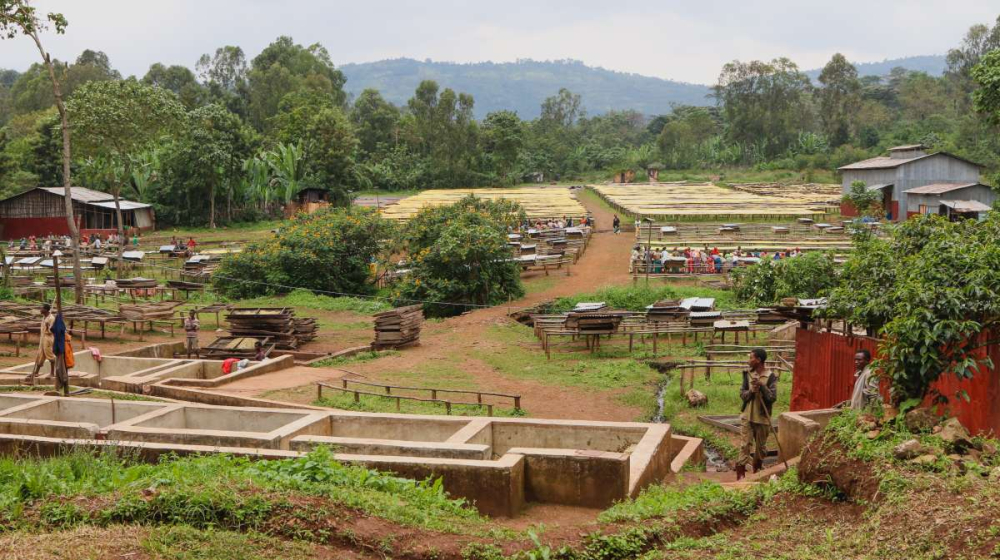
The first cup in the ceremony is called Abol, often considered the most important yet also the bitterest; the second, Tona, is re-brewed with added water, retaining a strong flavor; the third, Baraka, symbolizes joy and reconciliation, often shared with younger generations. Regardless of wealth, Ethiopian families hold this ceremony, and some believe it contributes to the harmony among the country’s 80+ ethnic groups.
An Ethiopian proverb, “Buna dabo naw,” meaning “coffee is our bread,” highlights its central role in diet. Another phrase, “Buna Tetu,” meaning “to drink coffee,” also refers to social gatherings, akin to English’s “let’s meet for coffee.”
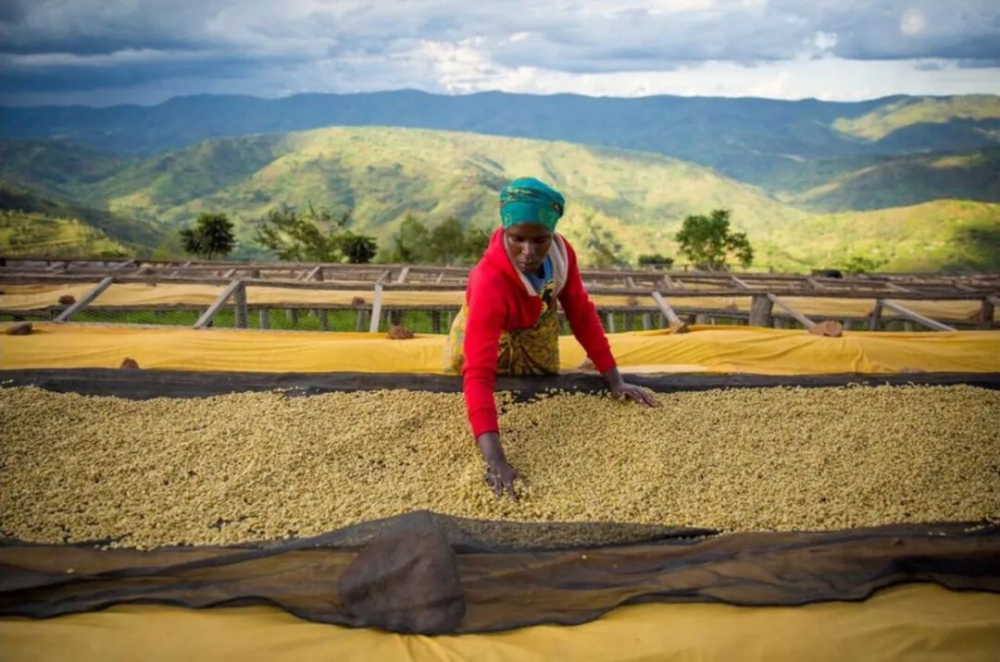
Ethiopian coffee farming is concentrated in the western and southern regions, with about 90% operated by smallholder families, typically cultivating less than 4 hectares at altitudes between 1,000 and 2,300 meters. Planting density averages 1,000 to 1,800 trees per hectare, yielding around 600 kg per hectare. Farming models include: forest coffee (8–10%), semi-forest coffee (30–35%), garden coffee (50–55%), and plantation coffee (5–6%), with garden coffee being the dominant method.
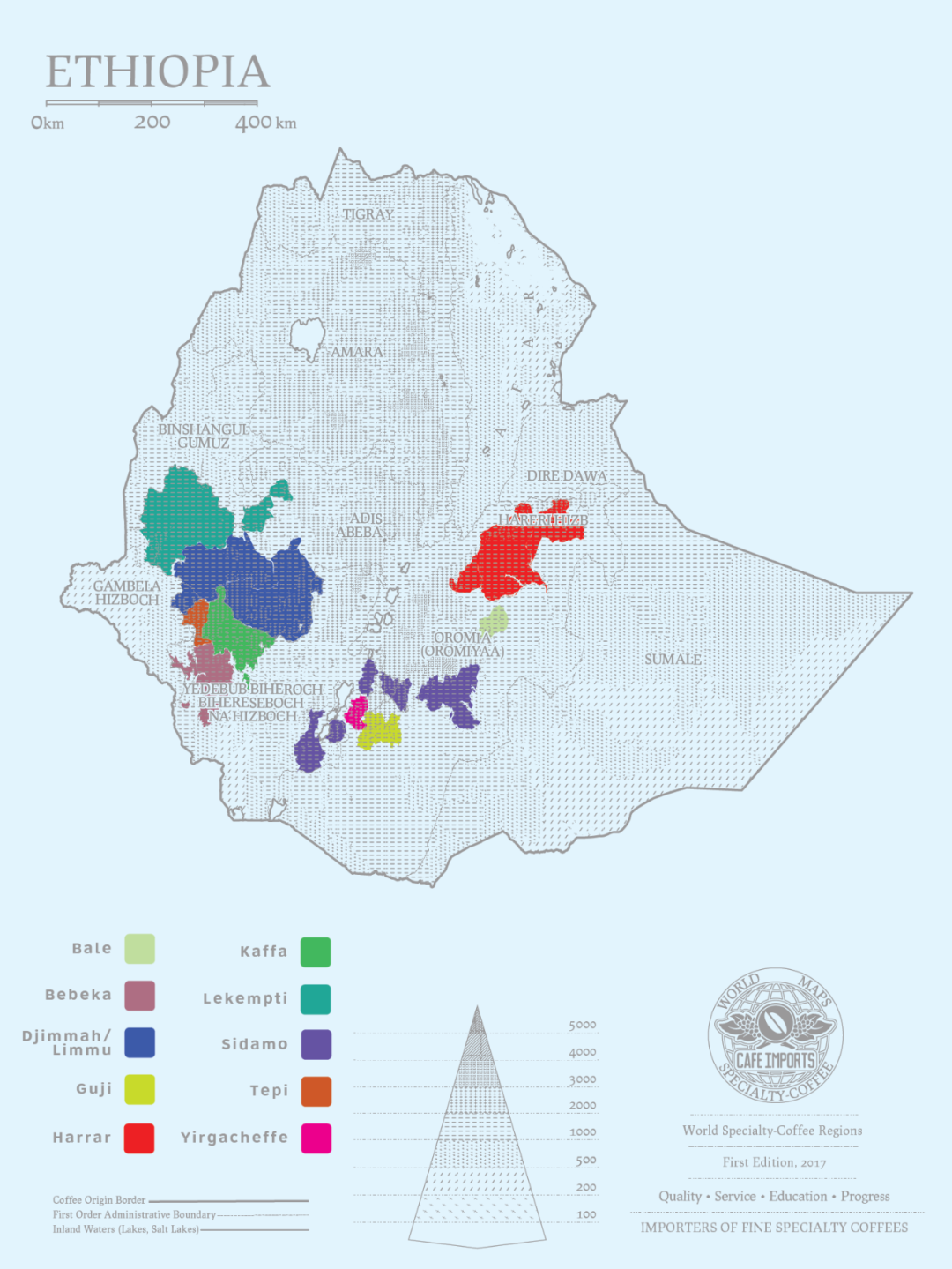
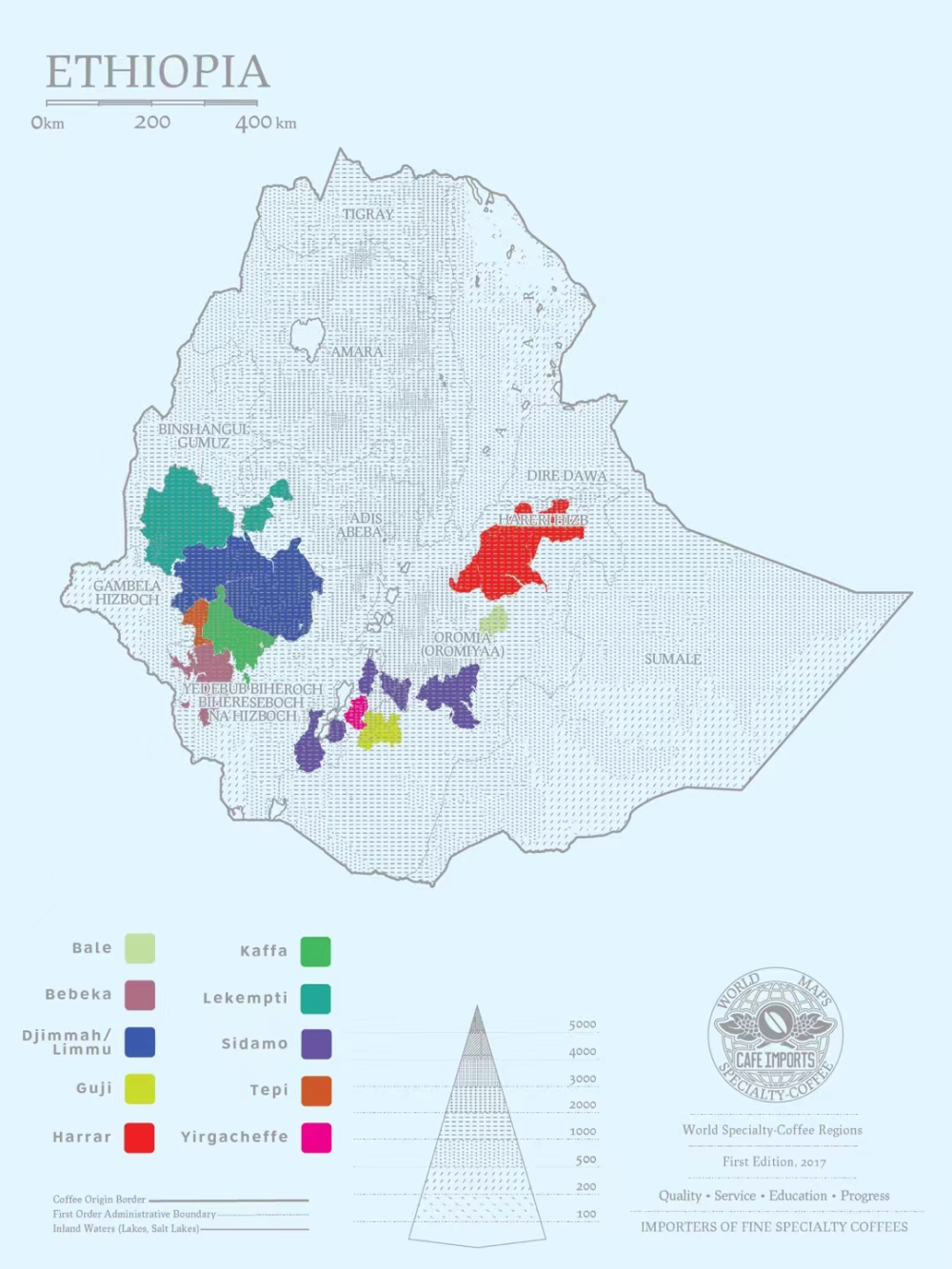
Due to administrative adjustments in 1995, some region names have changed—for example, the former Sidamo Province is now split into the newly established Sidama Region and Oromia Region, while Yirgacheffe falls under the Gedeo Zone. Currently, Ethiopian coffees on the market may feature both old and new names; the latest administrative divisions are recommended as references.
Ethiopia’s nine major regions each have distinct characteristics, detailed below:
1. Yirgacheffe (Specialty Region): Altitude 1,800–2,000 meters, garden coffee system. Known for unique jasmine, lemon, peach, almond, and tea notes, often described as “a bloom of flowers.” Traditionally sun-dried, but washed processing introduced in 1972 yields cleaner flavors, with both methods offering distinct profiles. Recent improvements in sun-drying have produced renowned beans like Idido Misty Valley, Beloya, and Aricha. Processing methods are diverse, including red honey and anaerobic.
2. Sidamo (Specialty Region): Altitude 1,400–2,200 meters, also primarily garden coffee. Flavors are sweet and mellow, often with strawberry and berry notes, sharing varieties with Yirgacheffe. The famous Huakui beans originate from the Guji zone (now mostly classified under Sidamo), showcasing delicate floral-fruity notes and caramel finishes with medium-light roasting. The 2025 version of Huakui offers rich layered flavors, bright acidity, and a smooth mouthfeel.
3. Limu (Specialty Region): Altitude 1,200–2,000 meters, mainly exported to Europe and the U.S., with processing methods including washed, sun-dried, and semi-washed. Flavors are refreshing, with grassy and black sugar notes, bright acidity but lower overall body.
4. Harrar (Specialty Region): Altitude 1,500–2,400 meters, primarily sun-dried, with low rainfall contributing to unique flavors often featuring berries and fermented notes. Quality can be inconsistent; pre-purchase tasting or cupping is recommended.
5. Gimbi (Commercial Bean Region): Altitude 1,350–1,850 meters, Ethiopia’s largest coffee-producing region, accounting for about one-third of exports. Mostly mixed varieties; washed specialty grades offer clean, bright flavors, while commercial grades provide good value, often with citrus peel notes.
6. Illubabor (Commercial Bean Region): Altitude 1,350–1,850 meters, bordering Sudan, with larger bean size, lower acidity, and good body, balanced flavors, often blended with Gimbi.
7. Ghimbi/Lekempti (Commercial Bean Region): Altitude 1,500–1,800 meters, with sun-dried and washed beans, similar in shape to Harrar, some specialty-grade, notable for acidity and fruity notes, popular in European and American markets.
8. Teppi/Bebeka (Commercial Bean Region): Altitude 500–1,900 meters, the two regions are close, with corporate-managed farms, flavors dominated by low acidity, suitable for blending, with both sun-dried and washed processing.
9. Lake Tana (Alternative Region): Altitude 1,840 meters, extremely limited production, with a unique “divine” coffee cultivated by Orthodox monasteries and religious culture in the area, managed by local communities or cooperatives, offering mysterious flavors.
Additionally,the Red Cherry Project, initiated by Dutch trader Trabocca in collaboration with local farmers, emphasizes harvesting fully ripe red cherries, hand-sorting, and strict processing, mainly implemented in regions like Yirgacheffe and Sidamo to elevate overall coffee quality, with Trabocca’s logo printed on the bags.
Ethiopia boasts nearly 2,000 coffee varieties, 1,927 of which are native. Due to unsorted cultivation, harvested beans often mix varying sizes, with variety labeling mostly as “local Ethiopian native.” In recent COE competitions, some beans began displaying variety codes, such as 74158, 74110, or KURUME, TYPICA.
Processing methods primarily include washed and sun-dried, with washed being more prevalent. Washed processing removes pulp and ferments to highlight bright acidity and floral-fruity notes; sun-dried processing dries whole cherries, resulting in richer, sweeter, and more layered flavors.
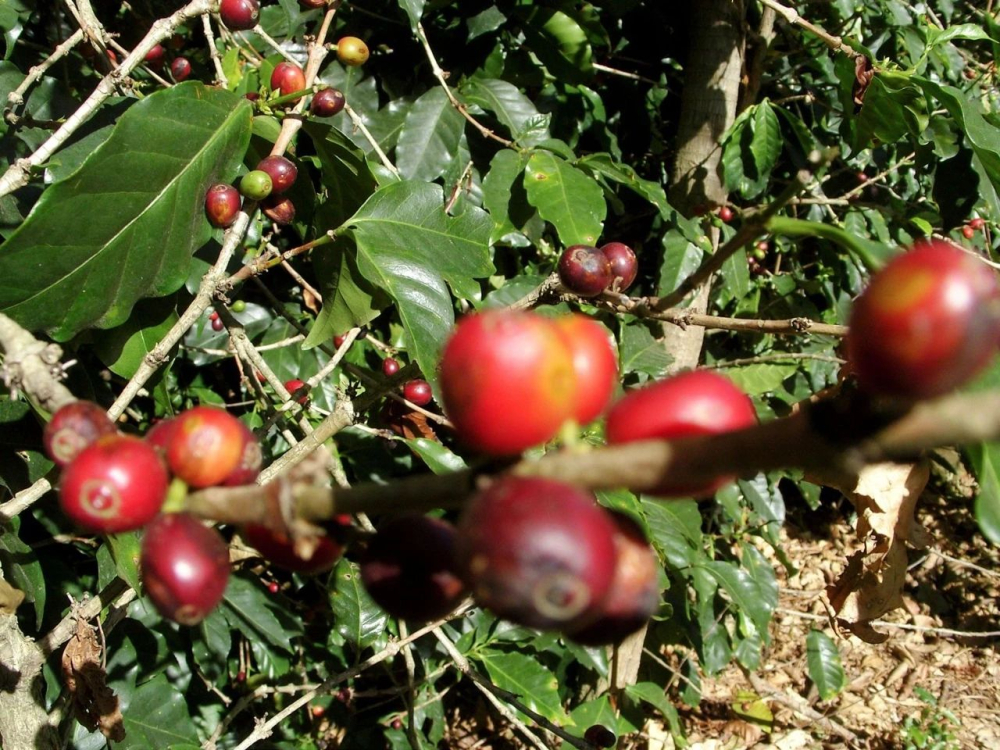
For beginners trying Ethiopian coffee, washed beans are recommended to experience their clarity and elegant floral notes; sun-dried beans offer bolder, sweeter flavors. The ECX classifies beans by defect rate: G1 (≤3 defects/300g) and G2 (4–12 defects/300g), and by cupping scores: Q1 (≥85) and Q2 (80–84.75).
Roasting and Pour-Over Recommendations for a Certain Brand’s Yirgacheffe Coffee
To highlight Yirgacheffe’s delicate acidity and floral-fruity notes, light roasting is advised. For pour-over, use a V60 filter, water temperature around 90°C, coffee-to-water ratio 1:15, 15g coffee, medium-fine grind (80% through a 20-mesh sieve). Brew in stages: 30g water for 30-second bloom, then pour to 125g in pulses, continue to 225g total, with an extraction time of about 2 minutes.
Flavor profile: Sun-dried Yirgacheffe features fermented wine, citrus, honey, and cocoa notes; washed versions have bright acidity with lemon tones and black tea finishes, highlighting fruity and juicy sensations.
Roasting and Pour-Over Recommendations for a Certain Brand’s Sidamo Coffee
Sidamo also suits light roasting to bring out berry notes. Take sun-dried Huakui 4.0 as an example, using the same pour-over parameters as Yirgacheffe: V60, 90°C, 1:15 ratio, medium-fine grind. The brewing process is identical.
Flavor description: Prominent citrus acidity, rich berry juice, with strawberry, cream, and lemon-black tea notes, and a lingering sweetness.
The above content is compiled by CoffeeHunters, a coffee news website.


