







Introduction:Sumatran Mandheling coffee is not a single variety, but rather a general term for Arabica beans grown on the island, with beans from the Gayo highlands being the most renowned. This article delves into the origins of the main cultivated varieties, TimTim and Ateng, and provides an in-depth look at Sumatra’s coffee-growing regions, grading system, along with practical brewing parameters and recommendations to help you better grasp the distinctive flavor profile of this unique coffee.
When it comes to coffee from Sumatra, many people immediately think of “Mandheling.” However, not all Sumatran coffee can be called Mandheling. The name is actually a general term for the island’s Arabica beans, rather than a specific variety. While most of Indonesia’s high-quality Arabica beans come from Sumatra, due to its terrain and climate, only certain areas produce beans that meet the Mandheling standard.
Overall, Sumatra does not have particularly high altitudes. Regions suitable for growing Arabica typically range between 600 to 1200 meters above sea level. This elevation, combined with the year-round hot and humid climate—especially in lower-altitude areas where day-night temperature differences are minimal—makes it difficult for the coffee to express delicate fruit acidity or complex layers. Instead, it develops a deep, unique woody and herbal character, which has become one of the most distinctive flavor traits of Mandheling.
So, what varieties actually make up the Mandheling coffee we know? In Sumatra, the two main cultivated varieties are TimTim and Ateng. Interestingly, these names originate from local language terms for the varieties, rather than internationally recognized botanical names. TimTim is actually Timor, an Arabica variety with Robusta genetics, while Ateng is Catimor, a hybrid of Caturra and Timor, known for its strong disease resistance but relatively straightforward flavor profile.
If these varieties each have their own names, why are they all collectively referred to as Mandheling? It is said to be related to history. During the Japanese occupation of Indonesia, Japanese soldiers tasted the locally grown, bold-flavored coffee and curiously asked what kind of coffee it was. However, the locals misunderstood the question as being about their ethnicity and answered “Mandheling tribe.” Since then, this coffee from Sumatra has been called Mandheling.
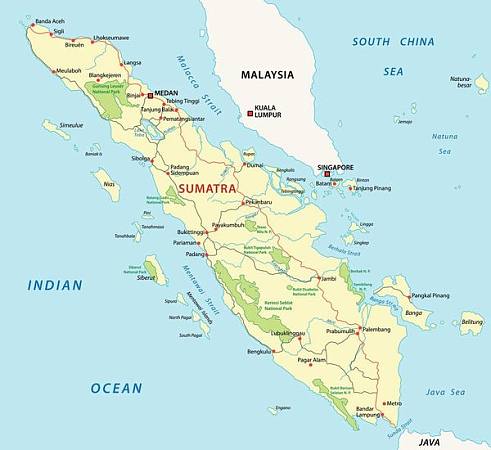
Although all Arabica beans from the entire island of Sumatra can be loosely referred to as Mandheling, the truly high-end specialty Mandheling mostly comes from the Gayo region in Aceh Province. This producing area is located in northern Sumatra, surrounding Lake Tawar and the slopes of Takegon town, at elevations of approximately 1110 to 1600 meters. The cool climate and significant day-night temperature variations provide ideal growing conditions for coffee.
These coffees are mostly grown by smallholder farmers under shade trees and processed using the wet hulling method (Wet Hulling). This technique involves removing the parchment layer before the coffee beans are fully dried, right after the fruit pulp has been removed. This process gives Mandheling its distinctive full body and earthy notes, while also preserving a rich mouthfeel and low-toned profile.
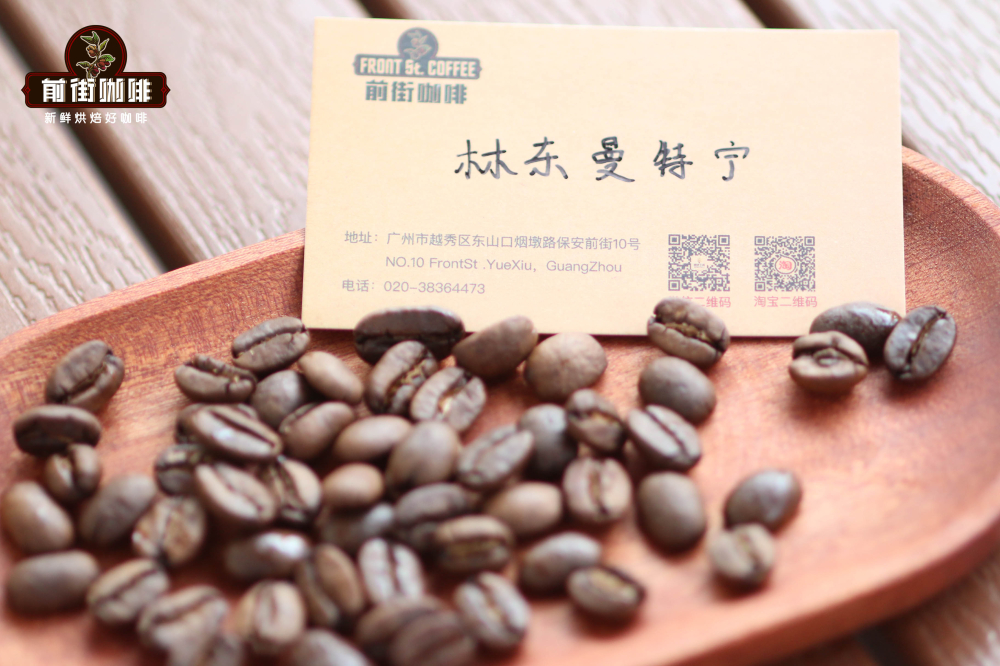
Among the many Mandheling coffees, the PWN Golden Mandheling launched by a well-known brand can be considered a star product in the specialty market. It is produced in the Gayo highlands of Aceh, carefully selected and produced by Indonesia’s official green bean trading company PWN (Pusat Niaga Wangi), and carries a registered trademark. Therefore, the name “Golden Mandheling” is exclusive to specific grade beans produced by PWN.
PWN sets very high quality standards for Golden Mandheling, selecting only G1 grade green beans with a screen size of 18 or above and no more than 3 defects per 300-gram sample. These beans are dark green in color and uniformly shaped, undergoing multiple rounds of manual sorting and mechanical color sorting to ensure consistent quality. It is said that in sunlight, these beans emit a slight golden shimmer, which is also the origin of the name “Golden Mandheling.”
It is worth noting that some coffee beans on the market that claim to be “Golden Mandheling” are not actually from PWN and should only be considered as general specialty Mandheling. Products that are officially certified by PWN usually come with certification documents and specially labeled sacks, which consumers should pay attention to.
To fully showcase the rich characteristics of Golden Mandheling, most roasters roast it to a medium-dark level, which retains the intensity of the flavors while maintaining complexity. For such medium-dark roasted beans, it is recommended to let them rest for 5 to 6 days after roasting to allow the carbon dioxide produced during roasting to dissipate, which helps ensure stable extraction and flavor expression during brewing.
For brewing, it is recommended to use a KONO filter cone, with a water temperature of 88°C, a coffee-to-water ratio of 1:15, and a grind size similar to coarse sugar, roughly equivalent to 70% passing through a Chinese No. 20 sieve. The specific steps can be divided into three pours: the first pour is 30 grams of water for a 30-second bloom; the second pour is a circular pour up to 125 grams; and the final pour is another circular pour up to 225 grams, with the total brew time controlled around 2 minutes and 10 seconds. These parameters help balance the full body with clear layers.
In terms of flavor, the well-known brand’s PWN Golden Mandheling exhibits rich notes of nuts, caramel, and chocolate, with a long and layered aftertaste. The overall mouthfeel is balanced and full-bodied, making it a representative choice for experiencing the essence of Sumatran Mandheling.
The above content is compiled by CoffeeHunters, a coffee news website.


