







Introduction:Mandheling coffee beans, as the representative variety of Sumatra in Indonesia, are renowned for their unique herbal and spicy flavors. But did you know that this name actually originated from a misunderstanding during World War II? This article delves into the origin of the name "Mandheling," the reasons behind its flavor profile, introduces the classic wet-hulling processing method, and teaches you how to identify genuine Golden Mandheling beans—giving you more confidence in selecting and brewing them.
Mandheling coffee beans hold a significant place in the specialty coffee world, but they are not a single variety. Instead, they are a general term for Arabica coffee beans produced on the island of Sumatra in Indonesia. The name hides an interesting anecdote from WWII: a Japanese soldier tasted strong coffee in Sumatra and asked the locals what it was called. Due to a language barrier, he was told “Mandheling,” which turned out to be the name used by the local ethnic group. After the war, this coffee became hugely popular in Japan, and the term “Mandheling” came to be synonymous with Arabica beans from Sumatra.
Many people mistakenly think that Mandheling is a coffee variety or another name for Sumatra. In reality, it is merely a collective term for origin and processing style. If Geisha is likened to an elegant lady in the coffee world, Mandheling is like a composed gentleman who conquers many coffee lovers with his rich flavor. Its characteristics stem from Sumatra’s low-altitude environment (600–1600 meters) and its unique wet-hulling process, resulting in its signature herbal, woody, resinous, and spicy notes.
The history of coffee cultivation in Indonesia dates back to the 17th century during the Dutch colonial period when Arabica seedlings were first introduced to the region. However, the coffee rust disaster of 1877 led farmers to switch to the more disease-resistant Robusta variety. Today, 90% of Indonesia’s exported coffee is Robusta, with only 10% being Arabica. Sumatra, due to its higher elevation, has become the main producer of Arabica, but its altitude is still lower than that of Africa or Central and South America, leading to the development of a uniquely bold and deep flavor profile in its beans.
Sumatra’s low altitude and hot, humid climate make traditional Arabica varieties (such as Typica/Bourbon) susceptible to pests and diseases. As a result, the region mainly grows hybrid varieties with Robusta lineage, including Timor (commonly known as Tim Tim) and Catimor (commonly known as Ateng). Although these varieties are more resistant to disease, they also contribute to the uniquely intense flavor that defines Mandheling.
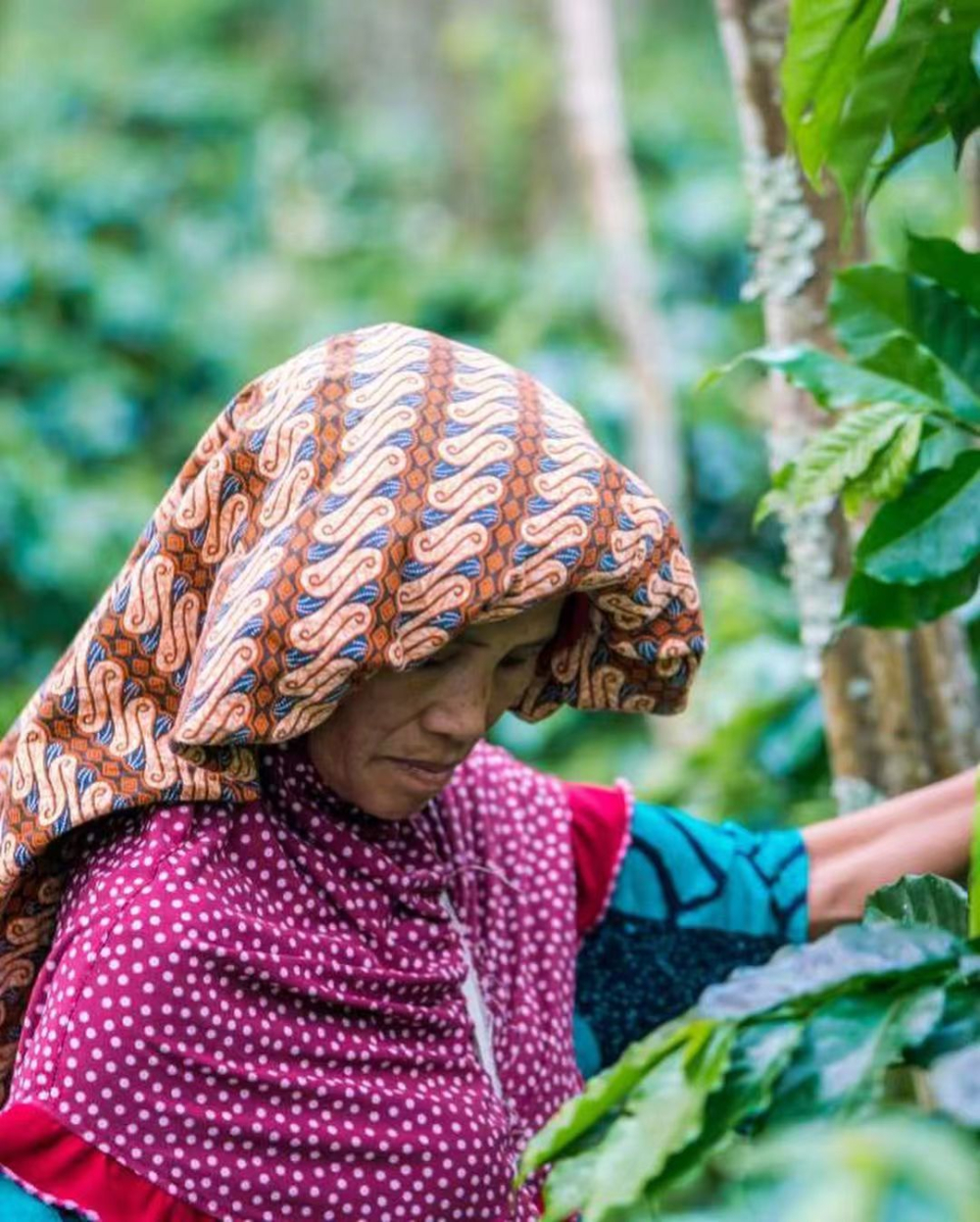
To adapt to the low-altitude environment and water limitations, Indonesian coffee farmers developed the wet-hulling (Wet Hulling) method, a unique processing technique. This method involves removing the parchment layer while the beans are still at a high moisture content, followed by rapid, multi-stage drying, resulting in Mandheling’s distinctive low acidity, full body, and earthy aroma. Han Huai Zong once commented that this method “accidentally created the hallmark characteristics of Mandheling.”
Although Arabica beans produced across the entire island of Sumatra can be called Mandheling, premium-grade beans mainly come from the Gayo Mountains in North Sumatra’s Aceh Province. This region sits at an altitude of 1,110–1,600 meters, where smallholder farmers grow coffee under shade trees and use wet processing methods to highlight vibrant richness and complex layers. The microclimate and meticulous farming practices here give the coffee distinct notes of nuts, chocolate, and spices.
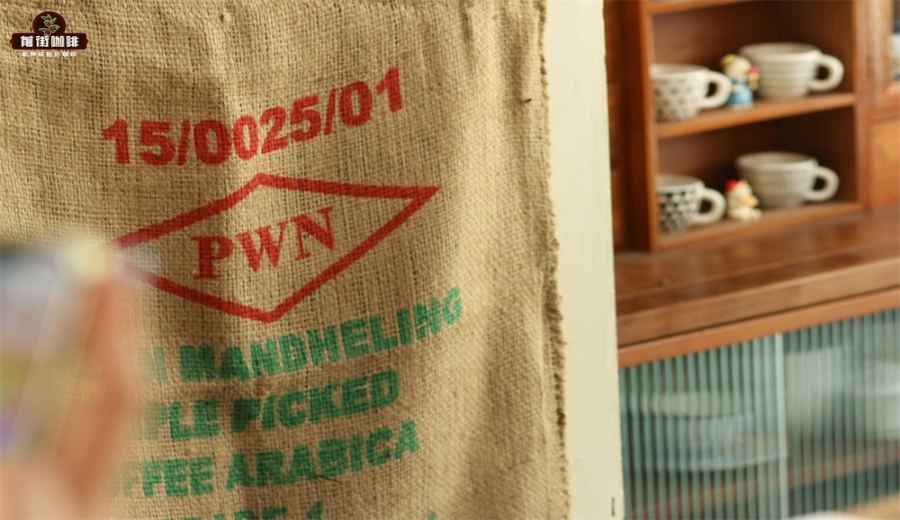
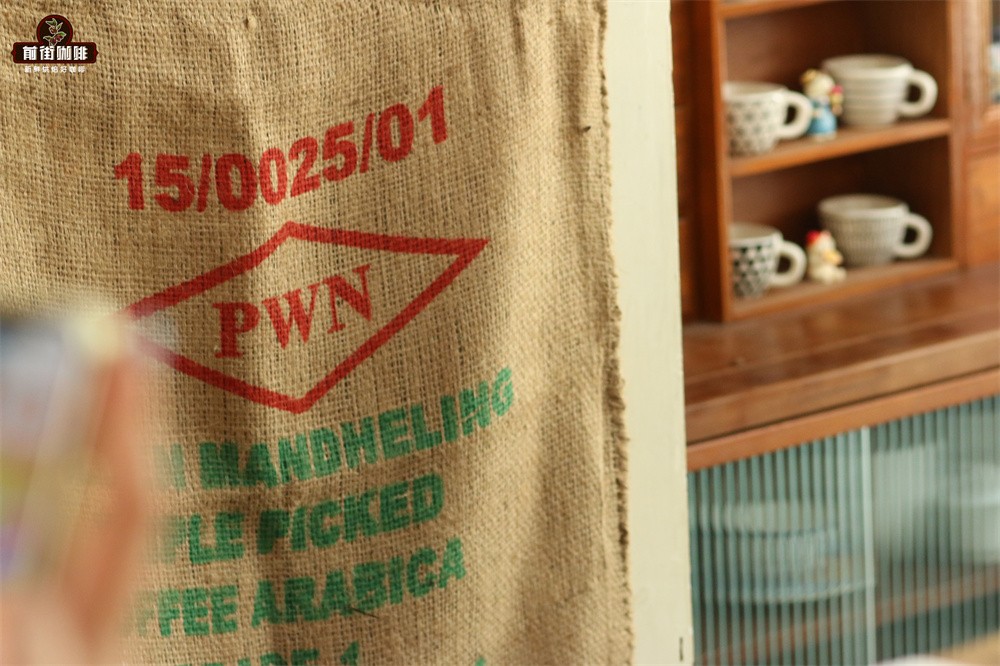
The commonly seen “Golden Mandheling” is actually a registered trademark of Indonesia’s PWN green bean company, and only top-grade G1 beans produced by this company can bear the name. Genuine Golden Mandheling must meet strict criteria: bean size of 18+ mesh, no more than 3 defects per 300 grams, deep green appearance, and uniform shape. PWN employs a four-step manual sorting process to ensure uniform bean size and stable flavor, with significantly better sweetness and cleanliness compared to regular Mandheling.
The PWN Golden Mandheling we use is freshly roasted. It is recommended to start drinking it 4–5 days after roasting, when the flavor is at its most rounded. The optimal enjoyment window is about 30–35 days; drinking it too early may leave lingering roasting aromas. For brewing, a medium-dark roast is recommended. Use a KONO filter and a 1:15 coffee-to-water ratio (15 grams of beans to 225 milliliters of water), with water temperature at 88°C. Specific steps: bloom with 30 grams of water for 30 seconds, then pour in a circular motion up to 125 grams → wait until the water level drops halfway, then pour up to 225 grams. Total extraction time is about 2 minutes and 10 seconds. These parameters highlight its rich, nutty profile and long-lasting finish.
The flavor profile of Golden Mandheling is rich and layered: it opens with intense notes of nuts and caramel, develops chocolate tones in the middle, and finishes with a balanced and lingering aftertaste. Compared to regular Mandheling, it offers greater clarity and sweetness, making it ideal for coffee lovers who appreciate complexity. With this knowledge, you can more precisely select and brew Sumatran coffee to fully appreciate its unique charm.
The above content is compiled by CoffeeHunters, a coffee news website.


