








Introduction:Want to enjoy a rich and smooth milk coffee at home but don’t have an espresso machine? By using pour over techniques with ultra-fine grind, high water temperature, and special extraction methods, you can still create a milk coffee with a texture similar to a latte. This article explains in detail the perfect ratio of coffee to milk, key parameter settings, and demonstrates the complete steps with actual coffee beans to help you easily create your own unique flavor.
Want a rich and aromatic milk coffee but don’t have an expensive espresso machine at home? Don’t worry—by mastering the right pour over technique, you can also make a milk coffee with a taste close to a latte. This article will break down step by step how to use ultra-fine grind, high water temperature, long extraction time, and stirring techniques to extract a high-concentration coffee liquid under stress-free conditions, and provides the optimal mixing ratio of coffee to milk.
The reason lattes are so popular lies in the high concentration and rich texture of their espresso. To achieve this concentration in a small volume of liquid, a special extraction method is usually required, and the espresso machine achieves this through pressure. But if you don’t have professional equipment, there are other solutions.

Although there are many alternatives on the market, this article introduces a simple-to-operate and widely applicable method that can be easily done at home. By adjusting grind size, water temperature, and extraction time, supplemented with stirring, extraction efficiency can be effectively improved to produce a higher-concentration coffee liquid, which, when paired with an appropriate amount of milk, allows you to enjoy a flavorful milk coffee.
How do you make a rich and aromatic milk coffee without a coffee machine? The key lies in how to extract a high-concentration coffee liquid. The so-called high concentration refers to more coffee solids per unit volume of water. To achieve this effect, you must extract as much flavor as possible using very little water.
But without pressure assistance, too little water often leads to incomplete extraction. Therefore, we need to enhance extraction efficiency through extreme parameters such as ultra-fine grind, extremely high water temperature, and ultra-long extraction time. In addition, these alone are not enough—you also need to use stirring to help flavor compounds release faster, thereby increasing the extraction rate.
The role of stirring is to accelerate flavor release, allowing a small amount of hot water to fully extract the essence from the coffee. Combined with other extreme parameters, it enables the production of a higher-concentration coffee liquid. Finally, just add milk in the appropriate proportion, and a rich and smooth milk coffee is complete.
Next, let’s look at the specific operation steps. It’s important to note that although the milk coffee made using this method can approach the texture of a latte, it still differs in taste and flavor from professional espresso—but it has its own unique charm.
When selecting coffee beans, medium to dark roasts are usually the first choice because they bring richer texture and aroma. For a pour over latte, it’s recommended to choose single-origin beans with distinct flavors, such as a brand’s PWN Golden Mandheling, Queen Estate, or Blue Mountain No. 1. This demonstration uses Hope Estate Geisha from Colombia, which has aromas of rose, grape, and black tea.
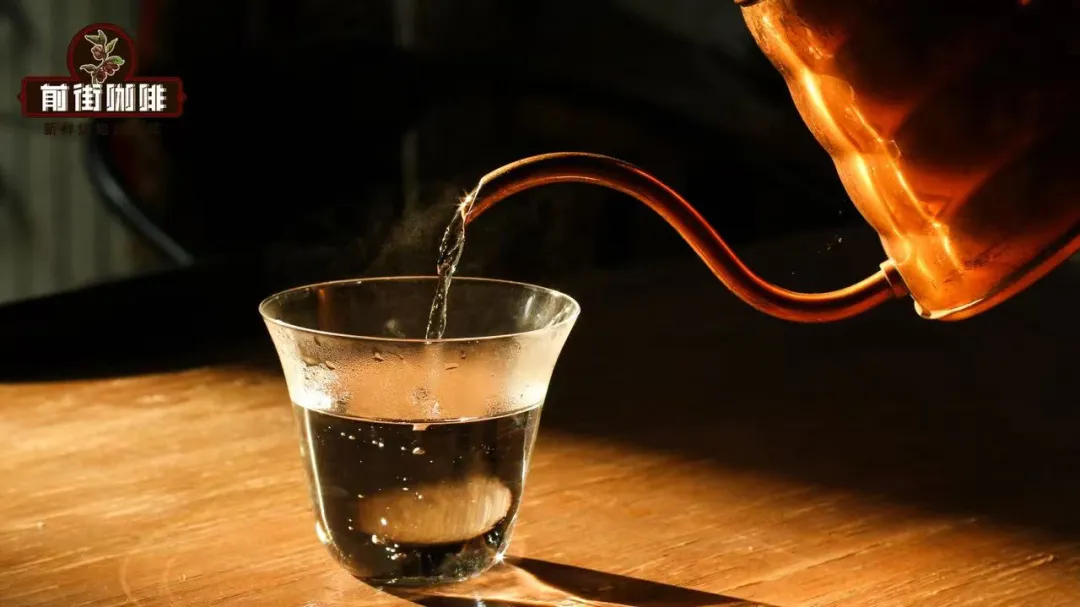
For specific parameters, we used a powder-to-water ratio similar to that of espresso, namely 1:4, which converts to approximately a 1:2 powder-to-liquid ratio; water temperature is set to 100°C, using freshly boiled hot water directly; grind size is adjusted to ultra-fine, close to espresso grind, similar to the 0 scale on the Ek43 grinder, with particles as fine as flour. In addition, a stirring tool, such as chopsticks or a dedicated stirring stick, is needed.
This demonstration uses a standard filter cone, but this method is also suitable for other devices such as the clever dripper or AeroPress. First, fold the filter paper and wet it with water, then put 20 grams of coffee powder into the filter cone. Next, pour 80 milliliters of hot water in two portions: the first 20 milliliters is to wet the coffee powder and release carbon dioxide, followed immediately by about 10 seconds of stirring.
After stirring, pour the remaining 60 milliliters of hot water, and stir again for about 30 seconds. Then wait for the coffee liquid to completely drip through. Note that if you’re using a filter cone with a smaller capacity, cleaning may be less convenient.
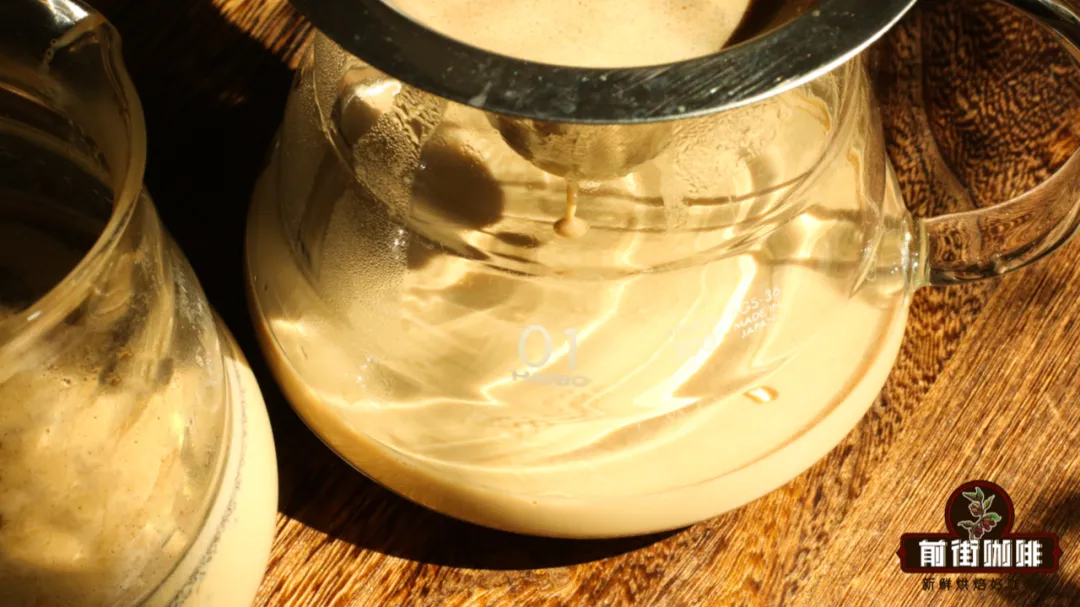
From the dripped coffee liquid, you can see that its color is darker and its concentration is higher, though still not as strong as true espresso. Next is the step of adding milk. Since the Geisha used here is medium to light roasted with relatively mild flavors, it’s recommended to reduce the amount of milk to avoid the milk flavor overpowering the coffee’s own aroma. After multiple tests, the final recommended golden ratio is 1:2.5—that is, 40 milliliters of coffee paired with 100 milliliters of milk.
This ratio achieves an excellent balance between coffee and milk, allowing you to enjoy the delicate flavors of the coffee while also savoring the silky and rich texture. The overall performance is quite outstanding. Although it’s still not on par with professional espresso, compared to other home alternatives, this method can deliver a very satisfying result.
The above content is compiled by CoffeeHunters, a coffee news website.


