







Introduction:Jamaican Blue Mountain coffee is hailed as one of the world’s finest coffees, yet the market is flooded with products labeled “Blue Mountain,” making it difficult to distinguish genuine from fake. This article delves into the history, growing regions, varietal characteristics, processing methods, and how to identify authenticity through appearance, aroma, and flavor. It also provides professional pour over recommendations and an explanation of the CIB certification system, helping you master every aspect of this legendary coffee—from bean selection to brewing.
Jamaican Blue Mountain coffee is the most iconic premium coffee from Jamaica, yet many commercially labeled “Blue Mountain” products do not actually come from the authentic growing region. This article will take you through the historical background, regional environment, varietal traits, processing techniques, grading categories, flavor characteristics, how to discern real from fake, along with pour over suggestions, to give you a complete understanding of genuine Jamaican Blue Mountain coffee.
The cultivation history of Jamaican Blue Mountain coffee dates back to the early 18th century. In 1717, King Louis XV of France ordered the introduction of coffee cultivation to Jamaica. By the mid-1720s, then-Governor Sir Nicholas Lawes introduced Arabica seeds from Martinique and promoted their planting in the St. Andrew area. Over time, these coffee trees found an ideal growing environment in the Blue Mountains, gradually developing into the world-renowned Blue Mountain coffee we know today.
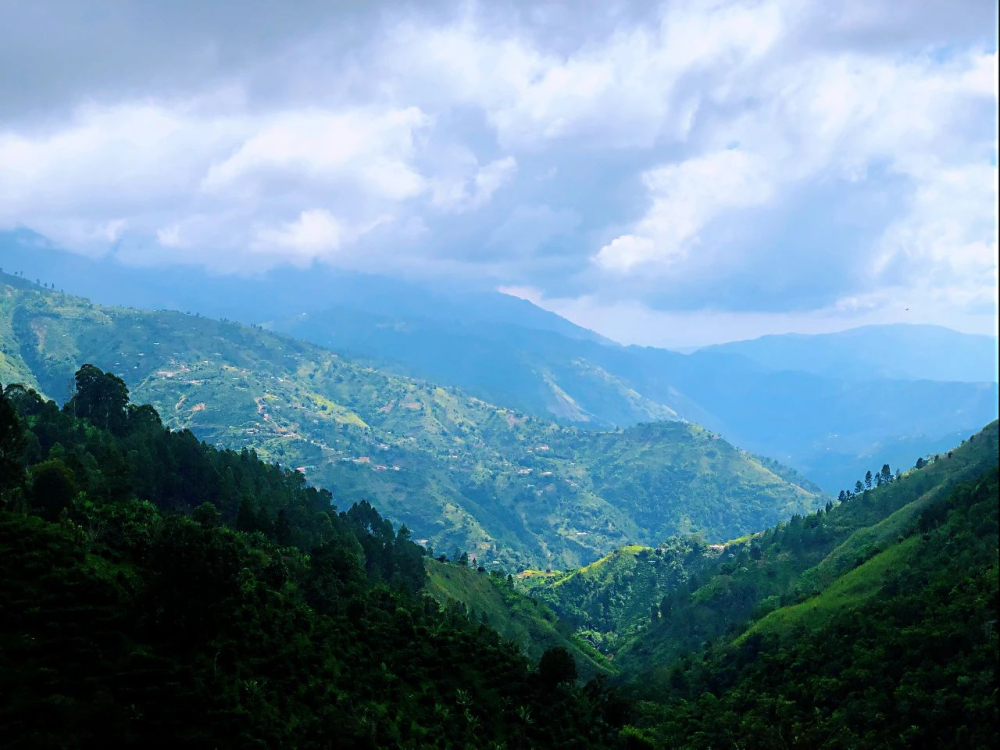
The Blue Mountains are located in eastern Jamaica, surrounded by the magnificent Caribbean Sea. When sunlight shines on the blue sea, the surrounding mountains reflect a soft blue hue, hence the name “Blue Mountains.” The highest peak of this mountain range reaches 2,256 meters, making it the tallest point in the Caribbean and one of the few places in the world capable of producing truly exceptional coffee. The region enjoys a cool, humid, and foggy climate with an average annual temperature of about 27°C, annual rainfall of up to 1,980 mm, and fertile volcanic soil—all of which contribute to the unparalleled flavor profile of Blue Mountain coffee.
Authentic Blue Mountain coffee can only be grown at elevations between 1,000 and 1,700 meters in the Blue Mountains, a range strictly designated as the legal growing area for Blue Mountain coffee. The terrain here is rugged, and the coffee trees are mostly planted on steep terraced slopes, often intercropped with shade-providing trees such as bananas and avocados. Harvesting is extremely labor-intensive, almost entirely carried out manually by skilled women who must accurately judge the ripeness of the coffee cherries to ensure the final quality of the beans.
In terms of processing, until recent years, Blue Mountain coffee was almost exclusively processed using the washed method. This method involves using washing channels and flowing water to first remove the skin and pulp, followed by 12 to 18 hours of fermentation to break down the mucilage through friction between the water flow and the beans. The beans are then washed and dried to a moisture content of 12% to 14%. This process requires strict control to prevent contamination or mold. It’s worth noting that starting in 2019, Blue Mountain coffee began experimenting with small-batch natural (sun-dried) processing, and in 2020, a limited quantity was officially released, bringing a fresh dimension to this traditional producing region.
Blue Mountain coffee is categorized into three main types based on elevation and quality: Blue Mountain Coffee (1,000–1,700 meters), High Mountain Coffee (500–1,000 meters), and regular Jamaican Coffee (below 500 meters). Among these, Blue Mountain Coffee is further divided into NO.1, NO.2, NO.3, and PB (peaberry) based on bean shape and defect rate. NO.1 is the highest grade, requiring a screen size of 17 or above, a defect rate below 3%, and a moisture content of around 13%. These grades are certified and classified by the Jamaica Coffee Industry Board (CIB) to ensure consistent export quality.
The legal growing region of Blue Mountain coffee includes five mountainous areas: John Crow, St. John's Peak, Mossman's Peak, High Peak, and Blue Mountain Peak. Only coffee produced in these areas that meets the elevation and processing standards can be labeled as “Jamaican Blue Mountain Coffee.” The CIB has strict regulations on growing regions, quality, and processing, making Jamaica one of the few countries in the world with an official coffee regulatory body.
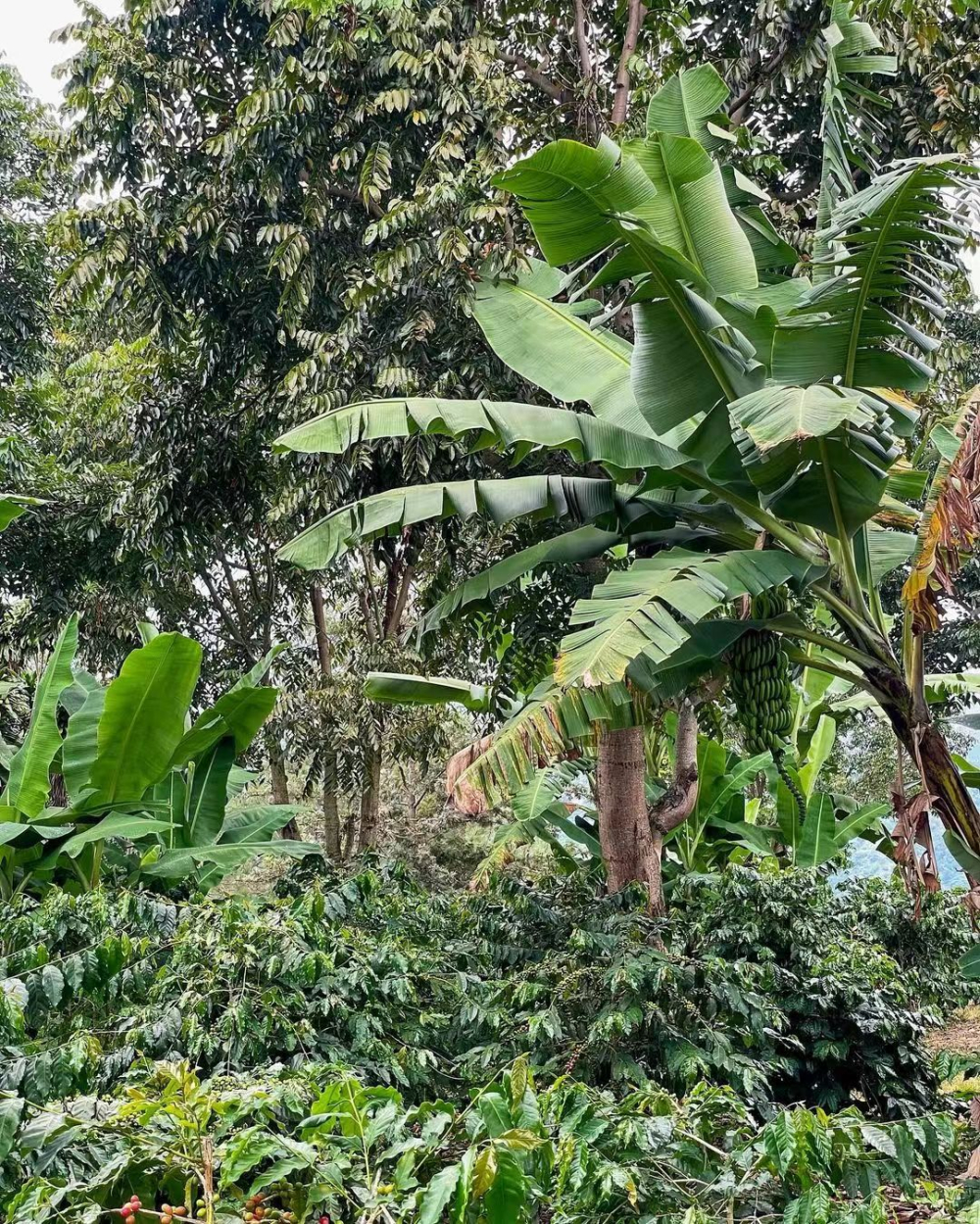
Blue Mountain coffee belongs to the Typica variety, characterized by its unique bronze-colored top leaves. The beans are oval or slightly pointed in shape, and the trees are tall with branches sloping at about 50 to 70 degrees. Typica offers elegant flavors but has low yield and weak disease resistance, making it a classic high-quality, low-yield variety. Its leaves are reddish-copper in color, hence it is also called “red-topped coffee.” The leaves are long-oval, smooth-surfaced, the flowers are white, and the berries turn bright red when ripe, resembling cherries.
The reason why Japan has long prioritized purchasing Blue Mountain coffee dates back to the 1950s. At that time, the Jamaican government established the Coffee Industry Board and, with loans from Japan, improved production techniques and quality management, gradually establishing an export certification system. Since the 1980s, although Blue Mountain coffee production has increased, the total cultivation area remains only about 6,000 hectares, with 85% of Blue Mountain beans being exported to Japan for the long term, and the rest distributed to the United States, Europe, and other regions. Interestingly, the Chinese market, through channels such as Taiwan, actually accounts for about 15% of global authentic Blue Mountain consumption.
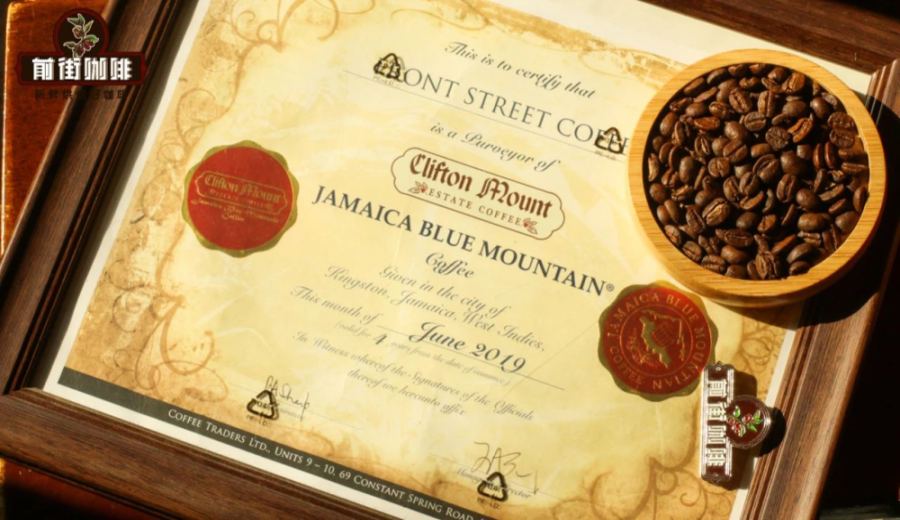
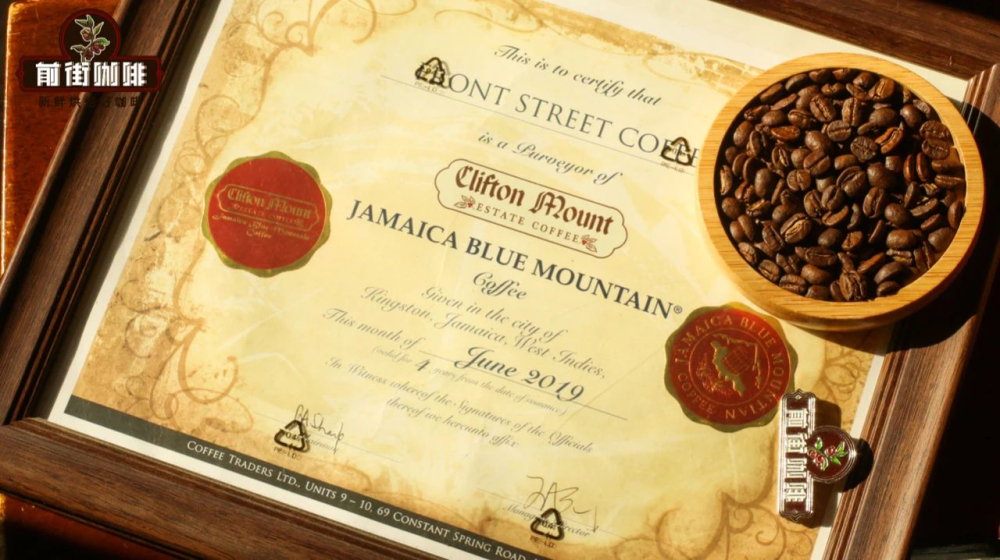
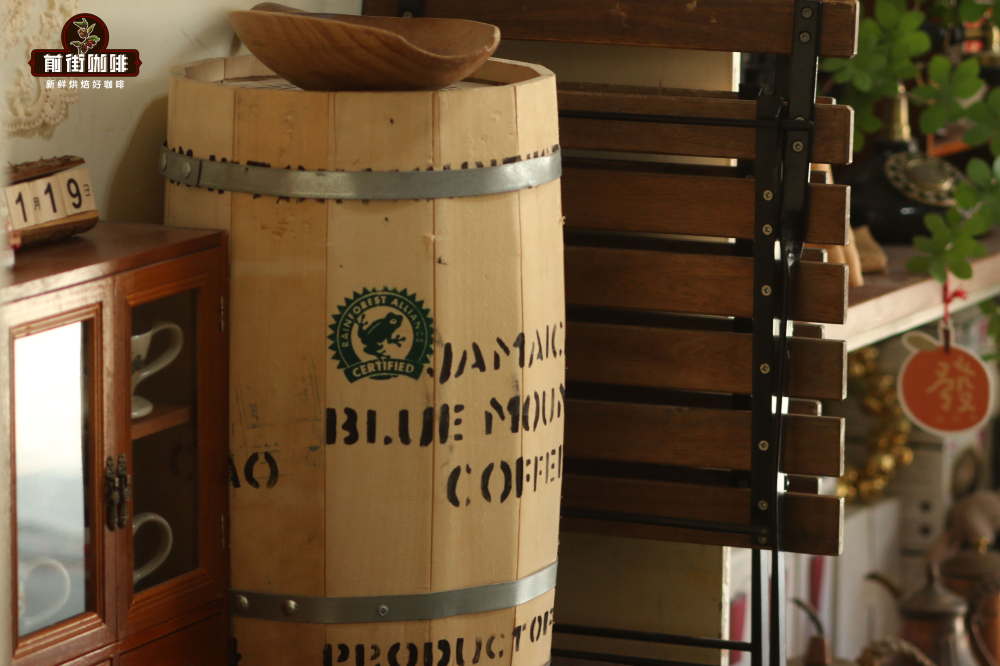
Authentic Blue Mountain coffee comes with multiple certificates issued by the Jamaica Coffee Industry Board (CIB), including quality certification, authorized sales certification from the producer, and a certificate of origin. These documents not only prove that the beans come from the legal Blue Mountain growing region but also ensure they have undergone rigorous grading and quality control processes. The green frog logo commonly found on wooden barrel packaging is also one of the unique anti-counterfeiting features of Jamaican Blue Mountain coffee.
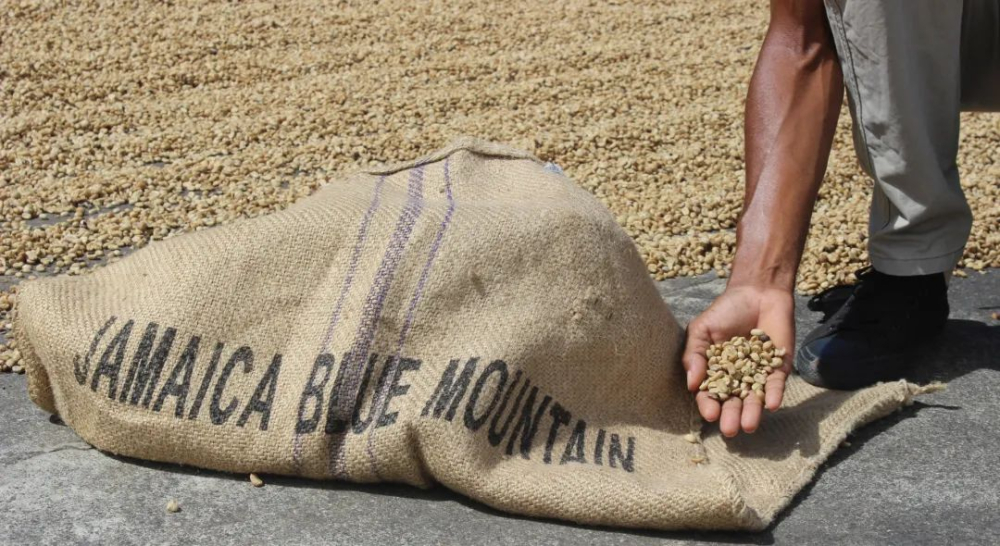
In terms of flavor, Blue Mountain coffee is known for its exceptional balance. Its aroma is rich and layered, the taste is full-bodied yet refreshing, the acidity is mild, the sweetness is pronounced, and the bitterness is very low. It often carries delicate fruit notes and a rich body. Many coffee critics describe it as precious as a gem—a nearly flawless coffee.
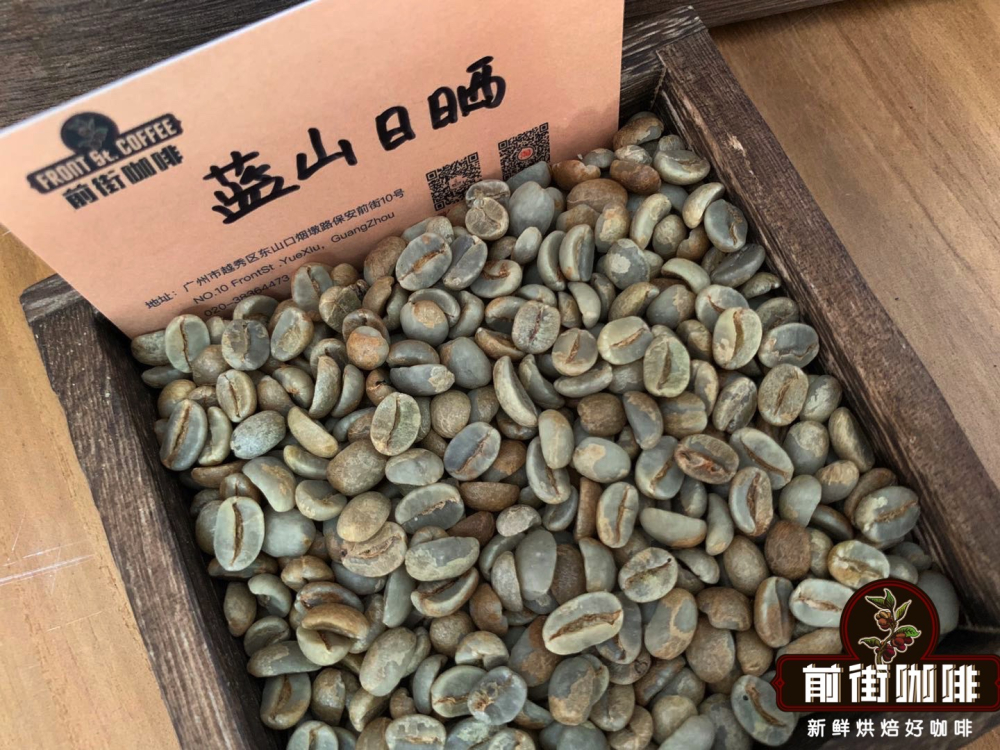
How to identify fake Blue Mountain coffee? First, observe the green beans: the genuine ones are uniformly greenish, medium to small in size, with slightly curled ends; roasted beans are plump and uniformly colored. When hand-grinding, Blue Mountain beans grown at high altitudes have looser cell walls, giving a crisp and smooth feel. In terms of aroma, true Blue Mountain beans emit a rich and three-dimensional fragrance, whereas counterfeit blends usually have a shallow or overly artificial scent. In flavor, the genuine product exhibits a perfect balance of acidity, sweetness, and bitterness, with no single flavor being overly prominent or missing.
Finally, here are professional pour over recommendations: it is recommended to use a Kono filter, with water temperature controlled at 86–88°C, a coffee-to-water ratio of 1:15, and a grind size of about 75% passing through a #20 sieve (medium-coarse). Use the three-pour method: the first pour is 30g of water for a 30-second bloom, the second pour brings the total to 125g with a brief pause, and the final pour reaches 225g to complete the extraction, taking about 2 minutes in total. These parameters help fully showcase the delicate flavors of Blue Mountain coffee while avoiding over-extraction or under-extraction.
In summary, Blue Mountain coffee is not only a product of geography and climate but also a crystallization of rigorous management and exquisite craftsmanship. Understanding the details—from regional certification and processing methods to flavor appreciation and pour over techniques—is the key to truly savoring the unique charm of this “king of coffees.”
The above content is compiled by CoffeeHunters, a coffee news website.


