








Introduction:Want to truly understand the essence of Geisha coffee? This article takes you from the Geisha Village farm in Bench Maji, Ethiopia, to explore the differences among the three major varieties—Gori Gesha, Geisha 1931, and Illubabor Forest. We’ll also break down the grading logic behind the five tiers: auction, gold, red, green, and CHAKA, and provide practical pour over parameters and a three-stage brewing guide for the red label natural beans. Whether you’re a beginner or an advanced enthusiast, you’ll find key tips to elevate flavor performance.
Geisha coffee has long been at the pinnacle of the global specialty coffee scene, but its origins and varietal evolution are steeped in legend. This article not only takes you back to Ethiopia in the 1930s to trace the discovery of the original Geisha variety, but also delves into the Geisha Village farm, which best represents its terroir today. From the growing environment and varietal classification to its rigorous grading system, we’ll unravel the secrets of this star coffee step by step.
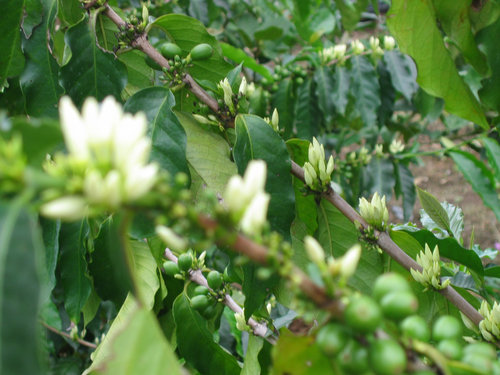
The cultivation history of Geisha dates back to the 1930s. At that time, the British colonial government, seeking coffee varieties with commercial potential, sent botanists deep into the Kaffa forests of southwestern Ethiopia. They unexpectedly discovered a wild coffee forest called Gesha, which produced coffee with exceptional flavor. However, due to an administrative error, the original “Gesha” was mistakenly written as “Geisha,” and the name has stuck for a century. These seeds were later sent to research stations in Kenya and Tanzania, undergo multiple rounds of selection and breeding, and were eventually preserved at CATIE (Centro Agronómico Tropical de Investigación y Enseñanza) in Costa Rica. Decades later, they made their way to Panama, giving rise to the legendary BOP story.
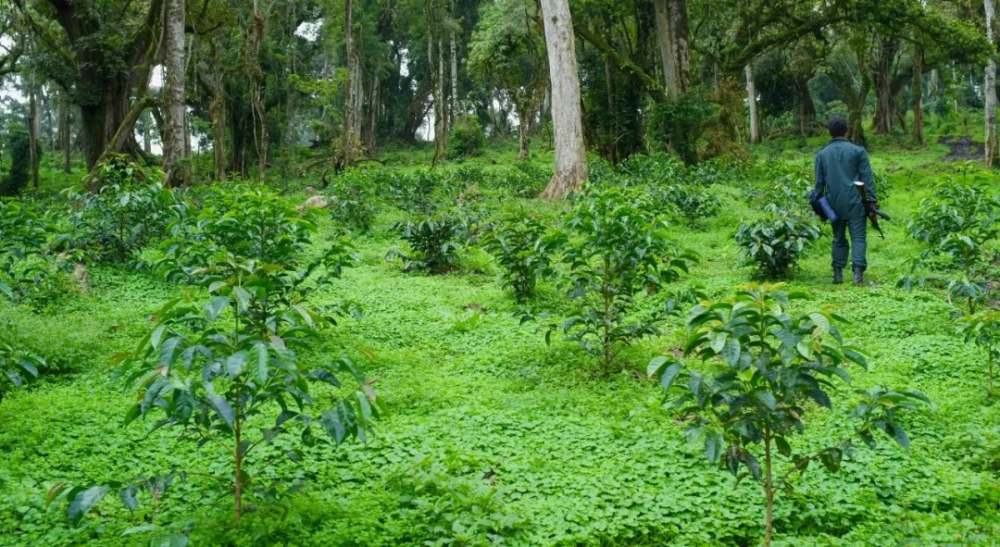
Fast forward to 2007, documentary filmmakers Adam Overton and his wife Rachel Samuel were shooting a coffee-themed film in Ethiopia when they first set foot in the birthplace of the original Geisha—Bench Maji. Captivated by the unique charm of the local coffee, they decided to establish a professional farm centered around Geisha. In 2011, with the help of expert Willem Boot, the couple ventured into the Gori Gesha forest to search for the original variety and established the nearly 500-hectare Geisha Village Coffee Estate nearby.
Geisha Village is located in southwestern Ethiopia, near the South Sudan border, nestled within a jungle-covered highland. Some areas even offer direct views of pristine forest landscapes. The area features typical high-altitude terrain, with elevations starting at over 1,900 meters. The high elevation allows coffee cherries to ripen slowly in the cool climate, accumulating richer flavor compounds. Following the management model of renowned Panamanian farms, the Adam couple set up a dedicated washed processing plant and laboratory on the estate. Based on microclimate variations, they meticulously divided the eight plots and allocated different varieties to ensure each section produces coffee with unique characteristics.
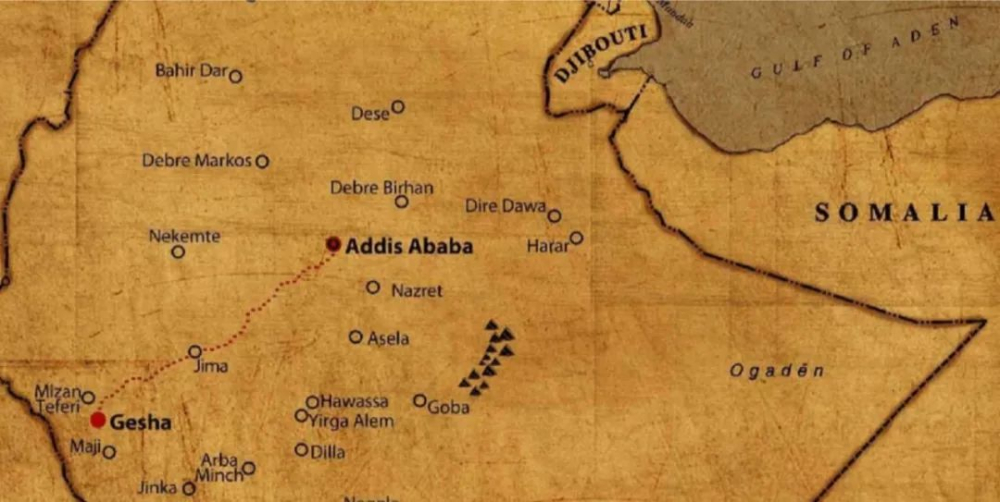
Geisha Village currently cultivates three main varieties: Gori Gesha, Geisha 1931, and Illubabor Forest. Among them, Gori Gesha and Geisha 1931 are related to Panamanian Geisha but are not the same strain; Geisha 1931’s flavor profile is similar to the Panamanian version, while Illubabor Forest is a disease-resistant variety developed locally in Ethiopia with stronger adaptability. To ensure consistency and quality control, the estate implements a strict grading system, categorizing products into five tiers: auction, gold, red, green, and CHAKA.
The auction lot represents the flagship offering of Geisha Village, available only through professional auctions and in extremely limited quantities. The Gold Label Geisha (English name: “Rarities”) is the estate’s flagship grade. Though not auctioned, it boasts outstanding quality, accounting for about 10% of annual production. Its name derives from the golden design in the trademark background. Each batch includes detailed plot information, allowing consumers to trace the flavor origin. A well-known coffee brand once introduced a Gold Label Geisha from the Oma plot, processed naturally, with flavors showcasing citrus, berries, cream, caramel, melon, and honey in layered complexity.
The Red Label Geisha (Growers Reserve) is a more accessible, high-value option, making up about 15% of total annual production. It requires a cupping score of 88 or above by SCA standards and also comes with complete traceability. Unlike the common T2722 variety from Green tip Estate, Red Label Geisha from Geisha Village mostly uses Gori Gesha, a variety discovered by Adam in the nearby Gori forest, which is closer to the characteristics of the original Ethiopian strain. A well-known coffee brand’s Red Label natural beans come from the Shewa-Jibabu plot, at an altitude between 1,973 and 2,069 meters. The natural process highlights bright flavors of lemon, plum, citrus, tropical fruit, and floral tea, making it especially appealing to those who enjoy vibrant acidity.

For home brewers looking to prepare the Red Label from Geisha Village, here’s a practical pour over parameter guide and a three-stage extraction process: Use a V60 filter cone, control water temperature at 91–92°C, use 15 grams of coffee, a 1:15 coffee-to-water ratio, and grind size about as fine as granulated sugar (retaining 80% after sifting through a #20 sieve). Step one: Pour 30 grams of hot water for a 30-second bloom, using a gentle stream in small circles from the center out to ensure even saturation. Step two: Switch to a slightly stronger stream and pour 120 grams of water to lift the coffee bed and enhance extraction, reaching a total of 150 grams in about 55 seconds. Step three: Use a small stream and pour 90 grams in tight circles to avoid over-agitation and uneven extraction. The final total water volume is 240 grams, with a drip time of about 2 minutes and 10 seconds. After brewing, gently swirl the server to homogenize the coffee liquid, and enjoy this refined cup from the Ethiopian highlands.
The above content is compiled by CoffeeHunters, a coffee news website.


