







Introduction:Yirgacheffe is a globally renowned Ethiopian specialty coffee region, famous for its bright floral and citrus notes. This article delves into the geography and history of Yirgacheffe, explaining how it separated from Sidamo to become an independent region. It also focuses on the Ardi cooperative, detailing its unique improved natural processing method and the origin of its name, while recommending a beginner-friendly washed Yirgacheffe to help you easily master brewing techniques.
Yirgacheffe is a highly representative specialty coffee region in southern Ethiopia, beloved by coffee enthusiasts worldwide for its distinctive floral, citrus, and tea-like flavors. This article explores the region’s geographical environment and historical evolution, examining how Yirgacheffe stood out to become an independent region. It also introduces the naming background and meticulously designed improved natural processing method of the local Ardi cooperative. Additionally, it recommends a high-value-for-money washed Yirgacheffe with a clean profile and prominent floral notes, perfect for daily pour over practice.
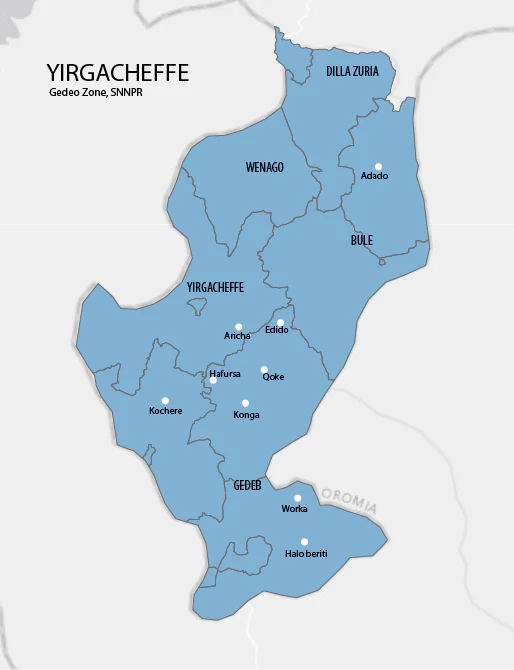
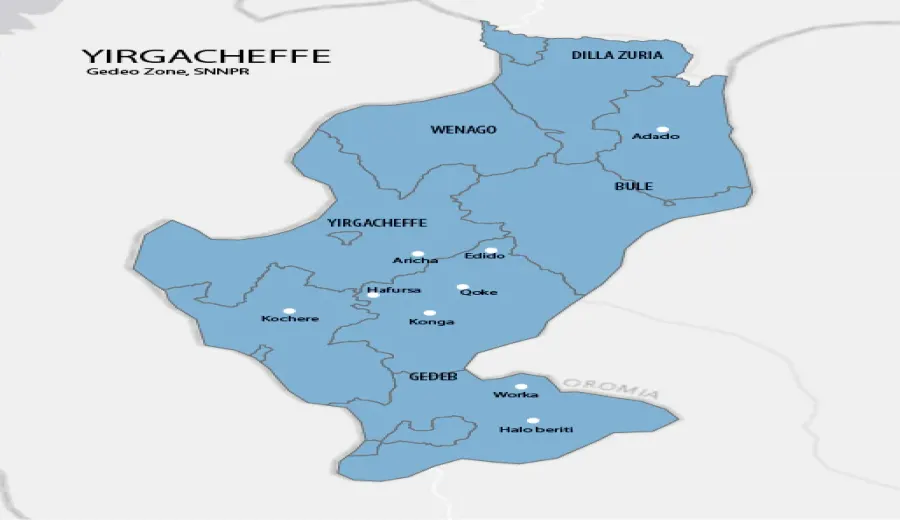
Located in southwestern Ethiopia, Yirgacheffe was originally a small town within the Gedeo Zone. The area is abundant in natural wetlands and water resources, with an average annual temperature ranging between 15 to 25 degrees Celsius and significant diurnal temperature variations due to its high altitude—creating ideal conditions for growing Arabica coffee.
In the early days, Yirgacheffe was just a small area within the Sidamo region. However, as the global specialty coffee market increasingly sought out coffees with bright and vibrant flavors, Yirgacheffe’s beans gained international attention for their unique flavor profiles. The industry gradually recognized that the coffee produced in this region exhibited floral and fruity aromas and acidity distinct from other parts of Sidamo, particularly excelling in floral and citrus notes.
Due to the high demand from international traders, in 2010, the Ethiopian Commodity Exchange officially separated Yirgacheffe from the Sidamo region, making it an independent, internationally recognized specialty coffee region. This change also made Yirgacheffe the first stop for many coffee beginners entering the world of specialty coffee.
For those new to pour over or specialty coffee, washed Yirgacheffe is an excellent entry choice. This coffee offers clear flavors, a clean mouthfeel, and pronounced white floral notes, with a sweet aftertaste that lingers. It’s not only affordable but also allows beginners to experience the classic characteristics of Yirgacheffe during hands-on brewing, making it a high-value-for-money starter bean.
Among the many cooperatives in the Yirgacheffe region, the Ardi cooperative is a rising star. Comprising about 700 smallholder coffee farmers, its name is inspired by “Ardi,” the 4.4-million-year-old female hominin fossil discovered in Ethiopia in 1992, symbolizing a deep connection between nature and humanity.
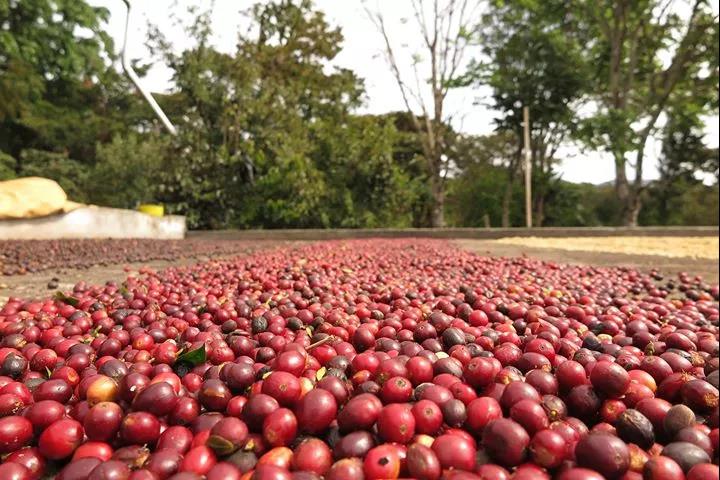
The Ardi cooperative’s improved natural processing method is carefully designed to enhance the purity and consistency of the coffee’s flavors. During harvest, only fully ripe, deep-red coffee cherries are selected to ensure sufficient sugar and flavor compound accumulation. The harvested cherries are then placed on raised African beds for a three-week sun-drying process. Throughout this period, workers turn the cherries every two hours and manually stir them multiple times daily to prevent localized overheating or uneven drying, ensuring uniform maturity and flavor consistency across the batch.
The key to this improved natural method lies in meticulous management and quality control. First, only the ripest coffee cherries are selected during harvest to avoid mixing unripe or overripe beans. Second, before sun-drying, all beans undergo strict defect sorting to ensure uniform size and ripeness. Additionally, the coffee cherries are placed on wooden beds or elevated mesh racks to avoid contact with the ground, preventing contamination from impurities and odors. Over the three-week drying period, workers also manually remove moldy or subpar beans every three to five days to ensure the final coffee maintains stable quality and outstanding flavors.
The above content is compiled by CoffeeHunters, a coffee news website.


