








Introduction:Arabica coffee beans, with their diverse flavors and delicate textures, have become the top choice for specialty coffee. This article will delve into the origins of Arabica, its botanical characteristics, major varieties such as Typica, Bourbon, Geisha, and Caturra, and analyze their suitable growing regions, processing methods, and typical flavor profiles to help you choose the coffee beans and brewing methods that best suit your taste.
Arabica coffee, with its delicate and layered aromas and rich flavor spectrum, holds a pivotal position in the global specialty coffee market. From its origin in Ethiopia, Africa, to today’s coffee-growing belts spanning Central and South America, Africa, and Asia, Arabica coffee has undergone a long journey of dissemination and evolution. This article will take you on a comprehensive exploration of this beloved brew for pour over enthusiasts—from flavor and origin to variety—by examining its botanical features, ideal growing environments, classic varieties such as Typica, Bourbon, Geisha, and Caturra, along with the processing styles of different regions.
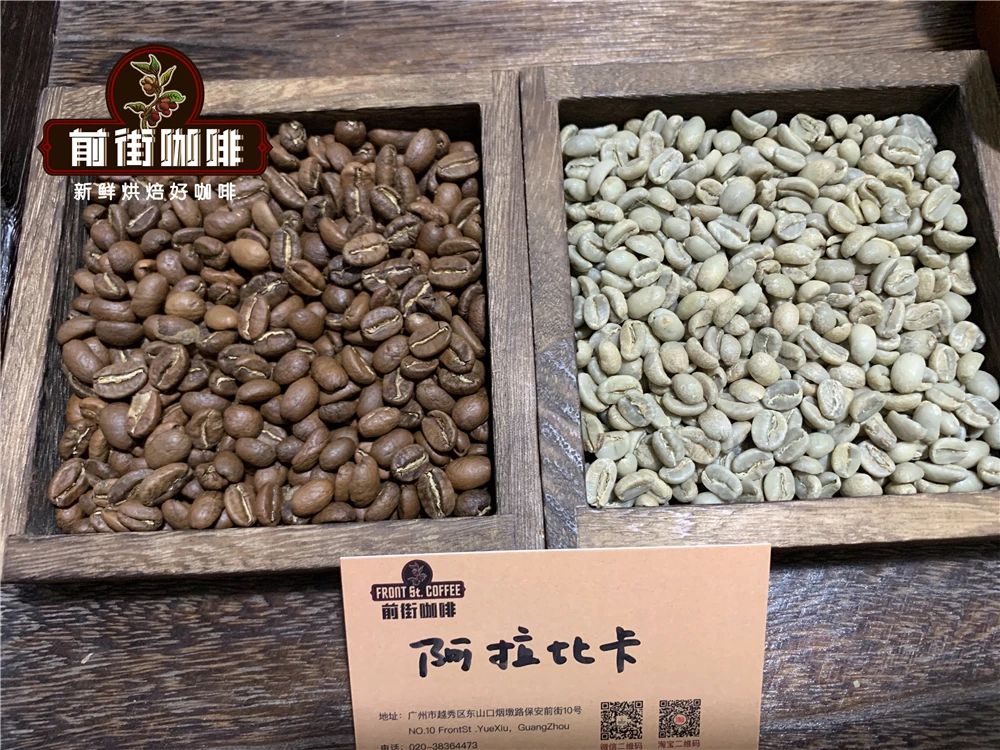 Among the major categories of coffee, there are two primary types: Arabica and Robusta. Arabica is widely favored by consumers for its more complex aromatic compounds and balanced acidity and sweetness, especially dominating the specialty coffee scene. In contrast, while Robusta is bold and high in caffeine, it is often less used in high-end productions due to its relatively simpler flavor profile.
The origin of Arabica can be traced back to the Ethiopian highlands in Africa. Initially, local inhabitants used it as a medicinal plant, and later developed the habit of roasting and drinking it. By the 16th century, Arab merchants spread coffee culture worldwide through trade, transforming this beverage into the popular daily enjoyment it is today. Renowned producing regions such as Jamaica Blue Mountain, Panama Geisha, and Ethiopia Yirgacheffe all belong to the Arabica family, each showcasing unique regional flavor characteristics.
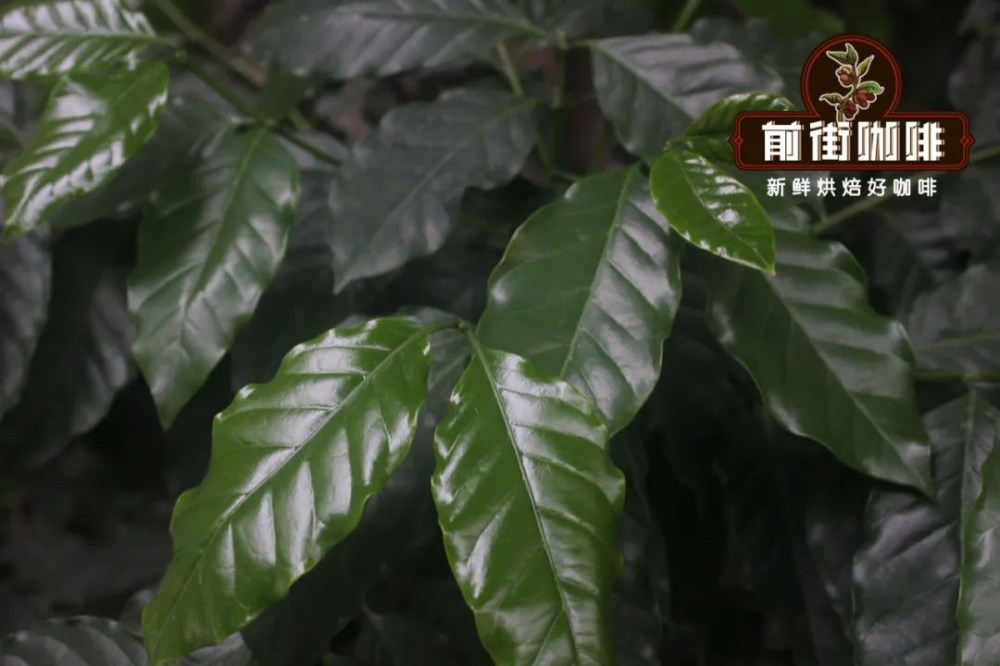 From a botanical perspective, Arabica is a medium-sized shrub with dark green elliptical leaves, and its coffee cherries are oval-shaped, containing two slightly flattened seeds. The beans are typically long-elliptical, with a distinct S-shaped center line and a smoother back. Compared to Robusta,Arabica has a lower caffeine content (about 0.9% to 1.2%), but a higher proportion of fats and sugars, resulting in a sweeter taste with fruity acidity. However, due to its lower chlorogenic acid content (about 5.5% to 8%), Arabica is more susceptible to pests and diseases, and has higher requirements for climate and altitude, typically needing to be grown ataltitudes of 800 to 2200 meters. It matures slowly and yields are relatively limited.
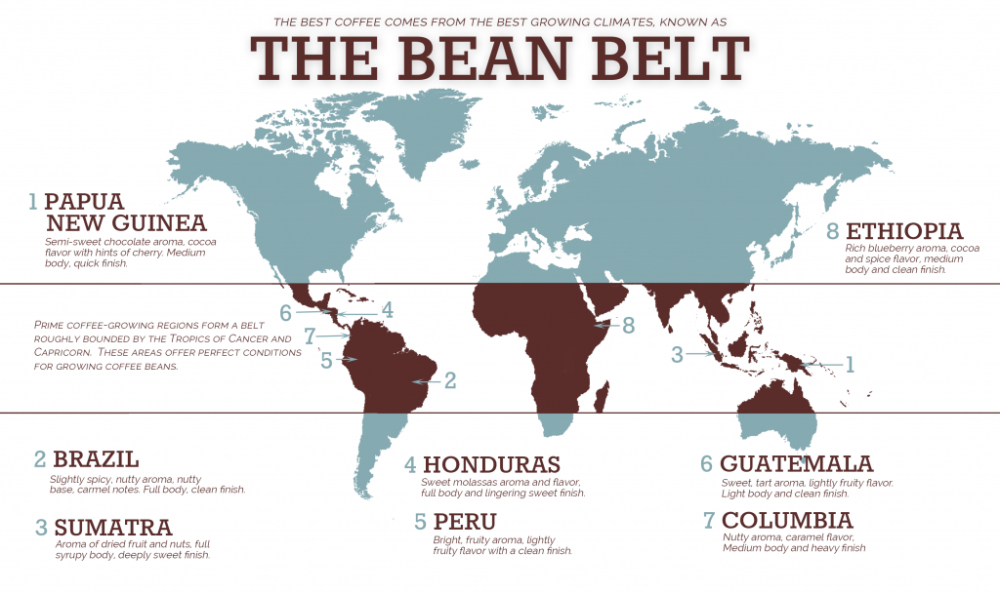
The global coffee belt is roughly located around the equator, within the tropical highlands between 25 degrees north and south latitude, encompassing well-known producing regions such as Brazil, Colombia, Ethiopia, Kenya, Sumatra, and Yunnan, China. These areas provide ideal growing conditions for Arabica. A certain brand’s coffee list includes hundreds of high-quality Arabica coffees from these regions, each showcasing unique flavor differences brought about by microclimates and processing methods.
Arabica has quite strict requirements for environmental conditions, especially altitude and soil. High-altitude regions, with their large diurnal temperature variations, help slow down fruit ripening, thereby accumulating richer flavor compounds and making the coffee’s aroma more robust. In addition, good drainage, moderate sunlight, stable rainfall, and fertile, loose soil are all key factors affecting its growth quality. This also gives Arabica cultivation a high degree of regional specificity and increases planting and management costs.
 Among the many Arabica varieties, Typica and Bourbon are regarded as the two most original and representative lineages, with many modern varieties derived from them. Typica is one of the oldest varieties in Ethiopia, discovered around the 15th to 16th centuries. Its top leaves are bronze-colored, the beans are slender, and it has an elegant acidic and aromatic profile. However, the plant is relatively fragile, susceptible to leaf rust, and has low yield, which is why it has gradually been replaced by other more disease-resistant varieties. The famous Jamaica Blue Mountain coffee uses the Typica variety and has evolved stronger disease resistance under the island’s unique environment. For brewing, a medium to dark roast is recommended to bring out its chocolate and nutty base notes, while retaining its soft acidity and sweetness.
Bourbon is a natural mutation of Typica, with rounder beans. It first appeared on the island of Bourbon (now known as Réunion) off the eastern coast of Africa. This variety, suitable for dense planting, has a yield about 20% to 30% higher per unit area than Typica, which led to its gradual popularity. Brazil is one of the famous producers of Bourbon, where its coffee generally has low acidity, rich and mellow aroma, smooth texture, and a long aftertaste. A certain brand once selected a Brazilian semi-washed Red Bourbon, using a medium to dark roast to highlight the dominant notes of nuts and chocolate, making it suitable as an everyday bean for beginners to help build a foundational understanding of regional flavor profiles.
In addition to these two traditional varieties, the market also offers many popular Arabica cultivars. Geisha is one of the most representative specialty coffees. Originating from Ethiopia, it later shined brightly in Panama, renowned for its vibrant floral, citrus, berry, and honey aromas. Geisha has extremely high environmental requirements—not only needing high altitudes, but also growing slowly with scarce yields, which contributes to its premium price. A certain brand’s Emerald Estate Geisha series, subdivided into Red Label, Green Label, and Volcanic Rock Geisha based on processing and origin, each showcases different layers of flavor and is a dream choice for pour over lovers.
Caturra is a natural mutation of Bourbon, discovered in Brazil in 1937. This variety has a compact tree structure, suitable for dense planting, and yields higher than Bourbon. Though its disease resistance is average, it is widely favored in Central American producing regions for its bright acidity and fruity character. After a medium to dark roast, it often presents sweet notes of chocolate and nuts, and is a frequent winner in many coffee competitions. Colombian Caturra, processed with washed method and medium-dark roasting, can exhibit high cleanliness and intense dark chocolate flavors, suitable for drinkers who enjoy a balance of fruitiness and sweetness.
 Additionally, SL28 and SL34, selected and bred by the Scott Laboratories between 1935 and 1939, are also classic varieties that should not be overlooked. These two varieties are renowned for their outstanding acidity and flavor performance. SL28 features pronounced acidity and notable sweetness, with short, round, and thick beans; SL34 has balanced acidity and sweetness, with a caramel-like aftertaste and slightly flat beans. These two are commonly used in high-altitude regions such as Kenya. Through a 72-hour long immersion washed process, they can fully express complex acidity reminiscent of plum, brown sugar, black plum, and cherry tomato, making them must-try choices for advanced coffee enthusiasts.
The above content is compiled by CoffeeHunters, a coffee news website.


