







Introduction:Explore the secrets of the golden pour over coffee ratio (brew ratio)! This article dives deep into the practical principles behind the 1:15 coffee-to-water ratio, demystifies why 225ml of water input results in only 195ml of brewed coffee, and breaks down the three-step pouring technique—from precise blooming to layered extraction—teaching you how to consistently bring out the floral, fruity notes, and body of your coffee. Whether you’re a beginner or an advanced enthusiast, you can achieve your ideal flavor through scientific parameters and sensory adjustments.
The charm of pour over coffee lies in unlocking the bean’s potential through precise parameters, andthe 1:15 brew ratiois the preferred benchmark for many coffee lovers. But have you ever wondered: why doesn’t 15 grams of coffee grounds with 225 milliliters of water actually yield 225 milliliters of coffee? This has to do with the physical properties of water absorption by the coffee grounds and retention by the filter.
The difference between brew ratio and water-to-coffee ratiois often confused. The correct way to phrase it is “15 grams of coffee grounds to 225 milliliters of water,” i.e., a brew ratio of 1:15 (or a water-to-coffee ratio of 15:1). Describing it the other way around—as 1 milliliter of water to 15 grams of coffee (1:15)—is clearly illogical.

During actual brewing,not all 225 milliliters of total water poured will end up as brewed coffee.The coffee grounds absorb about twice their own weight in water during the bloom phase (approximately 30 milliliters), reducing the effective brew volume to about 195 milliliters, and the actual brew ratio becomes roughly 1:13. This difference explains why measured values may not align with theoretical ones.
Why is the1:15 ratio recommended as a general standard?Although the SCA Golden Cup standard shows that a 1:17 ratio more easily falls within the ideal range (concentration of 1.15%–1.45% / extraction yield of 18%–22%), higher brew ratios can lead to over-extraction and unwanted bitterness. Practical data shows that with a 1:15 ratio, light roast beans achieve a concentration of 1.35%–1.42% and an extraction yield of 17.79%–18.73%. Though slightly at the lower end of the Golden Cup range, it balances acidity, sweetness, and body, making it suitable for over 80% of coffee beans.
It’s worth noting that Golden Cup parameters are derived from immersion brewing methods (like cupping), while pour over is a drip filtration method that relies on water flow for efficiency. Therefore, in practice, adjustments must be made based onbean freshness, grind size, water temperature, and equipment characteristicsto suit the situation—there is no absolute standard.
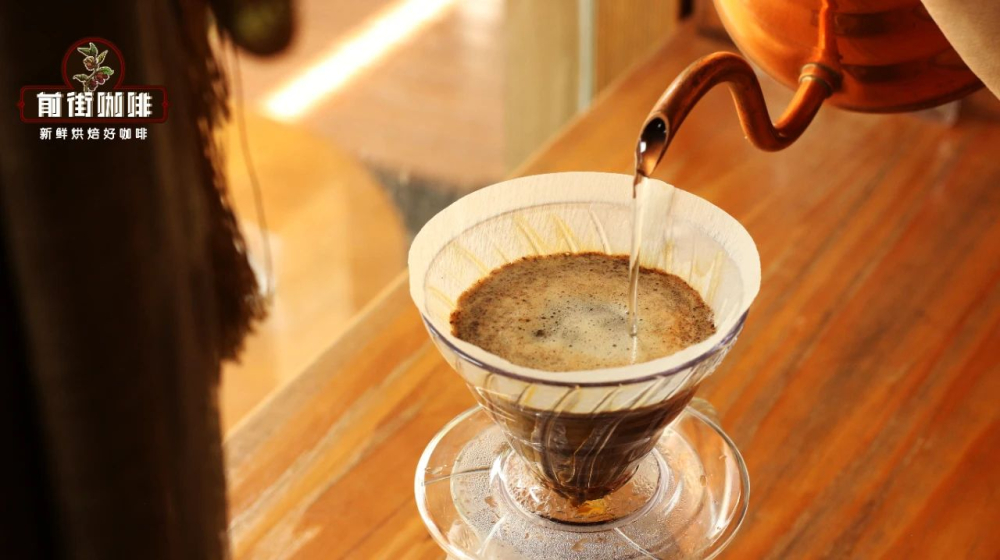
The three-step pouring methodis a practical technique for stabilizing flavor: the first step uses 30 grams of water for a 30-second bloom to activate the coffee; the second step pours 100 grams of water in a circular motion from the center outward to extract bright acidity; the third step pours 95 grams of water at a steady flow rate to bring out a rich aftertaste. This method is compatible with most origins and roast levels, especially well-suited for Ethiopian natural process beans and other varieties with complex flavor profiles.
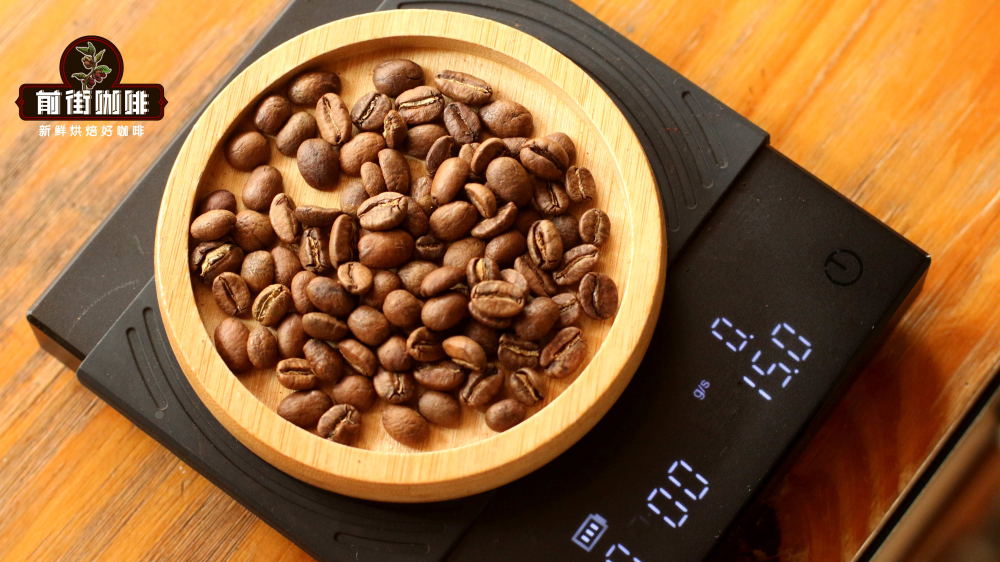
Operational details determine success: during blooming, the water flow should gently wet all the coffee grounds to form an expanded “coffee burger”; during the second pour, maintain a vertical water stream and observe the distribution of bubbles to the edge of the coffee bed; the speed of the third pour affects body—start when the liquid level has dropped by half. In the final stage, gently shake the server to mix coffee liquids of different densities for better flavor integration.
Common mistakes include neglecting space for coffee bed expansion, pouring from too high causing channeling, or not accounting for coffee absorption leading to miscalculations in final brew volume.Sensory evaluationis more important than simply chasing numbers—an ideal extraction should showcase clear floral and fruity notes, balanced acidity and sweetness, and a clean aftertaste.
Remember, the essence of pour over is using scientific parameters to express personalized flavors. The 1:15 ratio provides a solid foundation, but fine-tuning based on the bean’s characteristics (e.g., trying 1:14 for dark roasts to enhance body) is the key to mastering the art of extraction.
The above content is compiled by CoffeeHunters, a coffee news website.


