







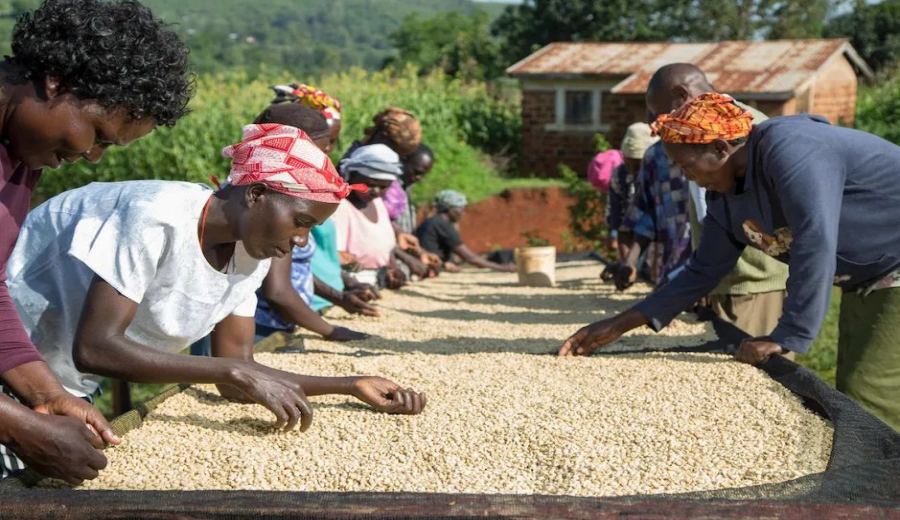
Introduction:Kenyan coffee holds a distinguished place in the global specialty coffee scene for its distinctive berry-like acidity and rich body, supported not only by its exceptional geographical environment but also by a rigorous green bean grading system. This article provides a comprehensive overview of how Kenyan coffee is graded, from the differences between AA, AB, and PB grades, to a tour of six renowned producing regions including Thika, Kirinyaga, and Nyeri. We’ll also analyze their altitudes, varieties, and flavor profiles, and conclude with professional pour over recommendations to help you better understand these captivating East African specialty beans.
Kenyan coffee has long been celebrated for its bright and vibrant acidity and tightly structured body—qualities that stem not only from its advantageous growing conditions but also from its strict green bean grading system. Among African coffee-producing nations, Kenya’s evaluation system is particularly refined, incorporating not just bean size and appearance, but also flavor performance for a comprehensive assessment, making it easier for consumers to find specialty coffees that suit their taste preferences.
Kenya’s main specialty coffee producing regions number six: Thika, Kirinyaga, Mt. Kenya West, Nyeri, Kiambu, and Muranga. Each of these regions has its own characteristics, with notable variations in altitude and a focus on high-altitude-adapted varieties such as SL-28 and SL-34, which contribute to the unique fruity aromas and balanced acidity-sweetness profile of Kenyan coffee.
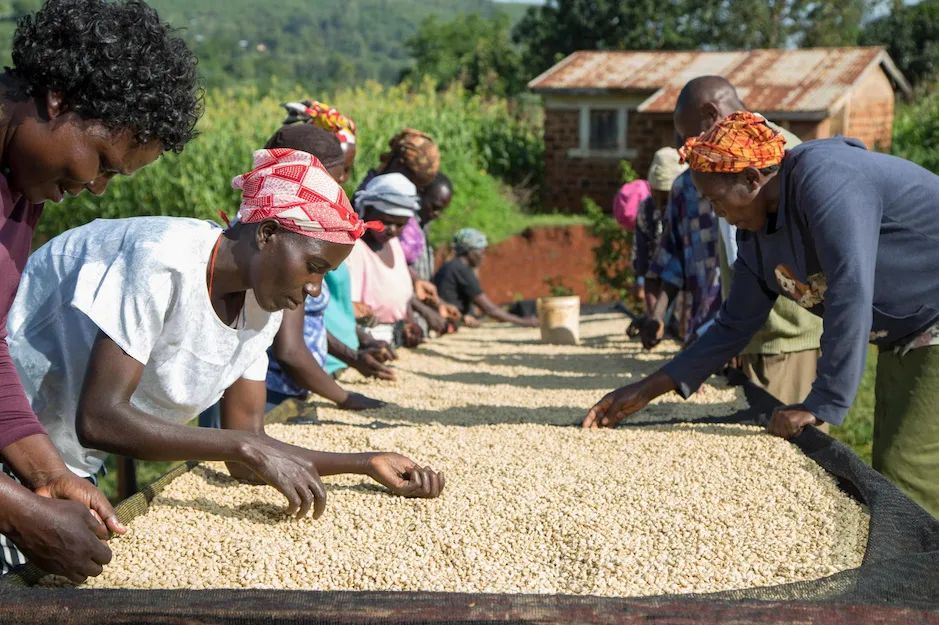
Let’s start with the Kiambu region in central Kenya. Although primarily known for tea cultivation, some areas here reach elevations of 1,850 to 2,200 meters, making it one of the country’s higher-altitude coffee-growing zones. The region features a mixed model of estates and smallholder farms, with two harvests per year. The coffee typically exhibits a clear, bright acidity and a full body, appealing to those who enjoy fruity acidity and bold flavors. Common varieties include SL-28, SL-34, Ruiru11, and Batian.
Thika is an industrial town near the capital Nairobi, surrounded by farmland and natural waterfalls. While its coffee cultivation area is relatively small, it is home to around 2,000 coffee farmers. The region sits at an altitude of about 1,550 to 1,750 meters and is known for producing coffee with bold fruitiness, intense berry-like juice flavors, and honey-like sweetness. The primary varieties grown are SL-28 and SL-34, making it ideal for coffee lovers who prefer distinct fruit flavors and noticeable sweetness.
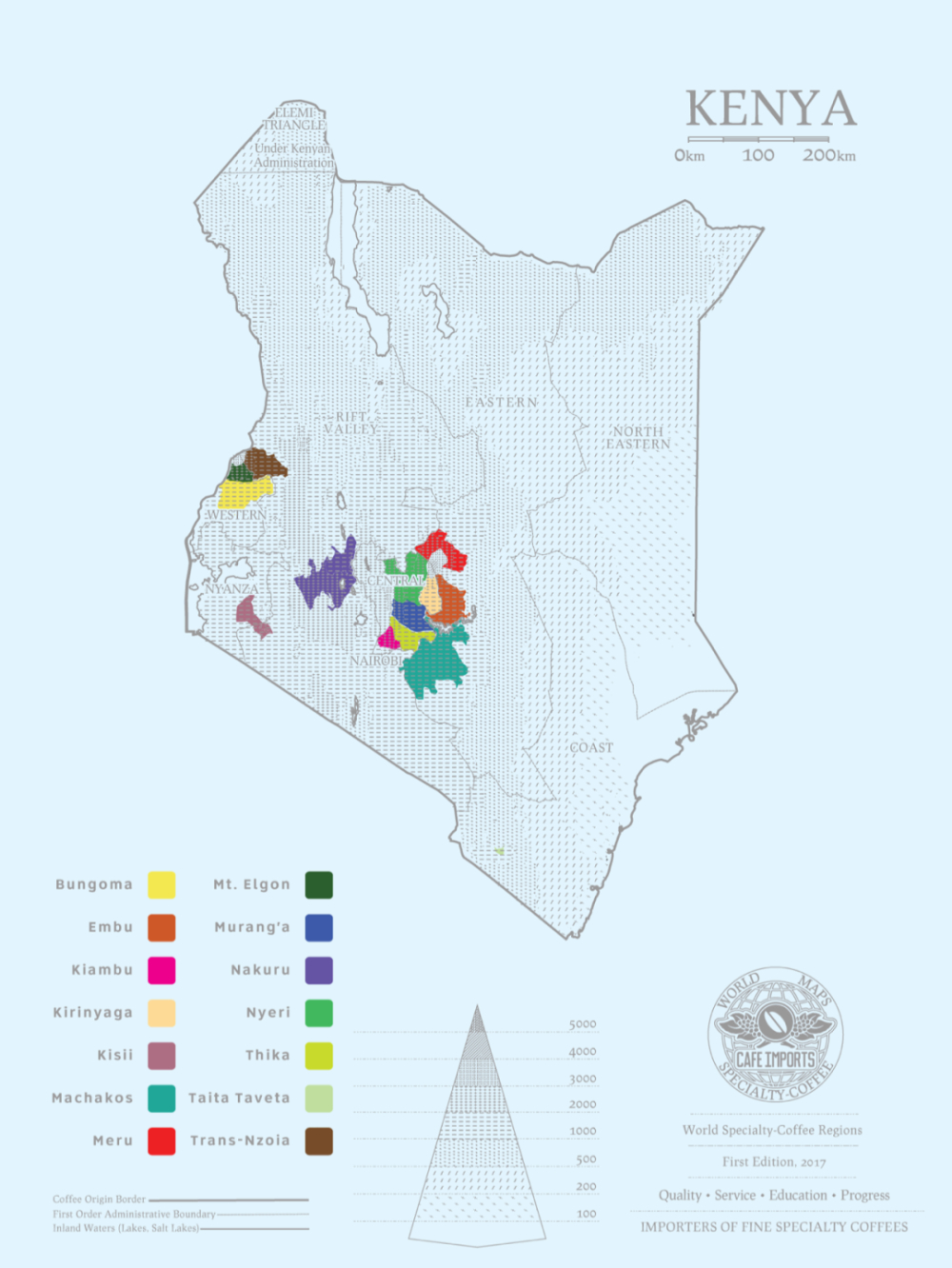
Kirinyaga is located at the foot of Mount Kenya, adjacent to Nyeri, and is one of the world’s most renowned specialty coffee regions. The area is dominated by smallholder farmers who mostly produce and process their coffee collectively through cooperatives, ensuring consistent quality. The harvest season is divided into a main season from October to December and a secondary season from June to August. Cup profiles often feature intense berry notes, complemented by soft honey and creamy finishes, with a well-balanced acidity-sweetness and rich layers. The growing altitude ranges between 1,300 and 1,900 meters, and the varieties are also primarily SL-28, SL-34, Ruiru11, and Batian.
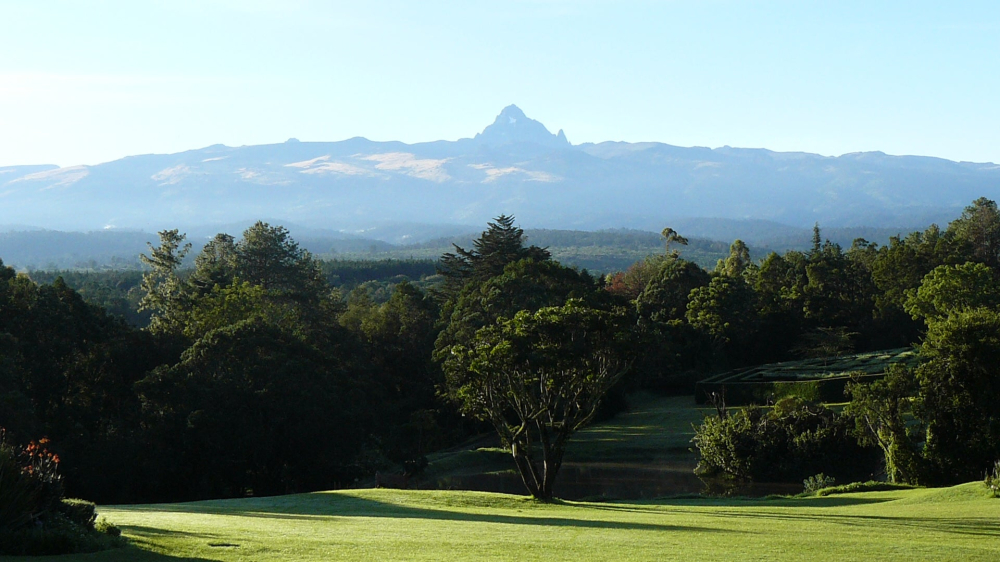
Nyeri is one of the core regions of Kenya’s coffee industry, situated on the eastern foothills of Mount Kenya with an average altitude exceeding 1,500 meters, and some areas reaching up to 2,300 meters. The region boasts fertile soil and a climate highly conducive to specialty coffee production, making it the origin of many top-tier Kenyan beans. Cup profiles often reveal deep berry and dark plum-like bright acidity-sweetness, along with delicate and lingering aftertastes. The varieties are similar to other high-altitude regions, with traditional ones like SL-28 and SL-34 being the mainstays.
Mt. Kenya West encompasses Kisii and Bungoma in the Elgon Highlands. Kisii, located in southwestern Kenya near Lake Victoria, is a smaller-producing region managed collectively by numerous small producers through cooperatives. The coffee flavor profile here differs markedly from central regions, often presenting gentle fruit acidity and roasted nutty notes, making it suitable for consumers who prefer less acidity. The growing altitude is about 1,450 to 1,800 meters, and the varieties are also mainly SL-28 and SL-34.
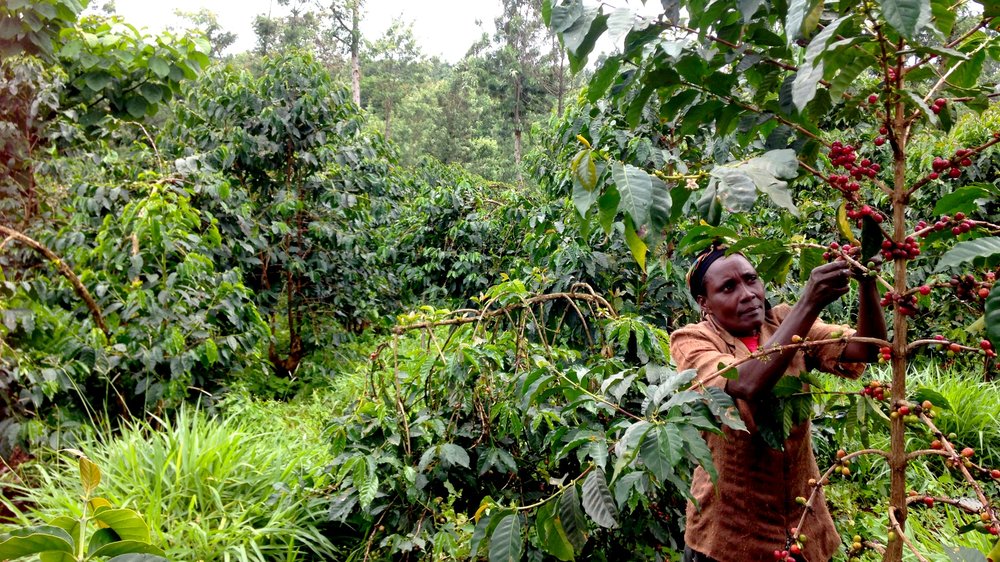
Muranga is an important producing region in Kenya’s Central Province, home to over 100,000 coffee farmers and primarily composed of smallholder operations. The area was among the first to host missionaries and benefits from volcanic soils rich in nutrients, resulting in coffee that generally exhibits bright acidity and a juicy body. Though dominated by smallholders, many high-quality beans come from this region, with clear and layered flavor profiles.
Kenya’s coffee grading system has been highly rigorous since the 1930s, primarily classifying beans by size, shape, and hardness. The grades, from highest to lowest, are AA (or AA+), AB, PB, C, E, TT, and T. Among them, AA grade represents the largest beans, with screen sizes of 17 to 18 (diameter of approximately 6.75 mm or more), while AB beans are sized 15 to 16. Additionally, PB refers to peaberry beans, which are graded separately from flat beans—not due to flavor differences but based on appearance.
Beyond size-based grading, Kenya also employs a flavor-oriented grading system, such as TOP, PLUS, and FAQ, which evaluates factors including green bean appearance, defect rate, cupping acidity, body, and overall flavor performance. In practice, a simplified scoring method is often used, assigning 1–3 points each for Acidity, Body, and Flavor. For example, a score of 1-1-1 indicates a top-tier TOP AA grade.
For brewing recommendations, take the Kenya Assaliya coffee bean as an example—an AA-grade bean from the Thika region, cultivated from SL-28 and SL-34 varieties and processed using Kenya’s signature 72-hour washed method, delivering outstanding flavor. It is recommended to use a V60 dripper, with a brew ratio of 1:15, 15 grams of coffee, water temperature at 91°C, and grind size passing about 80% through a #20 sieve. For pouring, a three-stage method is advised: first, pour 30 grams of water for a 30-second bloom; second, pour in a circular motion for 125 grams, then wait for the water level to drop before pouring up to 225 grams. The total brew time should be around 2 minutes, effectively highlighting its bright plum, cherry tomato acidity, and berry-like aftertaste.
The above content is compiled by CoffeeHunters, a coffee news website.


