







Introduction:Delve into Brazil, the world’s largest Arabica coffee-producing country. Explore its cultivation history, geographical environment, and dominant variety characteristics to comprehensively understand the unique flavor profile and processing techniques of Brazilian coffee beans. This article covers four core producing regions, the detailed differences between yellow Bourbon and red Bourbon, and offers practical pour-over brewing suggestions and extraction parameters to help you master the essence of Brazilian coffee—from bean selection to brewing.
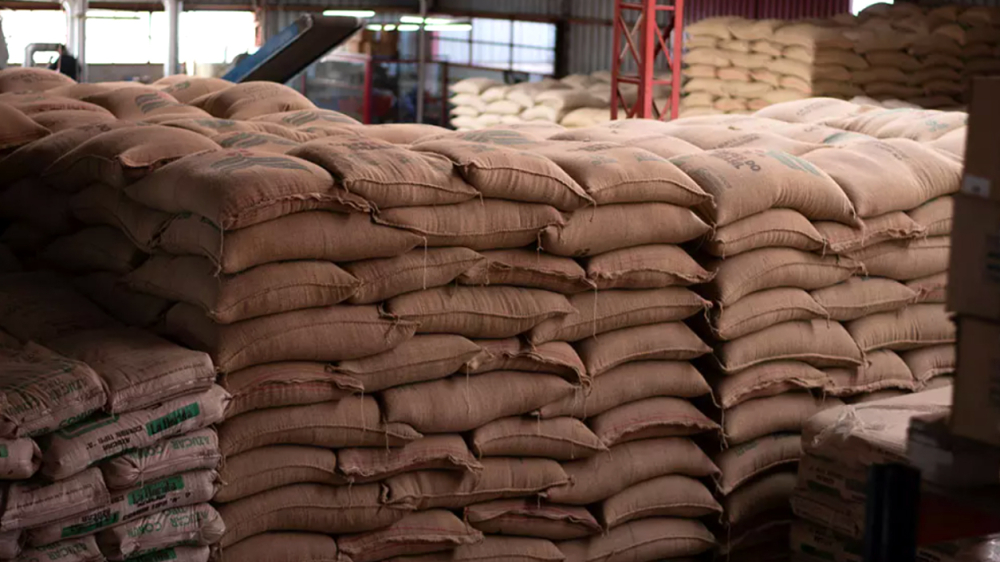
Brazil is not only the world’s largest producer of Arabica coffee, accounting for about 30% of global production, but also exerts significant influence on the international coffee futures market. Due to its stable supply, Brazil’s coffee harvest performance often becomes one of the key factors affecting global coffee prices. Every year, a large volume of Brazilian coffee beans enters the ICE Futures U.S. exchange for grading and storage. When inventories are ample, the price of Arabica coffee in the market usually declines; conversely, it may rise. Therefore, understanding Brazilian coffee is not only an art of tasting but also an important aspect of grasping market trends.
Brazil’s ability to become a major producer of Arabica coffee has a long historical background. As early as the 1720s, a Portuguese military officer from Brazil, Francisco de Mello Palheta, successfully introduced coffee seeds to Brazil from French Guiana through his private connections with the wife of the Governor-General of French Guiana, laying the foundation for the coffee industry in this South American country. Initially, coffee production in Brazil was limited to domestic consumption, but with the spread of coffee drinking habits after the American Revolutionary War, export demand grew rapidly, prompting a significant expansion in Brazilian coffee cultivation. By the mid-19th century, coffee exports accounted for nearly half of Brazil’s total exports, becoming an important pillar of the national economy.
In terms of geographical conditions, almost all of Brazil is located in tropical regions, with warm climates and abundant sunshine, providing an ideal environment for coffee cultivation. However, compared to other Central and South American producing regions, much of Brazil consists of low-altitude, flat terrain areas with less pronounced microclimate variation. This results in more uniform flavors in the coffee beans and a lack of the bright acidity and complex layers commonly found in high-altitude regions. Nevertheless, such conditions foster a rich flavor profile dominated by chocolate and nuts, making it an ideal base for many blends and everyday beverages.
The flavor profile of Brazilian coffee is typically known for being full-bodied and smooth, often with distinct notes of chocolate and nuts. It has low acidity and a mellow aftertaste, making it suitable for drinkers who prefer bold flavors. Whether brewed as a single-origin pour-over or used as the main component in a blend, it demonstrates high stability and balance. It is particularly friendly and accessible for beginners in the coffee world.
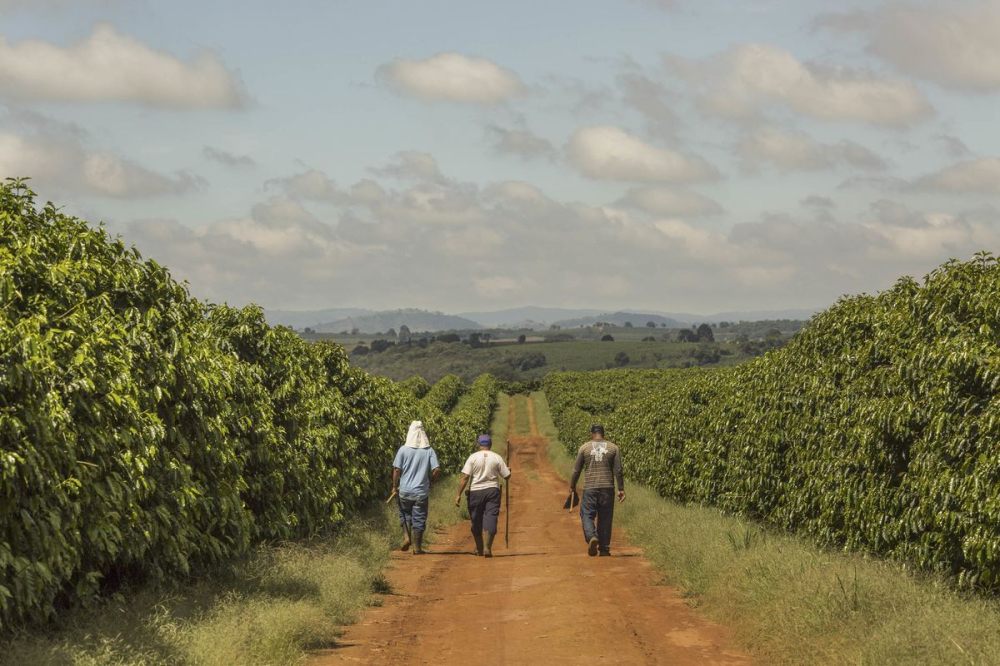
Brazil’s main coffee-producing regions are concentrated in four states: Minas Gerais, São Paulo, Bahia, and Espírito Santo, which together account for over 90% of the nation’s production. Among them, the Cerrado and Sul de Minas regions in Minas Gerais, due to their higher altitudes, are regarded as important sources of specialty coffee. Meanwhile, Mogiana in São Paulo, though known for traditional farms, also produces many high-quality beans thanks to its microclimate and farming culture.
In terms of varieties, the most widely planted in Brazil are variants of the Bourbon family, especially red Bourbon and yellow Bourbon. Red Bourbon coffee cherries ripen to a bright red color, and its flavor often carries a hint of wine-like acidity with a sweet and layered finish. In contrast, yellow Bourbon is a mutation that turns orange-yellow when ripe. This variety, mostly grown at higher altitudes, generally exhibits superior flavor profiles, often featuring notes of nuts, chocolate, and soft caramel sweetness. It has a bright acidity and an overall clean, balanced tone.
When it comes to Brazilian coffee, its unique semi-washed processing method (also known as pulped natural) cannot be overlooked. Given Brazil’s dry climate and large-scale production, traditional sun-drying is prone to dust and off-flavors, while washed processing consumes too much water. Brazilian farmers thus developed a method that combines the advantages of both. The process involves removing the coffee fruit’s skin and pulp, then mechanically removing some of the sticky mucilage, followed by directly drying the parchment-covered beans on patios. This method not only effectively controls drying time and significantly saves water but also retains the coffee’s rich body and sweet complexity.
For coffee enthusiasts who enjoy pour-over brewing, a medium to dark roast of Brazilian coffee can enhance its inherent richness and sweetness while reducing overly sharp acidity. It is recommended to use a medium-coarse grind (such as approximately 75% passing through a 20-mesh sieve) and brew with water slightly below the usual extraction temperature (recommended around 89°C). This helps reduce the risk of over-extraction and highlights the chocolate and nutty aftertaste. Below is a set of proven-effective pour-over parameters suitable for most filter cones such as KONO or V60:
- Coffee dose: 15g
- Water temperature: 89°C
- Grind size: Medium-coarse, approximately 75% passing through a 20-mesh sieve
- Coffee-to-water ratio: 1:15
- Bloom: 30g water, bloom for 30 seconds
- First pour: Pour in small circles up to 125g, then pause briefly
- Second pour: Continue pouring up to 225g, with total extraction time ideally controlled between 2 minutes 10 seconds and 2 minutes
With this extraction method, Brazilian coffee from the Cerrado region often presents a notable sweetness and subtle lemon aroma, accompanied by a rich nutty tone and a black chocolate aftertaste. The overall mouthfeel is round and smooth. The yellow Bourbon from Fazenda Rainha showcases a full-bodied profile of almonds and cocoa, complemented by a natural cane sugar sweetness. It is a bold and layered specialty bean, perfect for coffee lovers who appreciate balanced flavors to further explore.
The above content is compiled by CoffeeHunters, a coffee news website.


