







Introduction:Want to fully experience the berry aroma and rich sweetness of Ethiopian Huakui 8.0 natural sundried coffee beans? This article details its growing region background, unique sundried processing method, and provides practical V60 pour over parameters and three-stage pouring techniques, including key details such as grind size, water temperature, and coffee-to-water ratio, so you can easily master brewing tips and make a high-quality pour over coffee with distinct layers and fruity aroma at home.
Huakui 8.0 coffee, with its distinct berry character and rich sweetness, has long become one of the classic sundried beans favored by many coffee enthusiasts. How should this specialty coffee from Ethiopia’s Guji-Hambella region be brewed to fully showcase its unique flavor profile? This article not only introduces you to the regional characteristics of Huakui and the brilliance of the sundried processing method, but also thoroughly analyzes the industry’s V60 pour over approach, including the three-stage pouring technique, key grind size settings, water temperature control, and ideal coffee-to-water ratio. Each step is clearly explained to help you easily brew a full-bodied coffee at home.
 When selecting coffee beans, in addition to the growing region, the post-harvest processing method is a crucial factor that influences the final flavor. Sundried processing, as the most traditional and historic drying method in Ethiopia, is still widely used in many regions, including Sidamo. This technique involves naturally drying the coffee cherries under the sun, allowing the sugars and flavor compounds in the fruit pulp to fully penetrate the seeds. Sidamo sundried beans generally exhibit a rich, full-bodied mouthfeel, complex sweetness, and smooth texture, accompanied by layered aromas of floral, spice, and intense fruit, with a bright and long-lasting aftertaste.
Compared to washed processing, the fermentation period in sundried processing is longer, and the interaction between the fruit pulp and microorganisms is more thorough. During fermentation, microorganisms produce various volatile compounds, especially esters. Although some sugars may break down during subsequent roasting, through Maillard reactions and caramelization, these can be transformed into more layered aromatic molecules, further enhancing the coffee’s floral and tropical fruit fermentation flavors. For example, the presence of furan compounds contributes to the richer flavor spectrum and more pronounced sweetness of sundried coffee. The supplied Sidamo Huakui is precisely from a sundried batch in Hambella, known for its rich sweetness and berry character, which is highly loved by consumers and frequently repurchased.
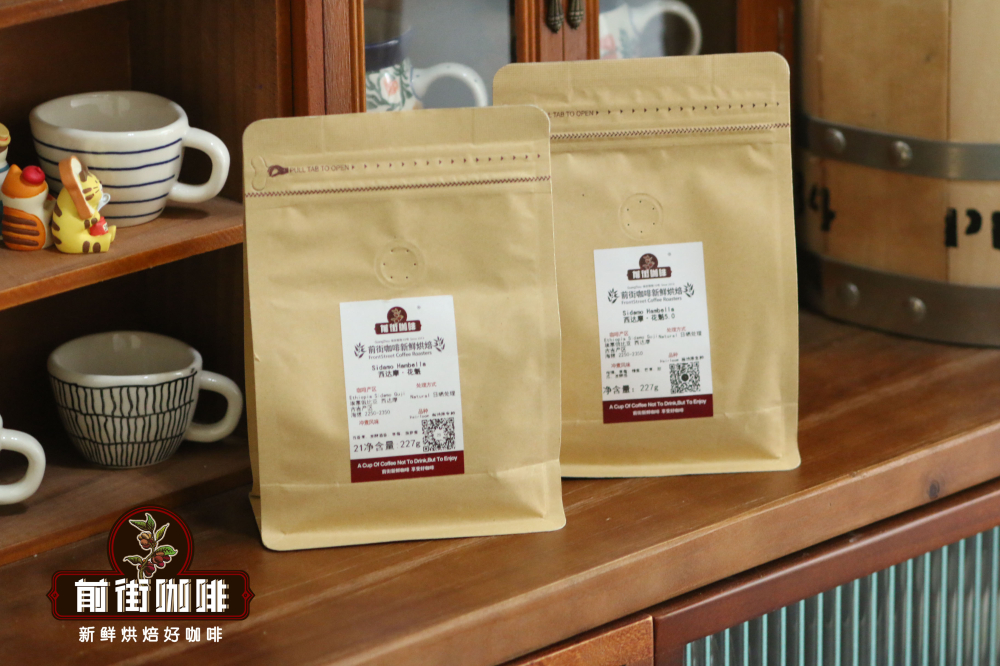 Hambella is located at the border between the Sidamo and Guji regions. Although administratively part of Guji, it sits at a high altitude on a plateau. It is separated from Kochere in Yirgacheffe by a mountain range with an elevation of 3,200 meters, making it one of the highest-altitude coffee sub-regions in Ethiopia. In 2017, DW Company brought locally produced Huakui to participate in Ethiopia’s National Taste of Harvest Competition (TOH) and won the championship. Since then, this coffee bean has garnered global market attention. The name “Huakui” is actually a transliteration of “Hambella,” the name of the region. This batch of Huakui comes from the Buku Abel processing factory in Guji, a sundried batch, where the factory purchases fully red cherries from surrounding farms for unified post-harvest processing and sales.
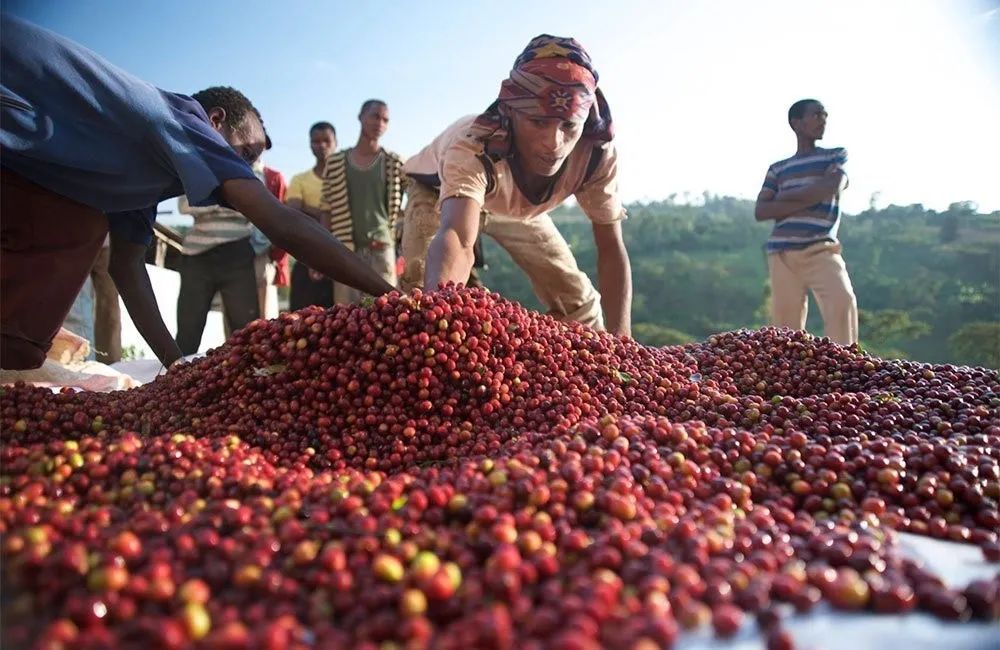
The main harvesting season is from December to January each year. The Buku Abel processing factory strictly requires farmers to pick only mature fully red cherries with a sugar content of 30 or above. After initial screening, the coffee cherries are evenly spread on African raised beds for prolonged sundrying. Due to the large day-night temperature difference in the area, sunshades are added during midday to prevent over-fermentation, and plastic sheets are used at night to avoid rain intrusion. The coffee fruits are constantly turned throughout the sundrying process to ensure even drying and avoid off-flavors from poor fermentation or sunburn. After about 18 days, when the moisture content of the green beans drops to around 13%, mechanical hulling is carried out to complete the primary processing.
To fully showcase the fruity character of Huakui 8.0, the industry opts for medium-light roasting. In cupping, this sundried Sidamo Huakui exhibits a complex dry fragrance of nuts, honey, berries, and slight fermentation notes. Upon tasting, one can distinctly perceive a rich acidity-sweetness balance of passion fruit, strawberry, and cream, with a full body and a soft cocoa aftertaste. The overall flavor profile is rich and layered.
 To successfully brew a cup of Huakui 8.0, in addition to choosing the right beans, suitable equipment and precise parameters are equally indispensable. Basic tools include a pour over kettle, filter cone, server, grinder, filter paper, digital scale, and thermometer. Among them, the choice of grinder and grind coarseness are particularly critical. Common types include hand-cranked and electric, both aiming for uniformly ground particles. Grind size directly affects extraction results: too coarse can lead to under-extraction and a thin taste; too fine may over-extract, resulting in bitterness. When calibrating grind size, the Chinese standard No. 20 sieve with a 0.85mm mesh is referenced. For medium-light roasted coffee, a general recommendation is a sieve passing rate of 75–80%. As Huakui 8.0 is a high-altitude medium-light roast bean, to fully release aromatic compounds, a setting of approximately 80% passing rate through a No. 20 sieve is used, equivalent to around grind setting 10 on the EK43s grinder, presenting a granularity similar to fine sugar.
Water temperature is also a core factor affecting extraction efficiency. Higher water temperatures can increase extraction yield and release more flavor compounds, but exceeding the appropriate range can easily bring out excessive bitterness and off-flavors. Generally, medium-dark roast beans are recommended to use water temperatures controlled at 87–90°C, while light roast beans need to be increased to 91–93°C to fully stimulate aroma. It is recommended to use hot water at 92–93°C for Huakui 8.0 to balance the expression of acidity and sweetness.
In terms of filter cone selection, the V60, with its unique flow-guiding ribs and large central hole, accelerates water flow-through and extends the contact time between coffee grounds and water. Coupled with its spiral venting grooves, it allows for a longer water flow path, resulting in a more distinct layered extraction—especially suitable for extracting high-aroma, high-sweetness sundried beans like Huakui.
For coffee-to-water ratio, a range of 1:15 to 1:16 is recommended, adjustable according to personal taste: those who prefer a stronger taste can choose 1:15, while if you want the floral and sweet notes to be clearer, 1:16 is advised, allowing the overall flavor to unfold more naturally.
For beginners in pour over brewing, it is recommended to use the classic three-stage pouring method, which helps release flavor compounds more steadily, enhances layering, and avoids over-extraction. Taking 15 grams of coffee grounds and a total water volume of 225 milliliters as an example, the three-stage pouring is suggested as 30 ml, 95 ml, and 100 ml, corresponding to the scale readings of 30 g, 125 g, and 225 g. The specific steps are: first fold and wet the filter paper to fit snugly against the filter cone, discard the pre-wetting water, then place the coffee grounds and gently tap to level. The first stage involves pouring 30 grams of water for a 30-second bloom; the second stage is stable circular pouring up to 125 grams, and when the liquid level drops to half, proceed to the final stage pouring up to 225 grams. The total extraction time is about 2 minutes, which can fully bring out Huakui’s berry aroma and rich sweetness.
The above content is compiled by CoffeeHunters, a coffee news website.


