







Introduction:An in-depth exploration of the unique charm of Costa Rican honey-processed coffee—from its eight major producing regions, the three key differences in honey processing methods, to the flavor profiles of yellow honey, red honey, and black honey, along with pour over brewing recommendations. This guide will help you fully understand this celebrated Central American specialty bean known for its sweetness. Whether you’re new to honey processing or looking to refine your brewing skills, this guide offers practical insights.
Costa Rica is globally renowned for its honey-processed coffee, whose distinctive sweetness and rich body have made it a classic favorite among specialty coffee enthusiasts. This article will take you through an analysis of its regional background, variety characteristics, altitude classification, as well as the techniques and flavor differences of the three main types of honey processing, while also providing expert pour over parameters to help you fully grasp this captivating coffee.
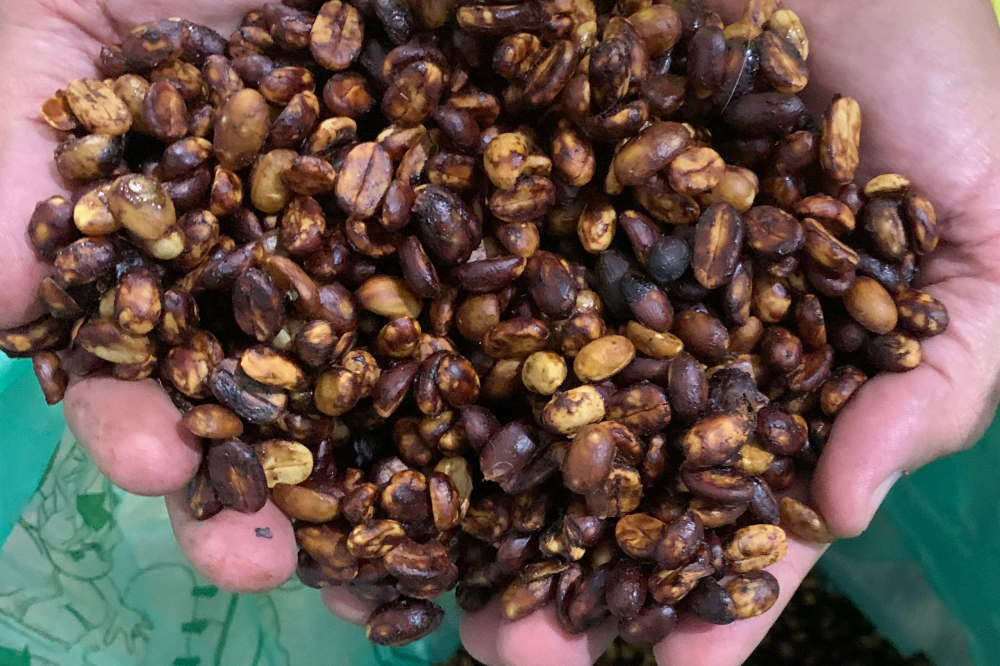
Honey processing ≠ adding honey! Although the name includes the word "honey," it actually refers to the natural mucilage found in the coffee fruit pulp. During processing, after removing the skin, some or all of the mucilage is retained, then dried under sunlight so the beans can absorb the sugars from the mucilage, resulting in intense sweetness and aroma. This technique was first widely used in Costa Rica, becoming a hallmark of the country’s processing style.
Costa Rica not only enjoys political stability—having focused on economic development since abolishing its military in 1949—but its coffee industry has also flourished thanks to land policies dating back to 1832. At that time, the government encouraged citizens to plant coffee on unused land, with successful growers earning ownership of the land, leading to the proliferation of private specialty farms seen today.
The country benefits from exceptional geographical conditions, including terrain extending from the Andes Mountains, moist sea breezes from both the Pacific and the Caribbean, and fertile volcanic soil, all of which provide an ideal foundation for coffee cultivation. Honey processing further enhances the coffee’s inherent sweetness by preserving the mucilage and controlling sun exposure, allowing sugars to fully develop and resulting in a cup profile that is distinctly fruity and sweet.
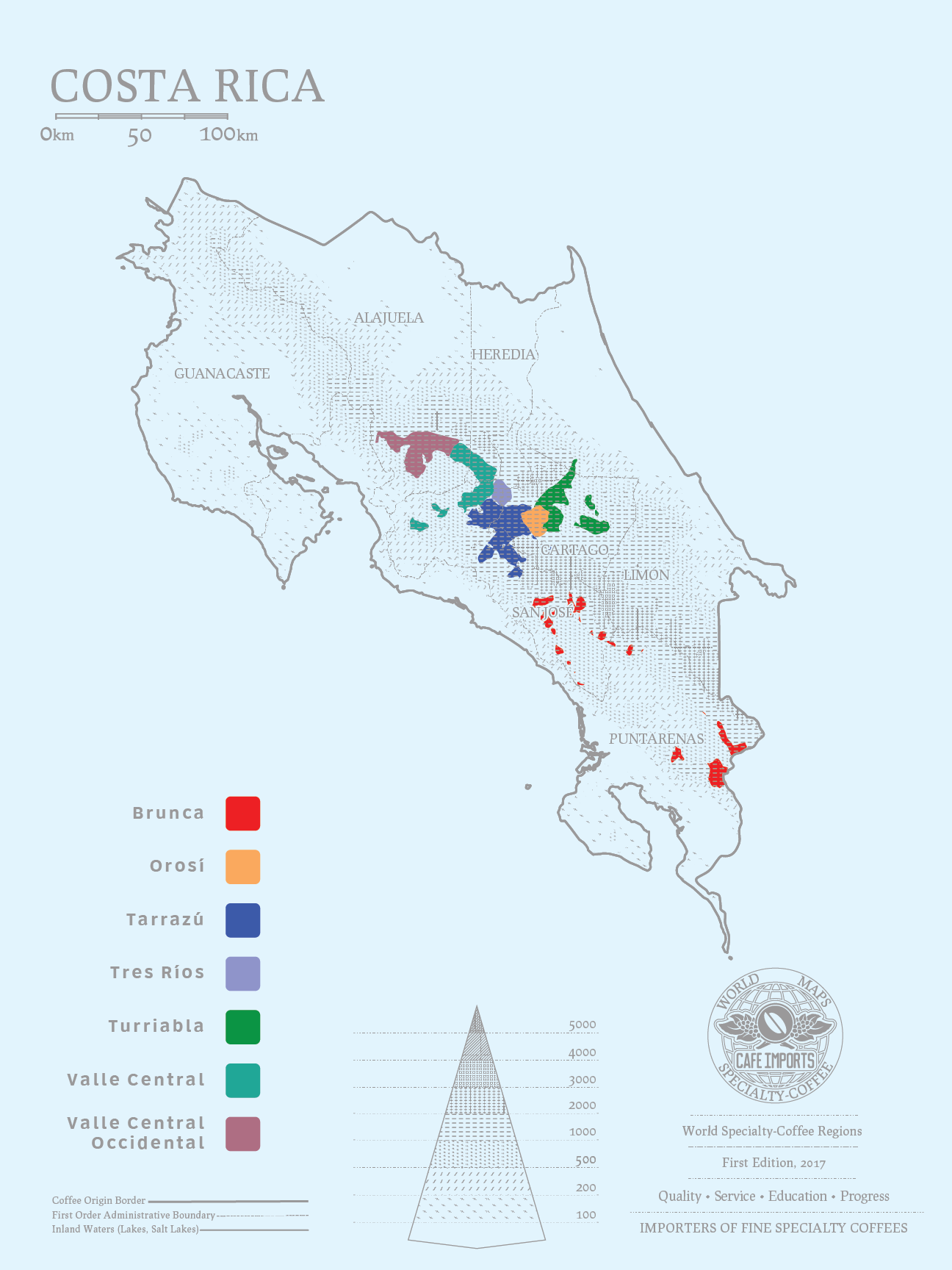
Costa Rica has eight well-known producing regions, including the West Valley, Central Valley, Tarrazú, Tres R
In terms of varieties, Costa Rica primarily grows Bourbon-type coffees such as Bourbon, Caturra, and Catuaí, along with a small amount of Geisha. In addition, the region has cultivated two unique varieties—Villa Sarchi and Villalobos. Villa Sarchi is a natural mutation of Bourbon, known for its complex aromas and suitability for medium to dark roasts. It often exhibits fragrances of perfume, honey, and cherries, with a slight spicy note. Villalobos, on the other hand, originates from Typica. It is wind-resistant and thrives in poor soils, performing well at high altitudes. Its flavor profile is highlighted by sweetness and good acidity.
Costa Rica classifies its coffee into three grades based on altitude: SHB (Strictly Hard Bean, above 1500 meters), GHB (Good Hard Bean, 1100–1200 meters), and HB (Hard Bean, 1000 meters). Among these, SHB is the most common high-quality Costa Rican coffee on the market, as the high-altitude environment slows the bean's growth, resulting in bright acidity and intense flavors.
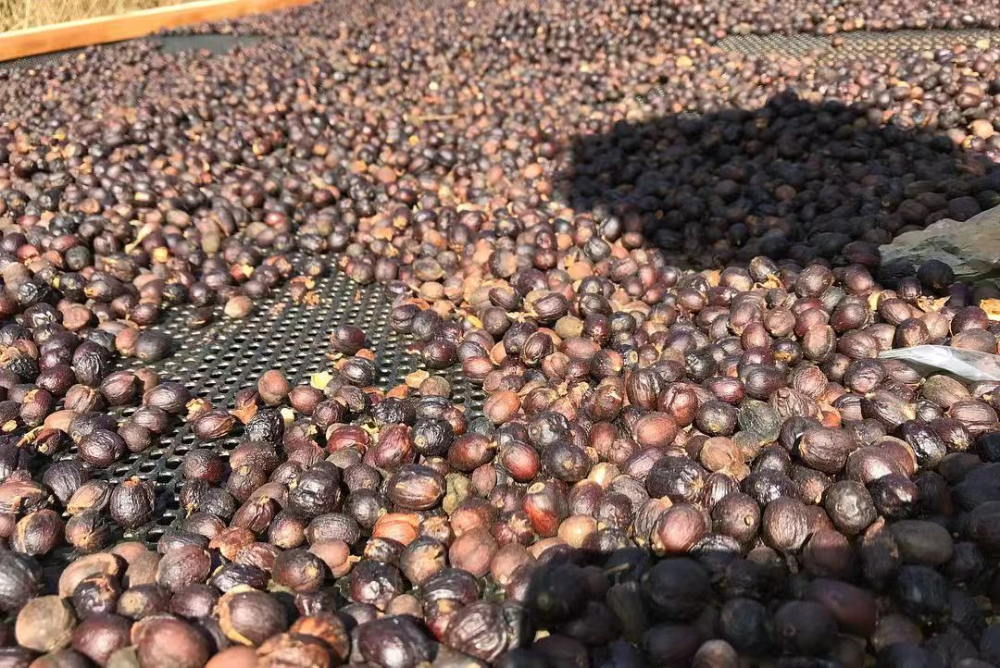
The Honey Process (also known as Miel Process) is a hallmark technique of Costa Rica. The main difference from the washed process is that it retains the mucilage during drying without washing it off. This method emerged due to water resource limitations but unexpectedly developed into a process that delivers richer sweetness and body. Depending on the proportion of mucilage retained and the drying method, it is categorized into three types: Yellow Honey, Red Honey, and Black Honey.
Yellow Honey: Approximately 40% of the mucilage is removed, and it is dried with maximum sun exposure, taking about 8 days to complete. The flavor is relatively bright, with noticeable sweetness but a simpler profile.
Red Honey: About 75% of the mucilage is retained, with reduced direct sunlight exposure, extending the drying time to around 12 days. It offers more abundant sweetness and fruity notes, with a good balance between acidity and body.
Black Honey: Nearly 80% of the mucilage is retained, using shading to avoid intense sunlight. It has the longest drying time (at least two weeks), resulting in the most intense flavors, often featuring rich fermentation aromas, black sugar sweetness, and dark fruit characteristics.
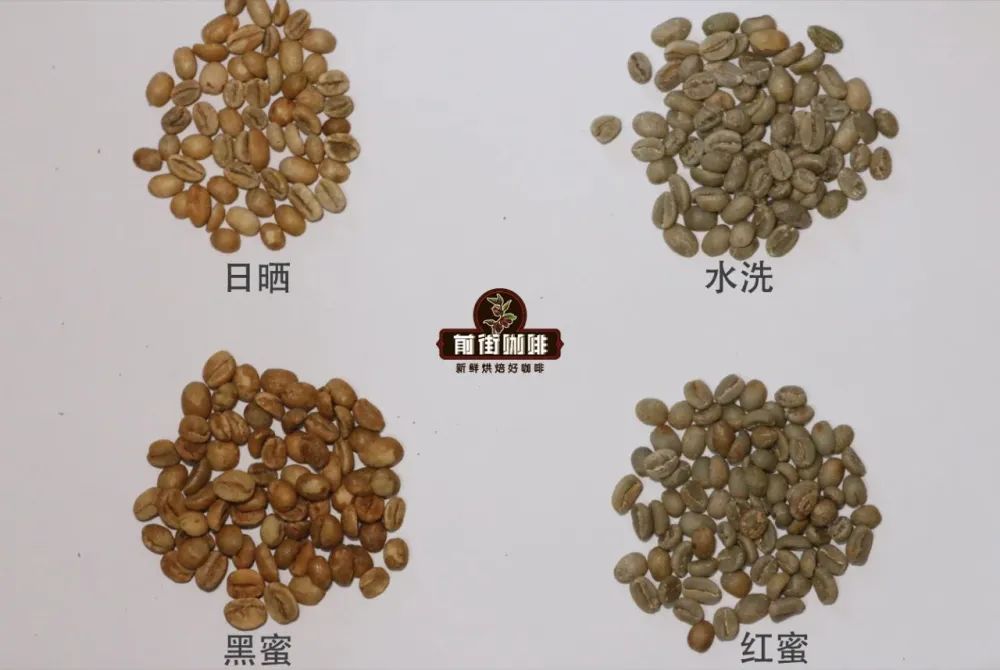
The three types of honey processing each have distinct flavor profiles:Sweetness ranking: Black Honey > Red Honey > Yellow Honey;Clarity: Yellow Honey > Red Honey > Black Honey;and overall balance is relatively similar between Red Honey and Yellow Honey, while Black Honey leans more toward intense and complex flavors. In cupping tests, Yellow Honey often showcases citrus, honey, and gentle caramel notes; Red Honey presents a rich array of flavors such as pineapple, cream, maple, and raisin; while Black Honey excels with intense plum, raisin, and fermented wine-like aromas, making it ideal for coffee lovers who prefer deep and complex profiles.
It’s worth noting that the Honey Process demands extremely high-quality raw materials, requiring the selection of flawless ripe red cherries. Otherwise, undesirable fermentation off-flavors—such as onion, durian, or chemical-like tastes—may emerge. Additionally, the precision of the mucilage removal machine also affects the final flavor. Strict control over the mucilage retention ratio is essential to achieve optimal sweetness and clarity.
For brewing, it is recommended to use a V60 filter, with 15 grams of coffee, water temperature at 90°C, a brew ratio of 1:15, and a grind size of 80% through a #20 sieve. Use a three-stage pouring method: the first stage involves 30 grams of water for a 30-second bloom, the second stage pours in a circular motion up to 125 grams, and the third stage continues pouring up to 225 grams, with a total extraction time of about 2 minutes. These parameters can fully highlight the sweetness and layers of honey-processed coffee, making it suitable for those seeking balanced and fruity flavors.
The above content is compiled by CoffeeHunters, a coffee news website.


