








Introduction:The moka pot is a popular and efficient brewing tool in many households, capable of quickly producing rich-tasting coffee. However, to brew a delicious cup, every step—from understanding how it works, selecting the right coffee beans, to controlling grind size and heat—plays a role in shaping the final flavor. This article details the pros and cons of the moka pot, outlines the correct operation process, and recommends several medium-to-dark roasted coffee beans with cocoa and chocolate flavor profiles to help you avoid common mistakes and brew an ideal cup with rich crema and a smooth body.
Thanks to its simple operation and bold coffee flavor, the moka pot has become a daily choice for many households and coffee enthusiasts. But if you want to consistently brew smooth and aromatic moka pot coffee, simply following the three steps of “adding water, adding coffee grounds, and heating” isn’t enough. Understanding how the moka pot works, choosing the right type of coffee beans, mastering the appropriate grind size and heat control—all are key factors that influence the final flavor. This article will take an in-depth look at the principles, pros and cons of the moka pot, and recommend several cocoa-flavored coffee beans suitable for use with the moka pot, teaching you how to avoid common failures and brew a good cup with rich crema and a silky texture.

Nowadays, more and more coffee drinkers are seeking bold and rich flavors, and the moka pot happens to provide this easily accessible espresso-like experience, which is why it’s gaining popularity. Many influencers or coffee bloggers share images of their moka pots producing thick crema, which looks very appealing. However, many people encounter various issues during actual use, such as lack of crema or overly burnt and bitter flavors. So what’s the problem? It might be that you haven’t yet mastered the correct way to use the moka pot.
To brew great moka pot coffee, the first step is to understand how it works. The moka pot was invented in the 1930s by the Italian Alfonso Bialetti, and its inspiration reportedly came from his wife’s washing machine. The old-style washing machine had two layers with a tube connecting them—the lower part held detergent, the upper part held clothes, and when heated, the liquid would rise through the tube and evenly sprinkle onto the clothes. Bialetti applied this structure to coffee making, designing the classic moka pot.
The moka pot mainly consists of an upper chamber, a coffee basket, a lower chamber, and a metal tube that runs through both. When you heat the water in the lower chamber, it gradually boils and generates steam. This steam creates pressure in the sealed space, pushing the hot water through the coffee grounds in the middle and up the metal tube, eventually reaching the upper chamber to form a strong cup of coffee.
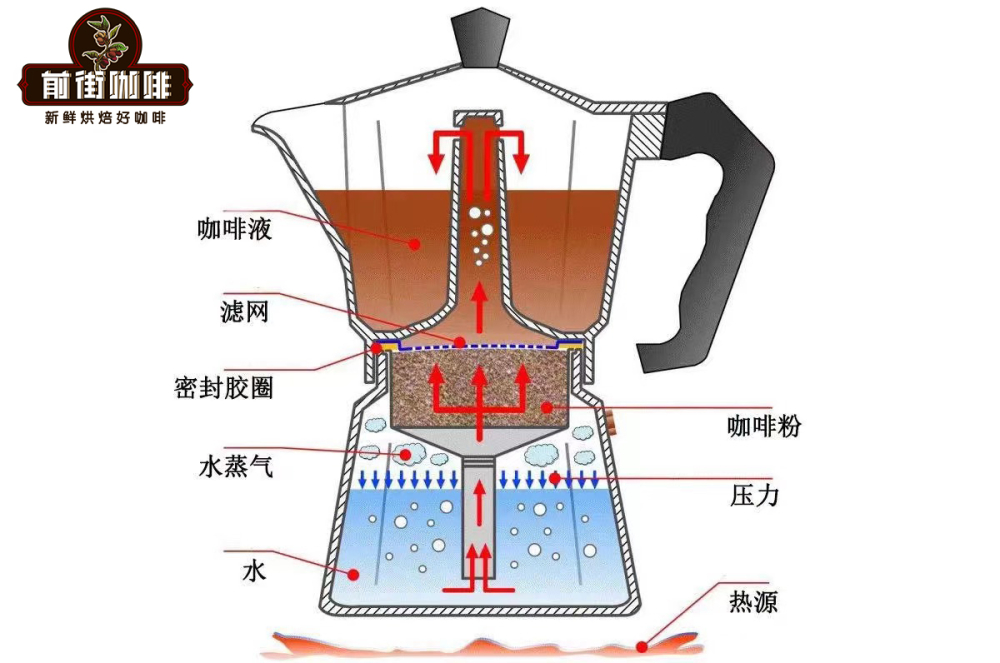
Although operating a moka pot may seem simple—just add water, coffee grounds, and heat—it is fundamentally different from commercial espresso machines. Typical commercial machines extract coffee at a pressure of at least 9 bar, while a moka pot usually only generates around 1–2 bar of pressure. Therefore, what it produces is not true espresso, but it can deliver a similarly intense flavor. So, what kind of coffee beans are suitable for the moka pot?
If you’re aiming for the bold and rich character unique to the moka pot, it’s recommended to choose medium-to-dark or dark roasted coffee beans. These beans can better showcase rich caramel, cocoa, and chocolate notes. In addition, because the moka pot uses pressurized extraction, using freshly roasted coffee beans helps release more aroma and crema. Below are several coffee beans that have performed exceptionally well in our tests:
① Classic Blend Coffee:A dark roast that fully highlights a bold coffee aroma and easily extracts fine and dense crema. Suitable for drinking straight, diluting with water for an Americano, or adding milk for a latte. It can even serve as a base for specialty drinks, offering great value for money.
② Commercial Blend Coffee:Also a dark roast, its flavor profile closely resembles the espresso typically served in cafes. It performs well in crema production, whether used for an Americano or a latte, delivering a bold flavor.
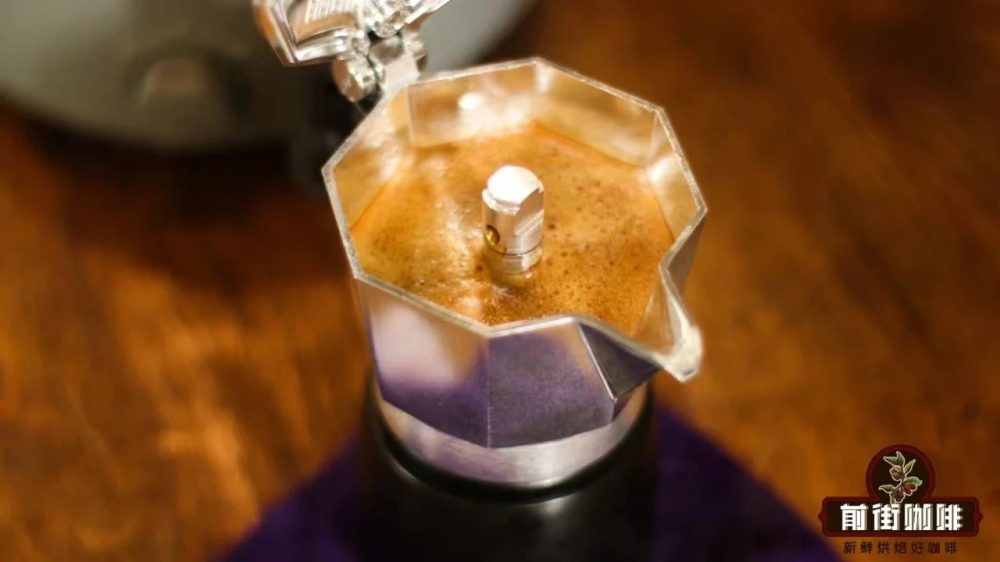
③ Brazilian Queen Estate Coffee:Medium-to-dark roasted, featuring flavors of roasted peanuts, cocoa, chocolate, and creamy notes. When brewed with a moka pot, the crema carries a distinct nutty aroma, with a balanced taste and soft fruity acidity.
④ PWN Golden Mandheling Coffee:A dark roast with flavor characteristics including pine, black cocoa, nuts, herbs, and sweet caramel. When brewed with a moka pot, the crema is fine, and the Americano has a rich body with low acidity.
In terms of grind size, the moka pot recommends using coffee grounds as fine as flour, with particle size approximately between 0.3 mm and 0.55 mm—slightly coarser than what is typically used in standard espresso machines. Since it’s hard to judge precisely by eye, you can adjust in two ways: one is to purchase a dedicated grind size ruler or moka pot-specific demonstration grind for comparison; the other is to make gradual adjustments based on the extraction results. If the coffee flows out in a fountain-like manner too quickly, it means the grind is too coarse and there’s insufficient resistance; if you hear a low humming sound but the coffee is not rising, the grind may be too fine—you should immediately turn off the heat and move away from the heat source to ensure safety.

During moka pot extraction, the lower chamber is in a high-pressure and high-temperature sealed environment, so safety cannot be overlooked. Carefully observing the bottom of the moka pot, you’ll notice a small protruding hole—that’s the pressure relief valve, whose main function is to release excess steam when the pressure gets too high, preventing explosion risks. Therefore, when filling water, be sure not to exceed the level of the pressure relief valve, otherwise its protective function will be compromised, significantly increasing the risk of use.
The above content is compiled by CoffeeHunters, a coffee news website.


