







Introduction:Hawaiian Kona coffee is renowned for its refined flavors and prestigious origin, making it one of the most sought-after specialty coffees among global coffee enthusiasts. This article delves into the geographical and climatic characteristics of the Kona region, analyzes its main coffee varieties and processing methods, and details professional pour-over brewing parameters and operational specifics to help readers master brewing essentials and elevate their tasting experience.
Hawaii is not only famous for its sunshine, beaches, and tourism but is also one of the few regions in the United States capable of growing high-quality Arabica coffee. Among them, Kona coffee stands alongside Jamaican Blue Mountain as one of the world’s top-tier specialty coffees. This coffee from Hawaii’s Big Island is highly praised for its consistently excellent flavor profile, nutty notes, and refreshing fruit acidity.
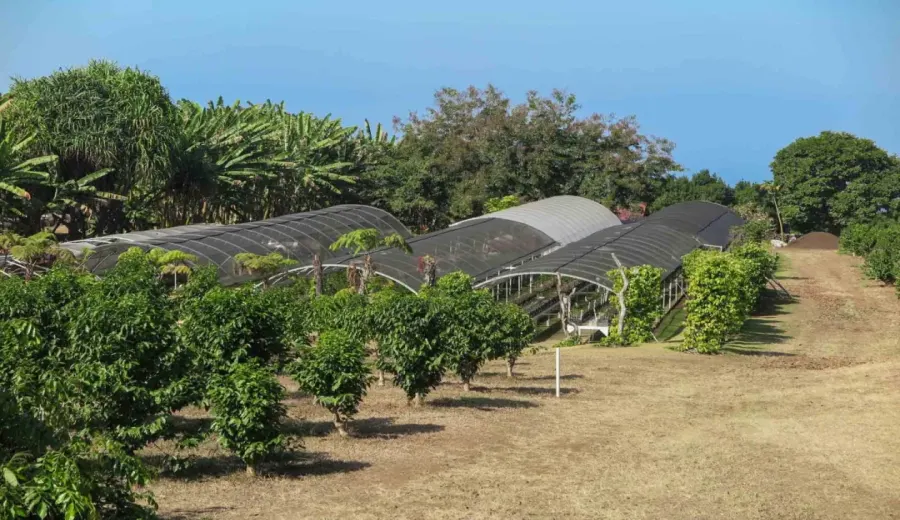
Kona coffee is primarily grown in the Kona district of Hawaii’s Big Island, particularly concentrated on volcanic slopes. The soil here, formed through ancient volcanic activity, is rich in organic matter and minerals. Coupled with moderate altitude and temperature variations, these conditions create an ideal environment for cultivars such as Typica and Catuai. Together, these factors contribute to the delicate and complex flavor profile of Kona coffee.
In multiple cuppings, Kona coffee often exhibits round, full beans with glossy surfaces and uniform coloration, closely linked to the careful management and strict selection by local farmers. Its flavor profile typically builds on a nutty base, accompanied by soft wine-like acidity and subtle spicy notes. The cup finishes with pronounced sweetness, high overall balance, and a freshness in acidity rarely seen in lower-altitude coffees — a standout feature.
Although the altitude of the Kona region is not as towering as some well-known producing areas in Central and South America or Africa, its microclimate and meticulous cultivation techniques compensate for the elevation, allowing the beans to maintain exceptional quality potential. However, the region faces new challenges in recent years. It was reported that in 2023, the presence of coffee leaf rust was detected in the Kona area for the first time. This disease can severely damage coffee tree health and even lead to plant death. As the rust spreads via wind, once it becomes widespread, it could have a long-term impact on the local coffee industry.
Coffee leaf rust has long posed a threat to the global coffee supply chain. For instance, in the early 20th century, it caused massive losses of Arabica varieties in West Java, Indonesia. If Hawaii fails to effectively manage the situation, both the yield and quality of Kona coffee may be significantly affected, which could drive up market prices and place it in the same high-end specialty category as Jamaican Blue Mountain.
The reason Kona coffee enjoys such high recognition goes beyond its flavor profile; it also stems from its visual characteristics. Grown in nutrient-rich volcanic soil, supported by balanced rainfall and sunlight, along with rigorous oversight during cultivation and harvesting, Kona coffee beans are known for their perfectly round, plump shape and glossy appearance, earning them the reputation of being “among the most beautifully shaped coffee beans.”
In terms of processing methods, Kona coffee mostly uses the washed process. After harvest, the coffee cherries are first stripped of their outer skin and pulp, then the mucilage-covered beans are placed in water tanks for fermentation to break down the remaining pulp layer. They are then thoroughly rinsed with clean water and spread out on sun-drying patios to dry. Notably, the Kona region uses clean, sweet mountain spring water from the volcanic mountains for washing — a factor believed to be key in shaping the bright and clear flavor unique to Kona coffee.
For this delicate and layered coffee, it is recommended to use a three-stage pour-over technique to fully bring out its potential. First, adjust the grind size to medium-fine (approximately like fine sugar), and it is suggested to use a KONO filter to stabilize flow rate and extraction. The water temperature is advised to be controlled at 89 to 90°C . This temperature helps highlight the acidity and subtle aromas of Kona coffee without over-extracting unwanted impurities.
During the pour-over process, the total brew water volume is recommended to be 225 grams, divided into three pours: first, pour a small amount of hot water for the bloom (about 30 grams) to initiate aroma release from the coffee grounds; after letting it sit for about 30 seconds, begin the first pour by slowly circling the water to reach about 125 grams. This stage focuses on stable diffusion. Then, when the water level drops to about half, proceed to the second pour, slowly adding water up to 225 grams. The total brewing time is advised to be around 2 minutes. Maintain a steady water flow throughout, avoiding pouring too quickly or forcefully, so as not to affect the balance of flavors.
A successfully brewed cup of Kona coffee offers an initial nose of distinct berry and light sweetness. On the palate, the acidity is refreshing, with hints of citrus and spice, while the finish is round and carries a lingering sweetness. The delicate mouthfeel and clear layers allow this coffee to showcase its pure flavor charm even without added sugar or milk.
In summary, Hawaiian Kona coffee is not only a product of its geography and climate but also a crystallization of refined agronomy and traditional techniques. Understanding its regional characteristics, variety background, and processing methods, paired with appropriate brewing techniques, allows you to more deeply appreciate this coffee treasure from the volcanic islands of the Pacific.
The above content is compiled by CoffeeHunters, a coffee news website.


