







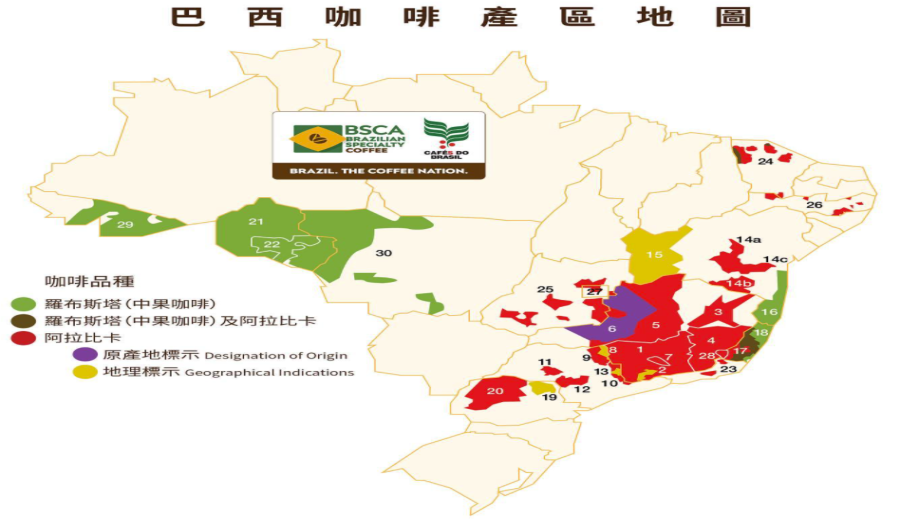
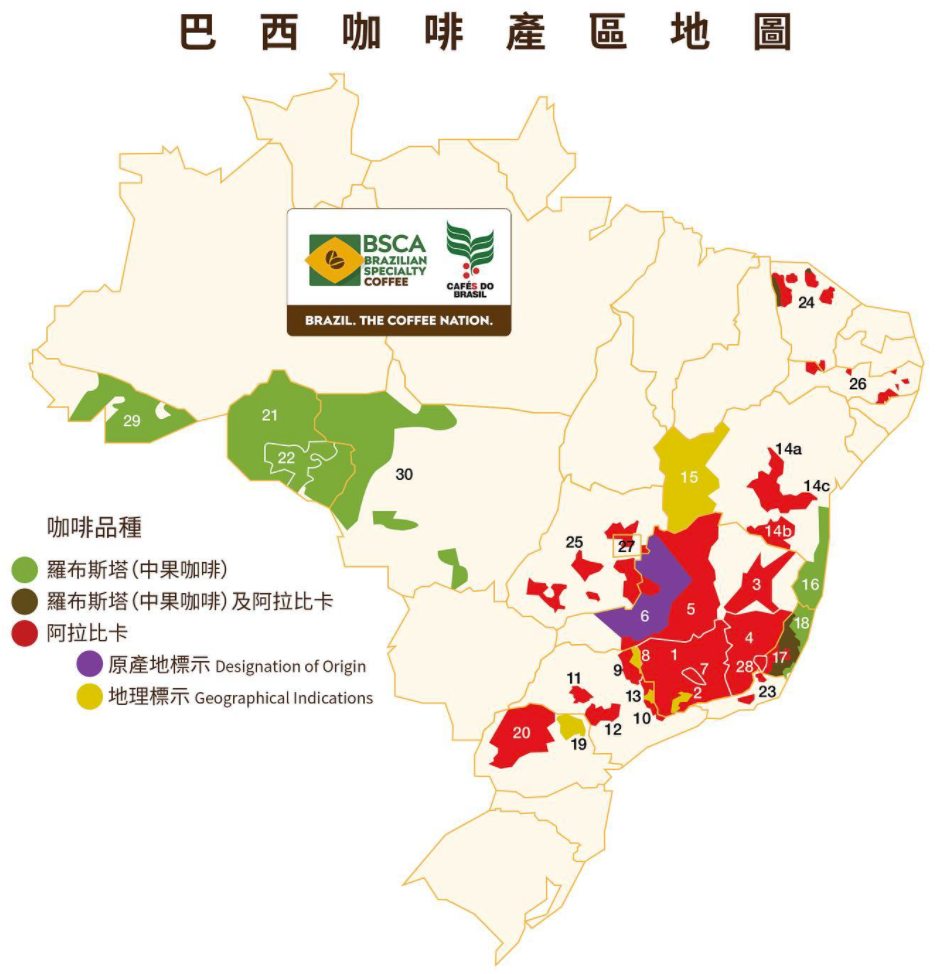
Introduction:Brazil is not only the world’s largest coffee producer but also boasts diverse flavor potential. This article delves into Brazil’s major coffee-growing regions, classic varieties, and its unique green bean grading system, while offering practical pour over recommendations and parameters to help you explore the essence of Brazilian flavors through a single-origin cup.
As a country accounting for over one-third of global coffee production, Brazil holds a pivotal position in the coffee world. In addition to producing large quantities of commercial-grade beans, its diverse regions and varieties also nurture many specialty coffees worthy of careful tasting. From Minas Gerais to São Paulo, from flat terrains to hilly terraces, varying environments yield uniquely characteristic coffee flavors. Moreover, its scientific grading system and rigorous quality control are key factors ensuring Brazil’s stable coffee output.
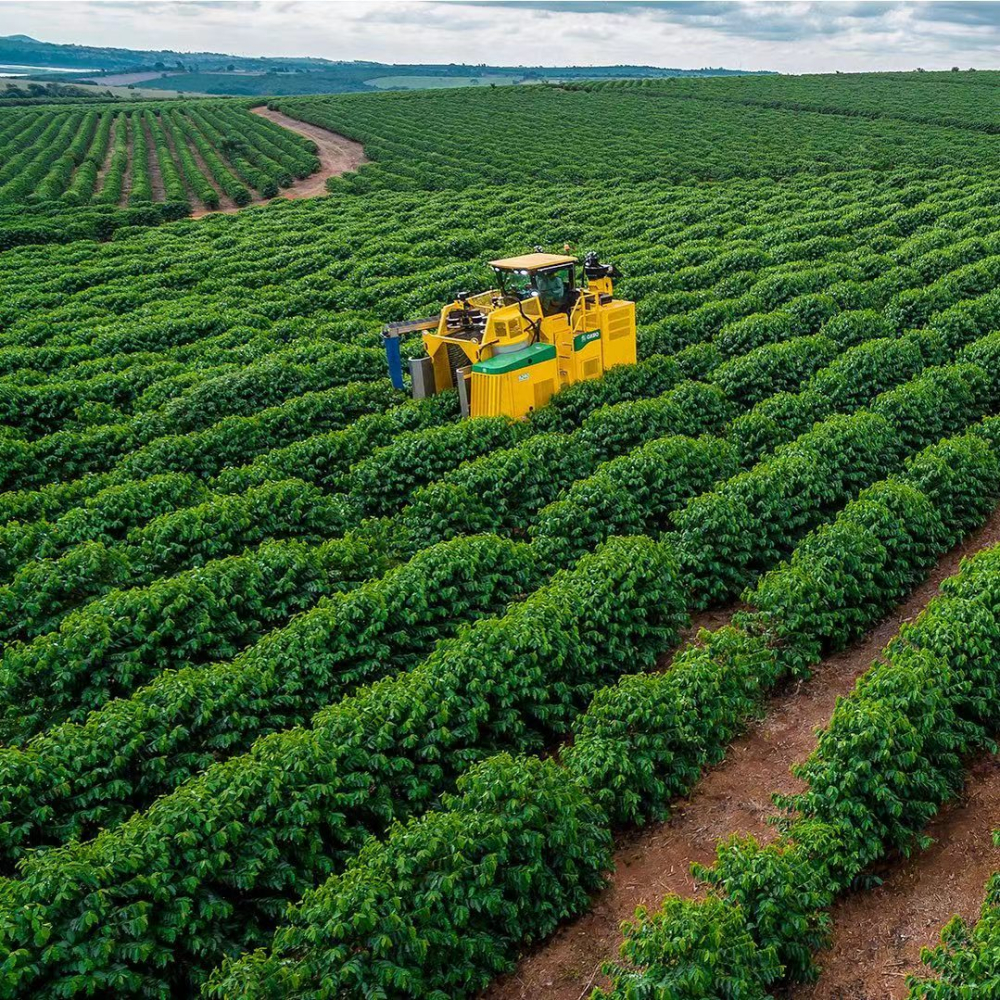
Coffee cultivation in Brazil is primarily concentrated on flat terrains. Unlike many high-altitude, shade-grown regions, the Arabica varieties here have been adapted to direct sunlight and large-scale mechanized operations. Although this planting model results in slightly lower bean density and less complex flavor development compared to high-altitude regions, it ensures stable yields and lower production costs. Especially in the central-western region, vast farms can be harvested in one go using machinery, achieving extremely high efficiency — one of the crucial reasons why Brazil remains the world’s top coffee exporter.
Coffee is grown in 14 states across the country, with seven — including Minas Gerais, São Paulo, and Rio de Janeiro — accounting for 90% of national output. Robusta is more common in the west, whereas the southeastern region is the stronghold of high-quality Arabica, particularly notable in Minas Gerais and São Paulo.
Minas Gerais is Brazil’s highest-producing state, contributing nearly half of the nation’s total coffee output. The state can be subdivided into four main producing regions: Cerrado, Sul de Minas, Chapada de Minas, and Matas de Minas. Among them, the Cerrado area shares its name with Brazil’s famous savannah. With flat terrain and a concentrated harvest period, it is especially suitable for large-scale farm management, with many exporters operating planting bases exceeding ten hectares. In contrast, Sul de Minas, Chapada de Minas, and Matas de Minas feature more rugged terrain, where smallholder farmers and manual harvesting still dominate, often yielding coffee with greater nuance and complexity.
São Paulo State is home to the historic Mogiana region, named after the Mogiana Railway Company established in 1883, which greatly boosted local transportation and coffee trade. Mogiana sits at an elevation of about 900 to 1,100 meters, with an average annual temperature of around 20°C. Its hilly terrain imparts good sweetness and balance to the coffee. Due to terrain limitations, most estates still rely on manual harvesting, resulting in relatively higher refinement. For instance, a brand once released a Queen’s Estate coffee from this area, cultivated with Yellow Bourbon, offering a sweet and clean taste with pronounced tropical fruit aromas, featuring a rich and balanced flavor profile.
When it comes to Brazilian coffee varieties, Red Bourbon, Yellow Bourbon, Mundo Novo, and Catuai are among the most common. Among them, Bourbon is one of the most classic lineages, characterized by relatively short and round fruits and high bean density. Especially in high-altitude environments, it can exhibit bright acidity and rich sweetness. Like Typica, Bourbon requires moderate shading and is more demanding in terms of growing conditions, but this also allows it to accumulate more complex flavor compounds.
As the name suggests, Red Bourbon fruits turn deep red upon ripening, while Yellow Bourbon turns into a rare yellow or pink color upon maturity. These varieties often display more refined aromas and subtle acidity-sweetness balance in high-altitude areas. In fact, Yellow Bourbon has repeatedly received high praise in Brazil’s Cup of Excellence (CoE) competitions, making it a must-try variety for specialty coffee enthusiasts. For example, the Yellow Bourbon used by Queen’s Estate is an outstanding representative.
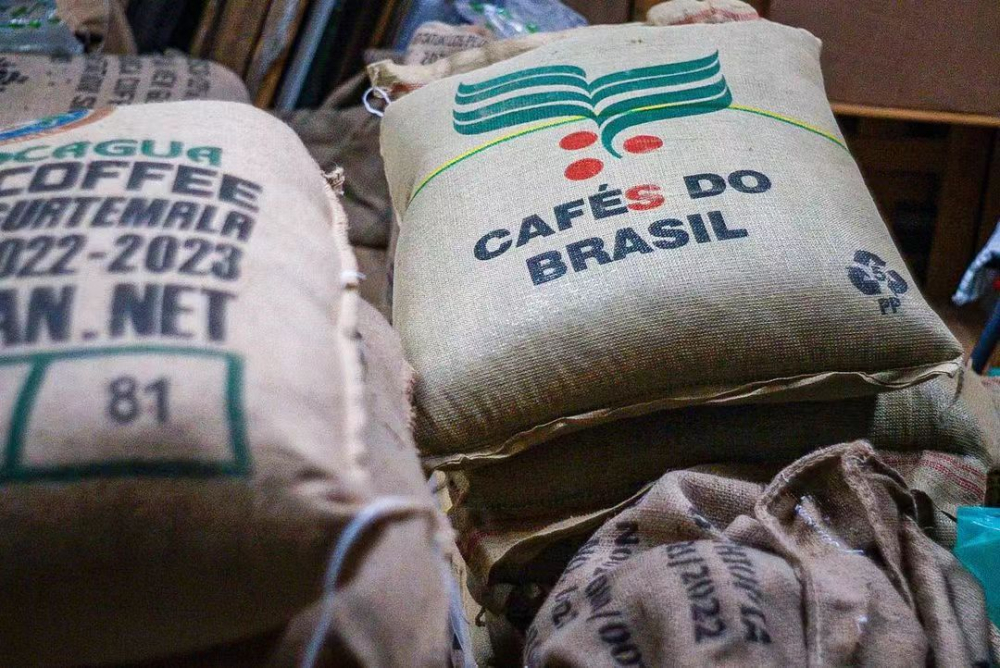
Brazil’s coffee grading system also has its unique features. Due to the large production volume and wide quality variations, the country employs a multi-dimensional evaluation method incorporating defect rates, green bean size, and cupping performance. The labels commonly found on Brazilian green bean sacks, such as Brazil NY.2 SC – 17/18 FC Cerrado, actually contain rich information: including origin (Cerrado), green bean size (17/18 mesh), cupping flavor grade (FC = Fine Cup), bean hardness (SC = Strictly Soft), and defect rate grade (NY.2). In the NY grading system, NY.2 indicates the lowest number of defects and the highest quality. Since NY.1 requires nearly zero defects — which is difficult to maintain stably in practice — NY.2 has become the top standard for Brazilian specialty beans.
In the realm of specialty coffee, Brazilian beans are known for their low acidity and full body. After roasting, they often present flavors of nuts, chocolate, cocoa, and even toasted bread. These characteristics make them a staple in espresso blends, effectively balancing acidity and adding richness. When used to prepare espresso, they yield a thick crema and intense aroma; when brewed as Americano, they are smooth and mellow, pairing excellently with milk for a velvety texture.
If you wish to experience the unique charm of Brazilian coffee at home through pour over, you may refer to the following practical parameters: use a KONO filter, control water temperature at 87–88°C, recommend 15 grams of coffee, with a 1:15 coffee-to-water ratio, and grind size approximately equivalent to 70% extraction through a Chinese standard No. 20 sieve. Begin with a 30-second bloom using double the coffee dose (about 30 grams) of water, then pour in a small stream in circular motions from the inside out. At 125 grams of total water, perform the first pour; after the coffee bed settles, continue pouring until reaching 225 grams to complete extraction. Keep total brew time around 2 minutes to enjoy a well-balanced, smooth single-origin Brazilian pour over coffee.
The above content is compiled by CoffeeHunters, a coffee news website.


