








Introduction:Gain an in-depth understanding of the characteristics, regional distributions, and flavor differences among the three major coffee species—Arabica, Robusta, and Liberica—to help you comprehensively grasp the traits of each bean from appearance, taste, to growing conditions. This article also explains why chain brands prefer Arabica and extends the discussion to the unique flavor profiles of well-known varieties such as Geisha, serving as a practical guide for both coffee beginners and advanced enthusiasts.
For many people who have just stepped into the world of coffee, one of the most common questions encountered after transitioning from chain coffee shops to specialty cafés is: “What variety of beans is used in this coffee?” In fact, the world’s main coffee varieties can be divided into three categories: Arabica, Robusta, and Liberica. These three types not only differ significantly in appearance and flavor, but also in their suitable brewing methods, growing conditions, and market positioning. This article will provide a detailed analysis of the characteristics of these three major varieties and explore why well-known chain brands such as Luckin often choose Arabica beans. It will take you from beginner to advanced, offering a comprehensive understanding of coffee bean types and their features.
 First, Arabica is the most mainstream coffee variety globally, accounting for over 70% of the market’s production. It is not only the top choice for specialty coffee but is also proudly labeled as “100% Arabica” by most chain brands to signify quality. Originally from Ethiopia, it demands very high standards of climate and altitude, typically growing at elevations of 1,000–2,000 meters or higher. As a result, its growth is slower, but it accumulates richer flavor compounds. Arabica green beans are slender and slightly flat in shape, with a distinct S-shaped curve along the center cut. Its caffeine content is about 0.9%–1.2%, relatively low compared to the other two varieties, while its fat and sugar contents are noticeably higher, which is the main reason why its flavors are usually sweeter, with bright acidity and complex layers.
In terms of appearance, Arabica is sensitive to environmental changes. Different regions—such as Panama, Colombia, Ethiopia, or Brazil—even if growing Arabica, can present vastly different flavor profiles due to variations in altitude, microclimate, and processing methods. For example, the Geisha variety from Panama is renowned for its distinctive floral notes, tropical fruit tones, and tea-like aftertaste, making it a dream bean for many coffee aficionados. One brand’s coffee menu features several Geisha offerings from different Panamanian farms, including Sophia, Guava, and Emerald Estate. Each showcases the unique flavor personality of its respective origin. For instance, Sophia Geisha is often described as having a refreshing sour-sweetness akin to green apple juice, while Guava offers intense pineapple and malted sweetness, with highly distinctive flavor layers.
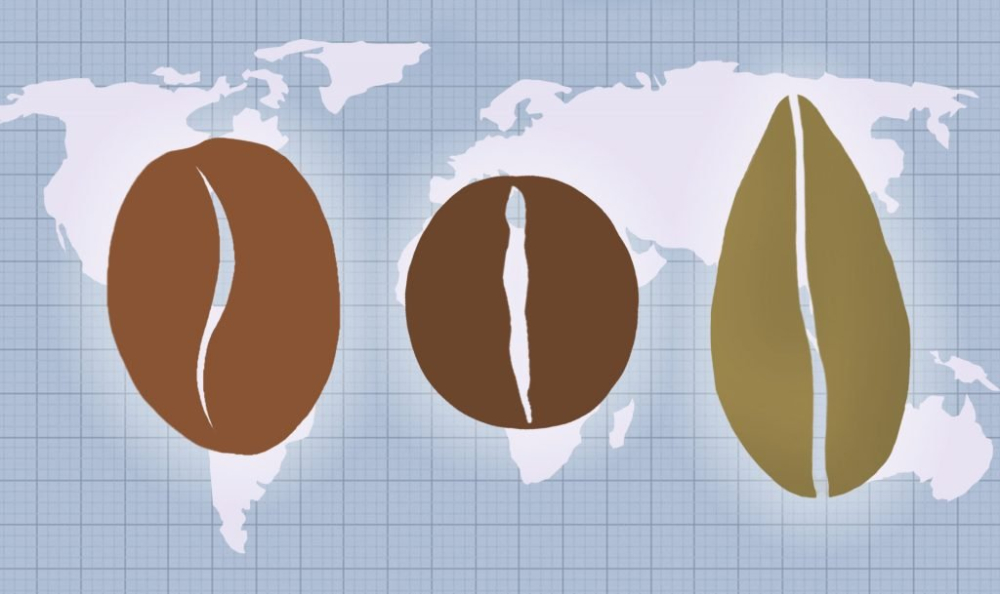 In contrast, Robusta is often considered a bolder or even harsher variety, mainly because it is highly adaptable and can grow in low-altitude, high-temperature environments with strong resistance to pests and diseases. However, it lacks the finesse of Arabica. Robusta green beans are usually round with a C-shape, featuring a straight I-shaped center cut. Their color tends to be yellowish-brown, and their caffeine content can reach 2%–2.7%, more than double that of Arabica. This high caffeine content also makes them more resistant to insects. However, the high caffeine also brings stronger bitterness and intense grainy, nutty, or even earthy flavors, so Robusta is mostly used in instant coffee or blended with Arabica to add crema and body.
It’s worth mentioning that although Robusta generally receives poor reviews, not all Robusta is unpleasant to drink. With improved cultivation and post-harvest processing, it can also exhibit remarkable quality. For example, India’s ‘Royal Robusta’ (Kappi Royale Robusta) is one of the representatives of premium Robusta. Through high-standard selection and processing, it breaks the public stereotype of this variety, showcasing clean, robust, and layered flavor characteristics.
 As for Liberica, this variety is relatively rarely mentioned because its market share is less than 1%. First discovered in Liberia, West Africa in 1843, Liberica beans are noticeably larger in size, with an elongated oval shape and pronounced indentations. However, due to its extremely demanding growing environment, low yield, and generally unremarkable flavor performance, it has long been grown only in small quantities in limited regions. Although it was once considered as a substitute for Arabica during the late 19th century when Arabica suffered from leaf rust disease, it ultimately failed to dethrone Arabica. Nevertheless, Liberica still holds historical significance and offers unique woody and spicy flavor notes. For enthusiasts eager to try something new or explore the history of coffee evolution, it remains a reference-worthy variety.
In summary, when choosing coffee beans, if you prefer bright, sweet-and-sour flavors with rich layers and floral-fruity notes, Arabica is the most suitable choice, especially for brewing methods like pour over or drip that highlight subtle details. If you enjoy bold, full-bodied coffee with intense dark roast characteristics, Robusta or Robusta-blend beans can offer a stronger taste experience. And although Liberica is niche, it is still worth exploring for coffee enthusiasts. Understanding the characteristics and differences among these three major varieties not only helps you make more informed choices when selecting coffee beans but also allows you to more deeply appreciate the story and terroir behind each cup of coffee.
The above content is compiled by CoffeeHunters, a coffee news website.


