







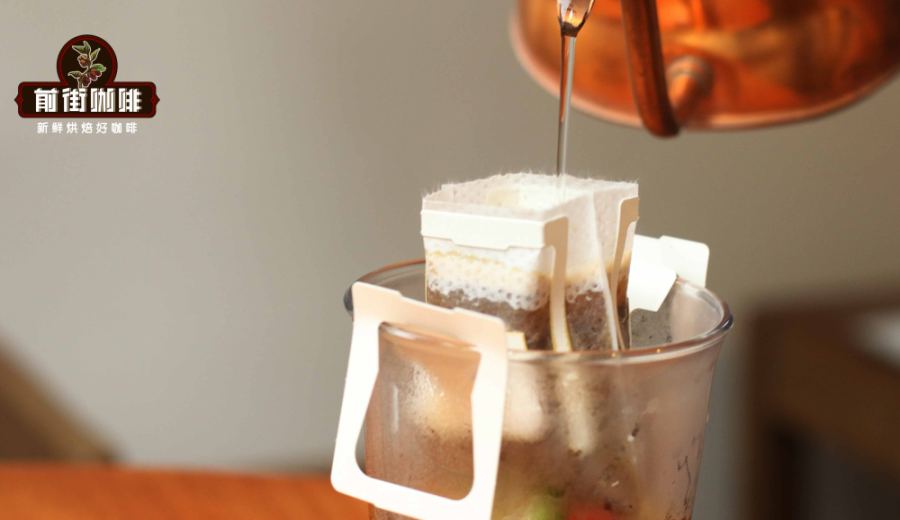
Introduction:Many beginners who are new to pour-over coffee often wonder: can one single-serve drip bag be brewed multiple times? This article provides an in-depth analysis of the extraction principles behind drip bags, starting with the solubility characteristics of chlorogenic acid to explain why coffee, unlike tea, cannot be brewed repeatedly. It also reveals why a second extraction after the standard brew is not recommended, helping you establish the correct brewing mindset.
Thanks to their ease of use and great cost-performance ratio, drip bags have become the top choice for many who lack experience in making coffee. Whether you prefer fruity and acidic profiles like fruity notes, Huakui, or Yirgacheffe, or richer, fuller-bodied flavors such as Mandheling, Huila, or Blue Mountain, there's something to satisfy every taste preference. However, many first-timers often face various questions, among which “how many times can one drip bag actually be brewed?” is a particularly popular topic. This article will explore the release mechanism of soluble substances in coffee—especially the role of chlorogenic acid during extraction—to clarify the fundamental differences between coffee and tea brewing methods, and explain why a second extraction is generally not advised after the initial brew.
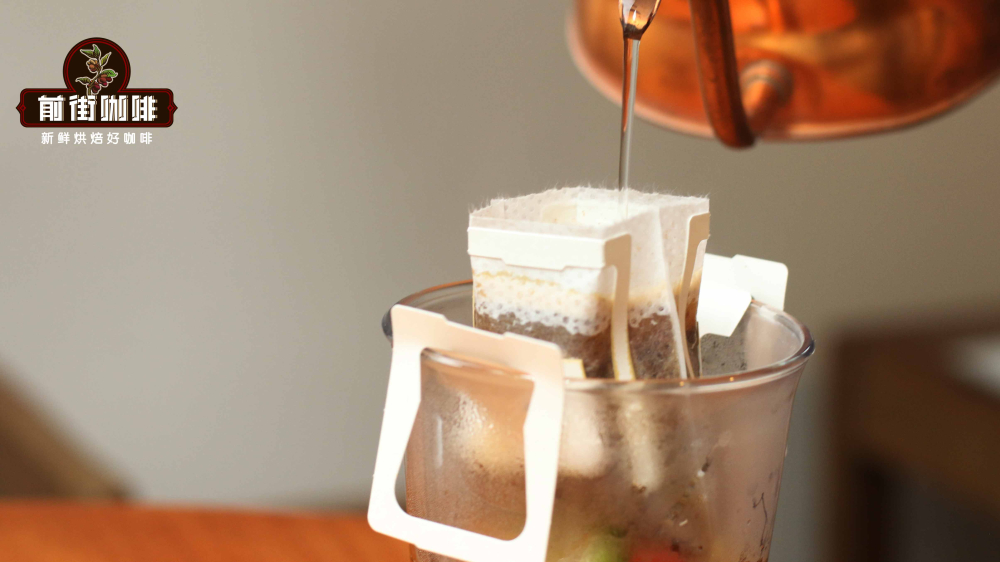
In recent years, more and more consumers have opted for drip bags. Aside from being portable and easy to use, they provide a coffee experience that is surprisingly good in quality, and the cost per serving is far lower than that of coffee made in cafes—making them attractive to those who have never tried brewing coffee at home. The market offers a wide variety of drip bags: if you enjoy floral aromas and moderate acidity, options like Fruity Dingding, Huakui, and Yirgacheffe are great choices; if you prefer a richer, fuller body, Mandheling, Huila, and Blue Mountain are more suitable. That said, for beginners just starting to brew at home, common concerns such as brewing method, reasons for weak flavor, and shelf life have been discussed before—so this article will not repeat them. Instead, it focuses on another frequently asked question: how many times can one drip bag of coffee actually be brewed?
From a theoretical standpoint, as long as the soluble substances in the coffee beans have not been completely dissolved, it is theoretically possible to brew a drip bag multiple times. This is because the flavor of coffee mainly comes from the soluble compounds in the beans, and a single coffee bean contains about 30% soluble material. As long as these substances haven't all been released, you can continue to brew coffee with flavor.
But in practice, whether using drip bags or other brewing methods, coffee is usually brewed only once. This is markedly different from tea, and the key lies in the fact that about half of the soluble substances in coffee are chlorogenic acid. Chlorogenic acid is a type of natural polyphenolic compound and one of the main contributors to the sourness, bitterness, and astringency in coffee. As the degree of roasting increases, chlorogenic acid gradually breaks down and transforms—lighter roasts retain more of it, while darker roasts retain less.
It’s worth noting that the taste threshold of chlorogenic acid and its derivatives is extremely low, meaning even trace amounts are easily detectable. At the same time, chlorogenic acid is a small-molecule compound, so it dissolves quickly during extraction. If you brew it multiple times like tea, the first brew will likely have an unpalatable taste due to the large amount of chlorogenic acid being released—unless it’s a dark roast, you’re likely to experience an under-extracted cup that tastes bitter, astringent, and sour.
The above content is compiled by CoffeeHunters, a coffee news website.


