







Introduction:The Indonesian wet-hulling process (Giling Basah) is the key technique behind the bold and rich flavors of Mandheling coffee. This article delves into its unique processing steps, explores how this method influences the herbal, woody, and spicy notes in the coffee, and provides practical pour over recommendations for medium-dark roasted Mandheling, including grind size, water temperature settings, and a three-stage pouring technique to help you better capture the flavor potential of this classic bean.
The Indonesian wet-hulling process (Wet Hulling), locally known as Giling Basah, is a highly regional coffee bean processing method. This technique involves mechanically removing the parchment layer while the beans still have a high moisture content, followed by direct sun drying of the green beans. As a result, it creates the distinctive full-bodied taste of Mandheling coffee, along with complex flavors such as herbal, woody, and spicy notes. Many well-known Indonesian Mandhelings, such as Golden Mandheling and Lintong Mandheling, are processed using this method, showcasing a rich and characterful cup profile.
So, how exactly does the wet-hulling process work? How does it differ from the standard washed process? In fact, although the term “wet” is part of its name, the wet-hulling method is quite different from the washed process. In the washed method, green beans undergo full fermentation and drying under the protection of the parchment layer, ultimately resulting in a clean and bright acidity. In contrast, the wet-hulling process removes the parchment while the beans still have relatively high moisture content, causing them to be directly exposed to sunlight and air during drying. This leads to a bolder and more distinctive flavor profile.
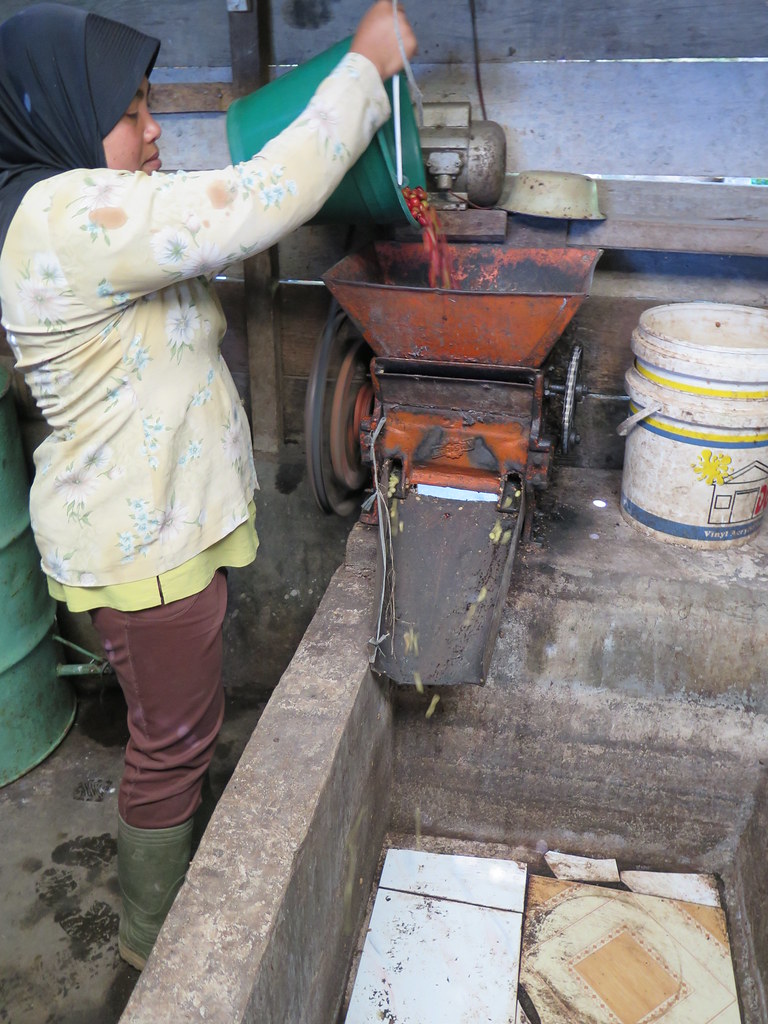
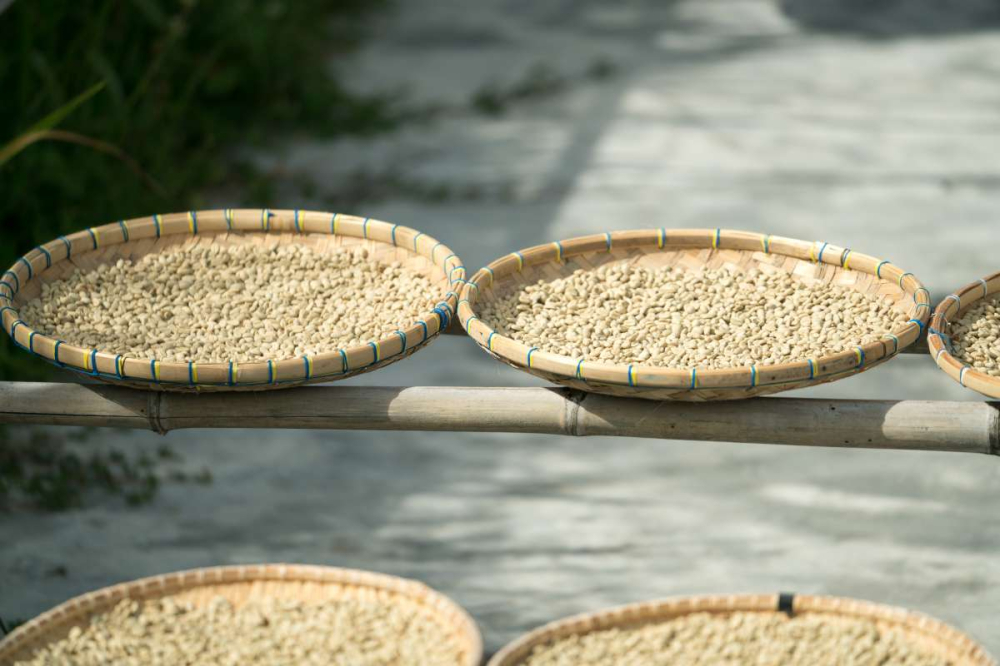
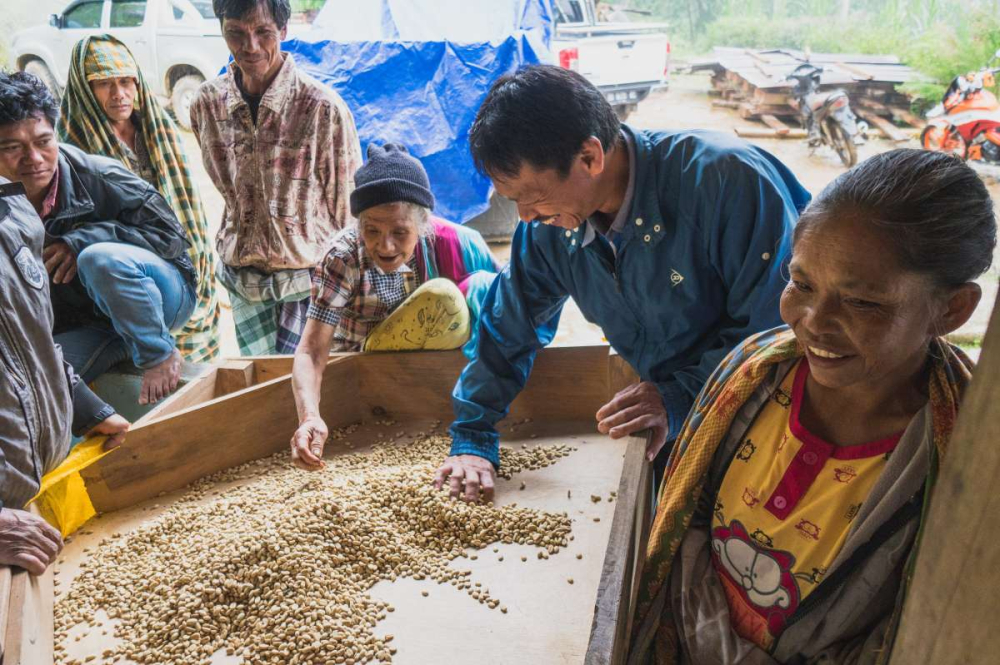
The overall processing flow is roughly as follows: first, the coffee fruit's skin and pulp are removed, leaving the parchment and mucilage intact; then the beans are placed in water tanks for a short fermentation to remove the mucilage; after that, they are washed clean and enter a parchment-covered sun-drying stage for about 2 to 3 days, reducing the moisture content to 20% to 24%. At this point, the green beans are transferred to a specialized wet mill, where the parchment is removed through intense friction. Because the beans are still relatively soft at this stage and prone to damage, the ends often develop pressure marks or dents, commonly referred to as “horse hoof beans” or “goat hoof beans.” After hulling, the beans are no longer protected by parchment and are directly dried in open-air conditions until their moisture content reaches 12% to 13%. Finally, they are sorted and bagged for export.
Indonesia’s adoption of the wet-hulling process is closely tied to the local climate conditions. With humidity levels reaching 70% to 90% year-round and some regions receiving over 2000 mm of annual rainfall, the environment is highly unfavorable for drying coffee. The standard washed process typically takes 2 to 3 weeks, but in Indonesia’s humid conditions, coffee drying is much slower and prone to mold. By removing the parchment early, wet-hulling accelerates the drying process to about 2 to 3 times faster than the traditional washed method, effectively reducing the risk of mold—but also imparting more earthy and woody characteristics to the coffee.
The processing steps of wet-hulling can be summarized as: first, removing the fruit skin and pulp while keeping the parchment and mucilage; then conducting water tank fermentation; next washing off the mucilage; followed by parchment-covered sun drying for 2 to 3 days until the moisture content reaches 20% to 24%; then using a wet mill to remove the parchment; afterward drying the beans to 12% to 13% moisture content; and finally preparing them for export.
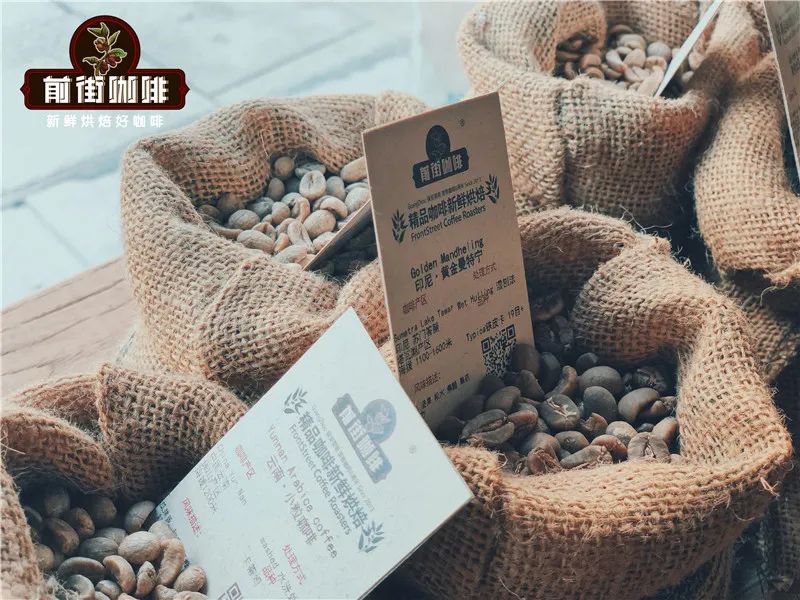
The Indonesian Mandheling beans sold, including Golden Mandheling and Lintong Mandheling, are classic representatives of the wet-hulling process. Among them, Golden Mandheling is produced by the renowned Indonesian PWN company. Although the processing may result in a higher defect rate, it undergoes rigorous four-stage manual sorting, selecting only G1 grade beans from the Gayo Mountains and Lake Tawar area of Sumatra. This ensures uniform bean size, minimal defects, and therefore a cleaner, richer taste with more pronounced sweetness. The definition of G1 grade is: bean size above eighteen mesh, with no more than 3 defective beans per 300-gram sample.
To highlight the bold characteristics of Mandheling, roasters typically opt for a medium-to-dark roast, bringing out more pronounced notes of dark chocolate and caramel. For such medium-dark roasted Mandheling, parameter settings during pour over are especially important. It is recommended to use a KONO filter, whose unique curved shape and limited straight ribs help create an immersion-style extraction, resulting in a rounder and fuller coffee flavor—ideal for showcasing the intense profile of Mandheling.
In terms of grind size, since medium-dark roasted beans have a looser structure and faster water absorption, a medium-coarse grind is recommended. Using a Chinese No. 20 sieve as a reference, aim for a sieve retention rate of around 70% to avoid over-extraction and the release of excessive bitter compounds. The water temperature is suggested to be set at 87 to 88°C, which is lower than the 91 to 93°C used for light roasts, in order to reduce scorching bitterness and off-flavors.
Recommended pour over parameters are as follows: 15 grams of coffee grounds, a 1:15 coffee-to-water ratio, using a three-stage pouring method. First is the bloom phase, pouring 30 ml of hot water to help the coffee grounds degas; then the second phase pours 100 ml, mainly to bring out the golden crema and lift the coffee bed; finally, the third phase gently pours 95 ml in the center to enhance sweetness and body, while bringing out the caramel, chocolate, and nutty aftertaste.
In summary, the Indonesian wet-hulling process is not only essential to the formation of Mandheling’s flavor profile, but also a challenging and regionally intelligent processing technique. Understanding its processing steps and flavor origins, along with appropriate pour over parameters, will allow you to more fully experience the unique charm of this classic Indonesian coffee.
The above content is compiled by CoffeeHunters, a coffee news website.


