








Introduction:Yirgacheffe is renowned for its distinctive citrusy character, and its flavor profile is inseparable from its processing method. This article delves into how regional environment, along with the differences between washed and natural processes, shapes the final flavors of coffee. Through practical examples—washed Guatudingding and natural Red Cherry—it explores how roasting and brewing parameters further amplify these differences. A must-read tasting reference for pour-over enthusiasts.
Yirgacheffe in Ethiopia is one of the most iconic coffee regions on the global specialty coffee map. Nestled in a plateau at elevations of 1700 to 2100 meters, this town not only benefits from exceptional climate conditions but also stands as a byword for "bright acidity" and "clean mouthfeel" among many coffee lovers. Among these qualities, the use of the washed process plays a pivotal role in shaping its classic flavor. In recent years, however, naturally processed Yirgacheffe has also gradually emerged, offering a distinctly bold and layered cup. This article will explain in detail the principles, procedures, and flavor differences of the two processing methods, using two representative beans—washed Guatudingding and natural Red Cherry—as examples. From roasting to brewing, it will guide you through mastering the essence of these two styles.
Overview of the Yirgacheffe Region: A Coffee Haven Nurtured by Highland Wetlands
Yirgacheffe (Yirga Cheffe) was originally part of the Sidamo region but was elevated to an independent producing area due to its outstanding coffee quality. The region has an average elevation of over 1800 meters, significant diurnal temperature variation, fertile soil, and abundant water resources, providing an ideal growing environment for Arabica coffee. Notably, “Yirga” means “settle down” and “Cheffe” refers to “wetland,” together suggesting that this place is a paradise for coffee trees. The region is now further divided into four sub-regions: Yirgacheffe, Worka, Kokosa, and Genlena Abay. Each sub-region produces coffee with its own unique personality due to slight variations in microclimate and processing methods.
Washed vs Natural: The Dual Faces of Yirgacheffe’s Flavor
When it comes to Yirgacheffe, most people first think of its bright and clean citrus acidity—a characteristic enhanced by the washed process. As early as 1972, when Ethiopia introduced the washed technique from South America, the cleanliness and aroma of local coffees improved significantly, propelling Yirgacheffe into the ranks of specialty coffee. However, the natural process, as a more traditional method, has regained attention in recent years with technological advancements and is now celebrated for its intense fruitiness and layered fermentation notes. The washed Guatudingding and natural Red Cherry from a certain brand are classic representatives of these two methods, showcasing the dual charm of Yirgacheffe.
The Natural Process: Rich Flavors from Natural Fermentation
Also known as the dry process, the natural method is the oldest coffee processing technique. It relies on ample sunlight and typically takes 27 to 30 days, making it highly dependent on climatic conditions. As such, it is commonly found in arid or semi-arid regions. Ethiopia, situated on a highland with abundant sunshine, is particularly well-suited for this method. However, Yirgacheffe, with its ample water supply, predominantly uses the washed process.
The steps of the natural process are as follows:
1. After harvesting, coffee cherries are manually and rigorously sorted to remove unripe, overripe, or defective beans, ensuring that only the highest-quality cherries proceed to the next stage.
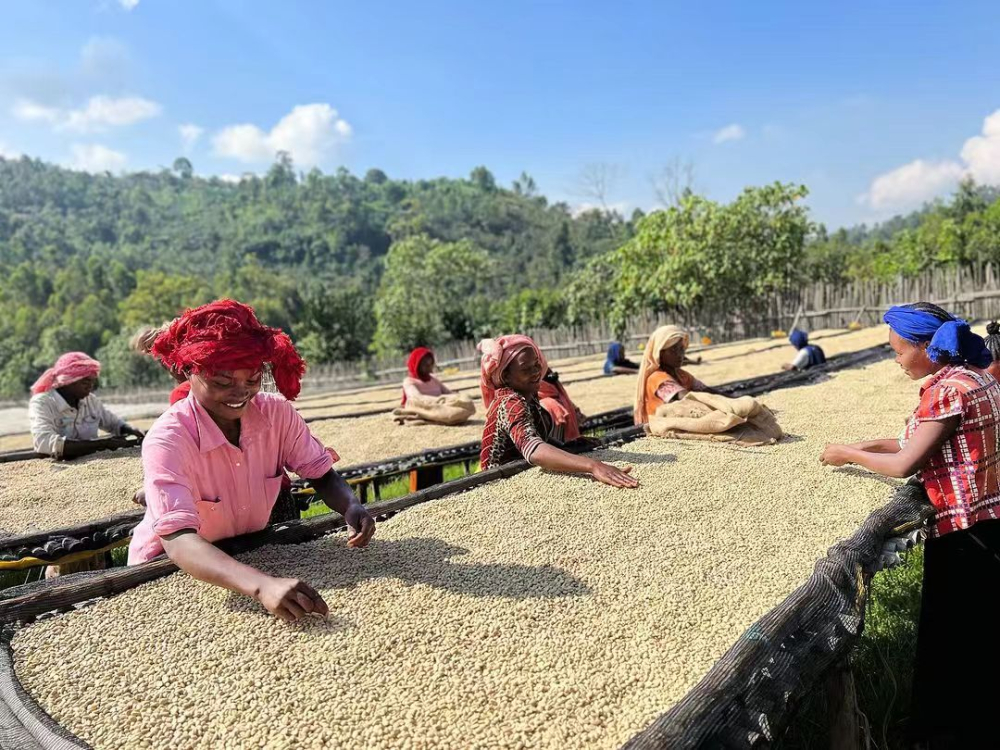
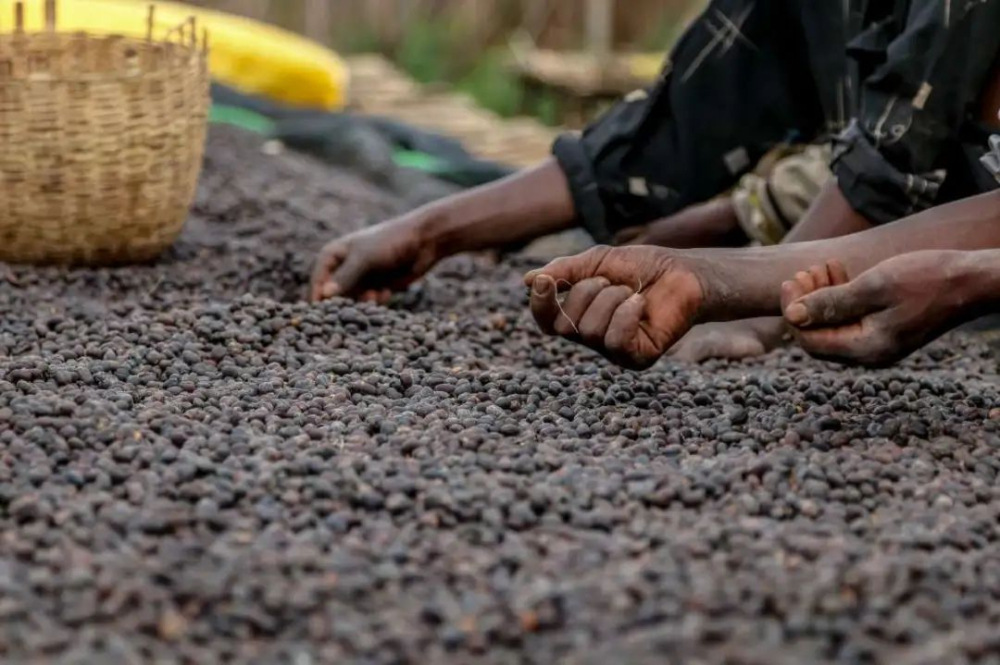
2. The selected cherries are spread out on drying racks (such as waterproof tarps, raised beds, or concrete surfaces) and left to sun-dry for approximately 27 to 30 days. They are regularly turned until their moisture content drops to 11%.
3. Once dried, the cherries are taken to a processing facility for hulling and de-pulping. Sometimes polishing is also performed, ultimately yielding green coffee beans.
4. The hulled beans are screened again to remove any defects caused by uneven drying, ensuring stable quality before being packaged for export.
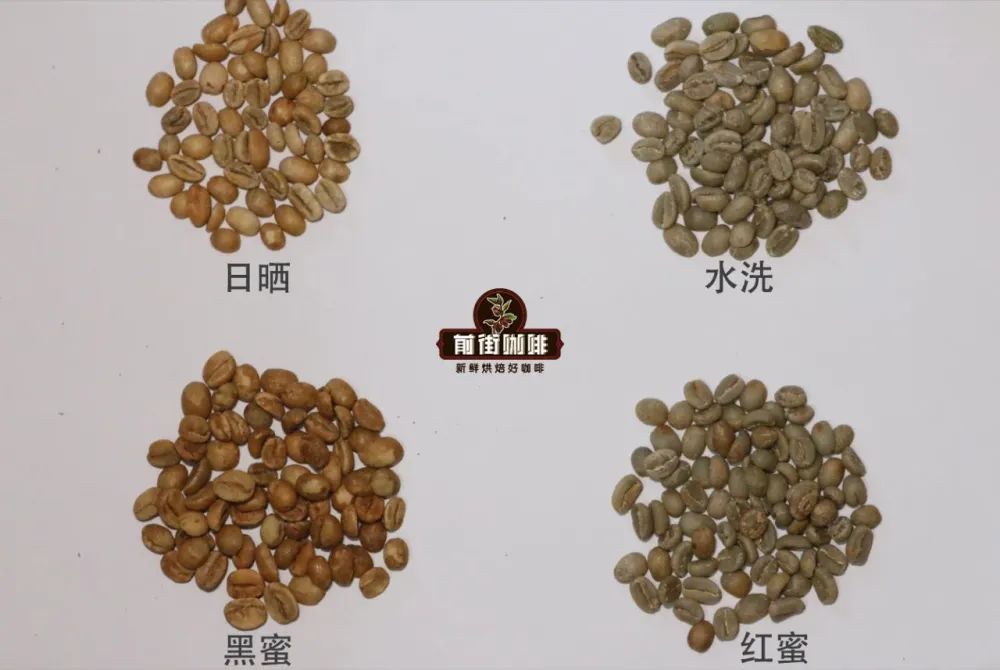
The advantages of the natural process include low cost and unique fermentation flavors that impart rich fruity, winey, and sweet notes to the coffee. Its downside is high weather dependency—if drying is uneven or the environment unhygienic, contaminants or mold can easily develop. However, with the advancement of refined natural processing techniques, these issues have gradually been mitigated.
Naturally processed coffee usually has a bolder flavor profile, often featuring fruity notes like berries, strawberries, and lemons, along with pronounced fermented wine notes and sweetness.
The Washed Process: Clean and Bright Classic Flavors
Compared to the natural process, the washed method emphasizes “purity.” This technique, widely used since the 19th century, significantly reduces impurities and off-flavors, resulting in clearer acidity and fruitiness. Washed beans are also often the first choice for beginners to explore regional flavor profiles.
The washed processing steps are as follows:
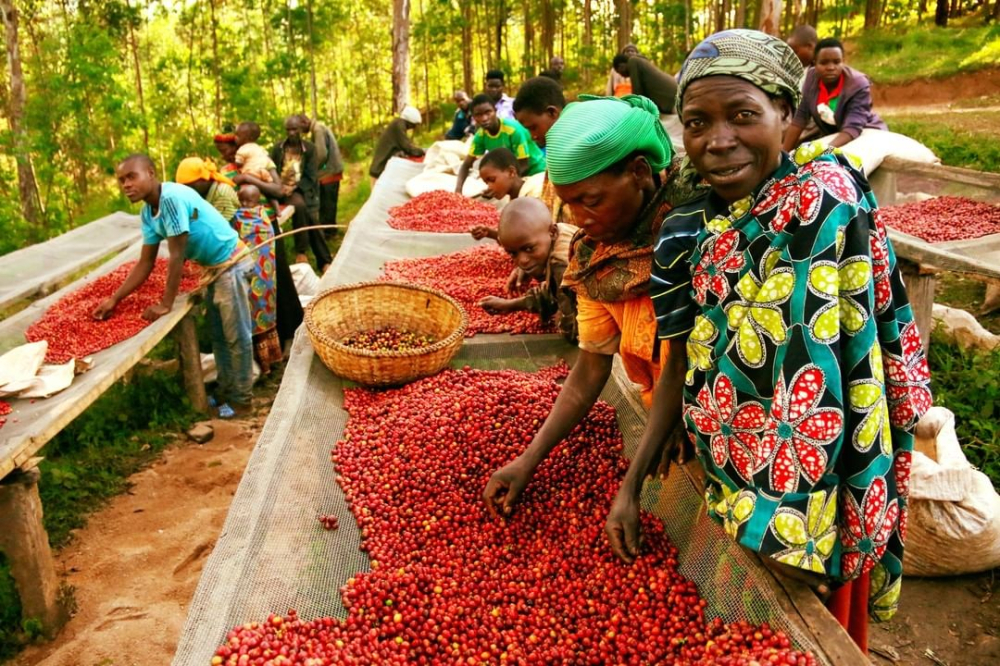
1. Harvested coffee cherries are first soaked in water; unripe or defective beans float due to differing densities, making them easy to sort out.
2. The selected cherries then enter a pulping machine where the outer skin and pulp are removed, though some fruit mucilage remains on the surface.
3. The mucilage is then removed via fermentation, which takes about 18 hours, followed by thorough washing with clean water.
4. The washed beans are dried until their moisture content reaches 11%, using either sun-drying or mechanical drying depending on regional conditions.
5. Finally, the beans are stored and packaged for export.
The advantages of the washed process include minimal impurities, intact bean appearance, and low fermentation impact, allowing for a more “true-to-origin” flavor expression. Its drawbacks are high water consumption, greater cost, and unsuitability for regions with scarce water resources.
Washed coffee flavors are typically clean and bright, dominated by citrus, berry, honey, and other fruit acids, with relatively mild sweetness and body.
Washed vs Natural: A Visual Comparison of the Two Methods
Simply put, the natural process retains the inherent flavors of the coffee fruit, resulting in a richer, more complex cup with noticeable fermentation characteristics. The washed process, on the other hand, removes the fruit flesh, highlighting the coffee’s inherent clean acidity and fruitiness, yielding a cleaner and brighter cup. For those new to trying coffee from a particular origin, washed beans are often the safer option to establish a foundational understanding of its flavor.
Washed Guatudingding and Natural Red Cherry: Practical Flavor Analysis
Two classic beans from Yirgacheffe—washed Guatudingding and natural Red Cherry—are the best examples to understand the differences mentioned above.
Washed Guatudingding is produced by the Guatudingding Cooperative at altitudes of 1900–2300 meters. The variety is a local landrace, processed using the washed method. Its flavors showcase a bright combination of tropical fruits, cream, honey, berries, and citrus. It has a crisp acidity and a sweet, lingering aftertaste.
Natural Red Cherry comes from the “Red Cherry Project,” initiated by coffee farmers and Dutch trader Trabocca at an altitude of 2300 meters. The variety is also a landrace, processed with a refined natural method. Its flavor profile centers around berries, lemons, and strawberries, accompanied by strong fermented wine notes and sweet orange tones, with notable sweetness.
Roasting and Brewing Parameter Comparison
In terms of roasting, natural Red Cherry is mainly medium-light roasted to emphasize fruitiness and fermentation layers. Using a Yangjia 800N roaster, 600g of beans were loaded. The roast started at 200°C, with multi-stage adjustments to heat and air damper, finally dropping to 194°C for first crack, preserving the maximum amount of flavor compounds.
Washed Guatudingding is better suited to light roasting to highlight its clean acidity and fruity character. Using the same machine, 480g of beans were used, beginning at 175°C. With precise control over temperature and air damper, the roast finished at 193.5°C, enhancing the citrus and black tea-like freshness.
For brewing, it is recommended to use a V60 #01 filter cone, with 15g of coffee, a 1:15 coffee-to-water ratio, and water temperature controlled at 90–91°C. Grind size is BG 6M (medium-fine, approximately 80% through a #20 sieve). Use a three-stage extraction: start with a 30g bloom for 30 seconds, then add 95g and 100g of water in separate pours. Total brew time is about 2 minutes, effectively highlighting the bean's nuanced flavors.
In actual tasting, natural Red Cherry reveals sweet layers of lemon, licorice, berries, and sweet orange, with a caramel and black tea finish. Washed Guatudingding opens with citrus and black tea notes, gradually releasing creamy, almond, and caramel softness as it cools, delivering a clean and refreshing mouthfeel.
The above content is compiled by CoffeeHunters, a coffee news website.


