








Introduction:Brewing rich coffee at home using a moka pot is the go-to choice for many coffee enthusiasts. However, improper operation often leads to burnt bottoms or over-extraction, resulting in bitter and unpleasant-tasting coffee. This article delves into the structure and extraction principles of the moka pot, analyzes two key factors—heat control and grind size—and provides specific adjustment suggestions and safety tips to help you brew a well-balanced, full-bodied cup while avoiding common mistakes.
In recent years, more and more coffee lovers have chosen to use a moka pot at home to enjoy the pleasure of brewing their own coffee. Compared to expensive espresso machines, moka pots are not only more affordable but also relatively simple to operate—just heat them up to use steam pressure to extract richly aromatic coffee. However, many users often encounter issues such as burnt bottoms or overly bitter, over-extracted coffee, which negatively impact the overall flavor.
To understand the root of the problem, we first need to discuss the basic structure and working principle of the moka pot. The moka pot mainly consists of three parts: the upper chamber, the filter basket, and the lower chamber. Water is placed in the lower chamber, finely ground coffee is placed in the filter basket, and the upper chamber is used to collect the extracted coffee. When the lower chamber is heated, the water generates steam pressure. Once the pressure is sufficient, the hot water is pushed up through the coffee grounds and into the upper chamber, completing the extraction.

Given the pressurized extraction nature of the moka pot, choosing the right coffee beans is particularly important. Generally speaking, medium to dark roasted beans are better at delivering a rich and full-bodied taste, making them an ideal choice. If you’re new to using a moka pot and want your coffee to have a rich crema, you can try a blend—for example, a classic combination of Indonesian Mandheling and Brazilian beans. These beans usually offer balanced flavors, pronounced aromas, and are well-suited for making espresso-like drinks, as well as being compatible with milk.
If you prefer single-origin beans, it’s recommended to choose medium-roasted options, such as those from Brazil's Queen Estate or Papua New Guinea's Paradise Bird Estate. These beans typically showcase nutty tones and natural sweetness, with clear flavor layers and a smooth mouthfeel. For those who enjoy more intense aromas and complex flavors, dark-roasted beans such as Indonesia's Golden Mandheling can be a great pick. Its unique herbal and dark berry notes also complement the extraction style of the moka pot.
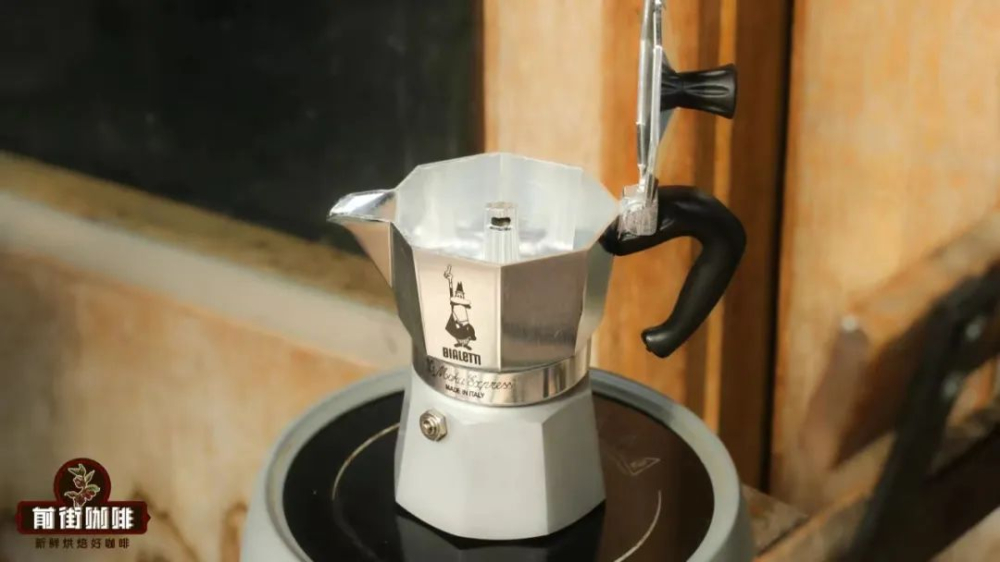
However, even when you’ve chosen the right beans, many people still encounter issues where their moka pot coffee either ends up with a burnt bottom or becomes overly bitter due to over-extraction. These two problems are often directly related to heat control and the grind size of the coffee.
First is the issue of excessive heat. When you see coffee beginning to flow from the upper chamber, it means the water in the lower chamber has started to boil and generate enough steam pressure. If you continue to use high heat at this point, the steam volume will rapidly increase, causing a sudden spike in pressure. This can result in the coffee shooting out in a stream or even spraying out, which not only affects extraction uniformity but can also overheat the bottom layer of coffee grounds, leading to a burnt bottom. Therefore, it’s recommended that once the coffee starts flowing, you immediately reduce the heat or temporarily move the moka pot away from the heat source to stabilize the extraction pressure and avoid a sudden surge of liquid.
Next is the issue of grinding the coffee too fine. The ideal grind size for a moka pot differs from that of pour over or drip coffee—it should be roughly between 0.3 to 0.55 millimeters, feeling similar to fine salt but with a slight granular texture. If the grind is too fine, water passes through more slowly, causing the coffee grounds to be soaked for too long, which easily leads to over-extraction and results in a bitter and astringent cup. If the grind is too coarse, water flows too quickly, preventing proper extraction and leading to weak flavors and uneven extraction. It’s recommended to adjust the grind size through 3 to 5 rounds of practical testing to gradually find the optimal fineness for your specific moka pot. You can also refer to professional grind size charts or use commercially available moka pot-specific coffee as a reference benchmark.
During the process of adjusting the grind size, it’s important to pay special attention to the sounds and flow rate during extraction. If you hear a continuous humming sound from the water as it heats but the coffee doesn’t start flowing for a while, it’s usually a sign that the grind is too fine—in this case, you should immediately turn off the heat to prevent further over-extraction. On the other hand, if the coffee suddenly gushes out like a fountain, it may indicate the grind is too coarse or the heat is too high. After each adjustment, observe both the extraction time and the resulting coffee flavor, and make gradual fine-tuned adjustments to reach the ideal state.
In summary, the key to brewing delicious coffee with a moka pot lies in mastering the right heat level and grind size. By observing and experimenting more during actual use and paying attention to various details throughout the extraction process, you can effectively avoid burnt bottoms and over-extraction, and brew a rich, well-balanced cup of coffee—enjoying the pleasure of making coffee at home.
The above content is compiled by CoffeeHunters, a coffee news website.


