







Introduction:Thanks to its volcanic terrain, high altitudes, and microclimates, Colombia has long been a mainstay among the world’s top specialty coffee-producing nations. This article explores four core coffee-growing regions—including Huila and Cauca—analyzes the growth characteristics of mainstream varieties such as Caturra and Castillo, and delves into a comparative analysis of diverse processing methods like washed and anaerobic fermentation, revealing their tangible impact on flavor. The goal is to help you select and brew distinctive single-origin Colombian beans.
Situated in the central Andes, Colombia benefits from fertile volcanic soils and abundant rainfall, creating an ideal environment for growing Arabica coffee. From 2008 to 2011, the country topped the SCAA International Cupping Competition for four consecutive years, even surpassing Panama’s Geisha’s historic dominance at the Best of Panama.
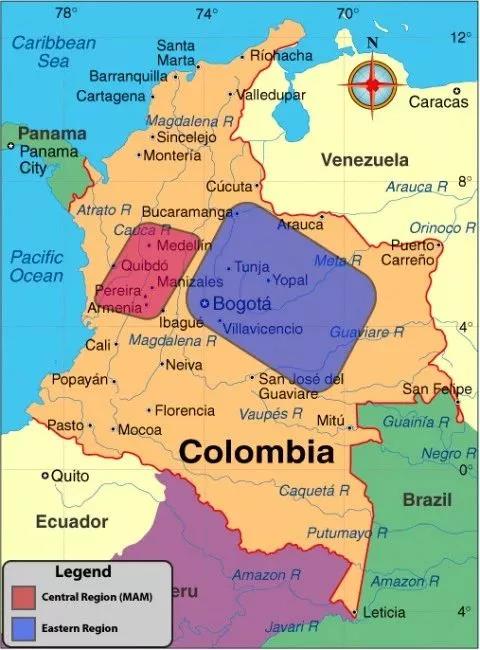
The nation features two major coffee-growing belts: the central MAM region (comprising Medellín, Armenia, and Manizales), which primarily produces commercial-grade beans at around 1,000 meters above sea level, offering bold and sweet profiles; while the central-southern areas—such as Huila, Tolima, Cauca, and Nariño—are the cradle of specialty coffee, renowned for high elevations, strong individuality, and diverse processing methods.
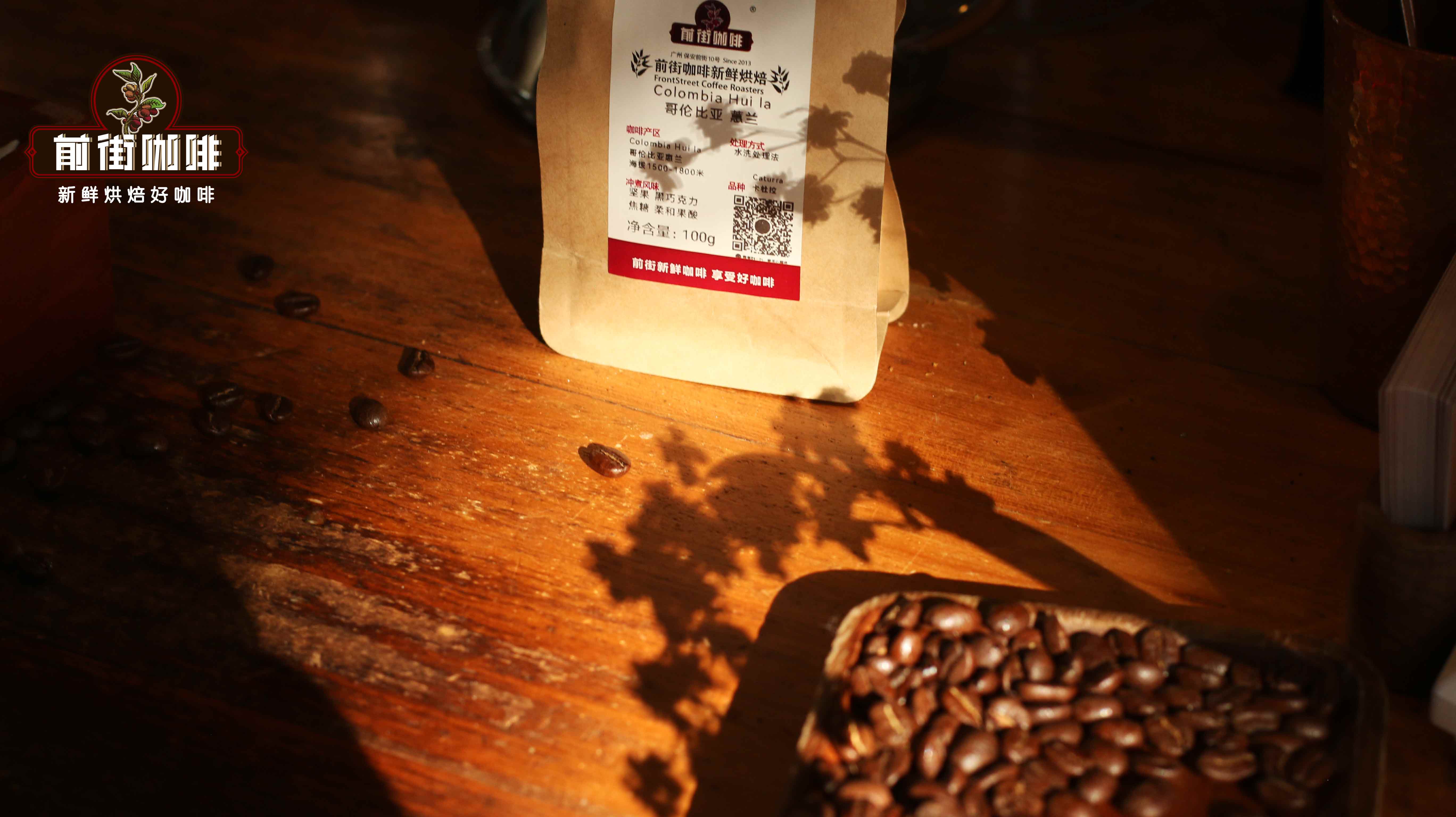
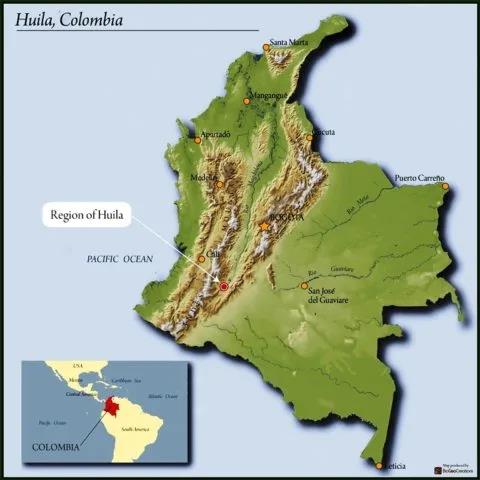
Located in the southern central mountain range of Colombia, Huila is one of the country’s most representative specialty coffee regions. With an average altitude exceeding 1,500 meters and numerous important rivers converging, the area provides ample water and a humid microclimate. Unlike the traditionally balanced and mild Colombian beans, many micro-lot coffees produced by smallholder farmers in Huila showcase distinct regional characteristics and complex layers.
In recent years, driven by consumer interest in origin identity and traceability, Huila has gradually moved away from the traditional bean-size-based grading system and embraced a micro-lot model centered on specific micro-regions. Through centralized cupping, high-quality beans with unique flavors from small farms can be precisely selected, enhancing overall quality and market competitiveness.
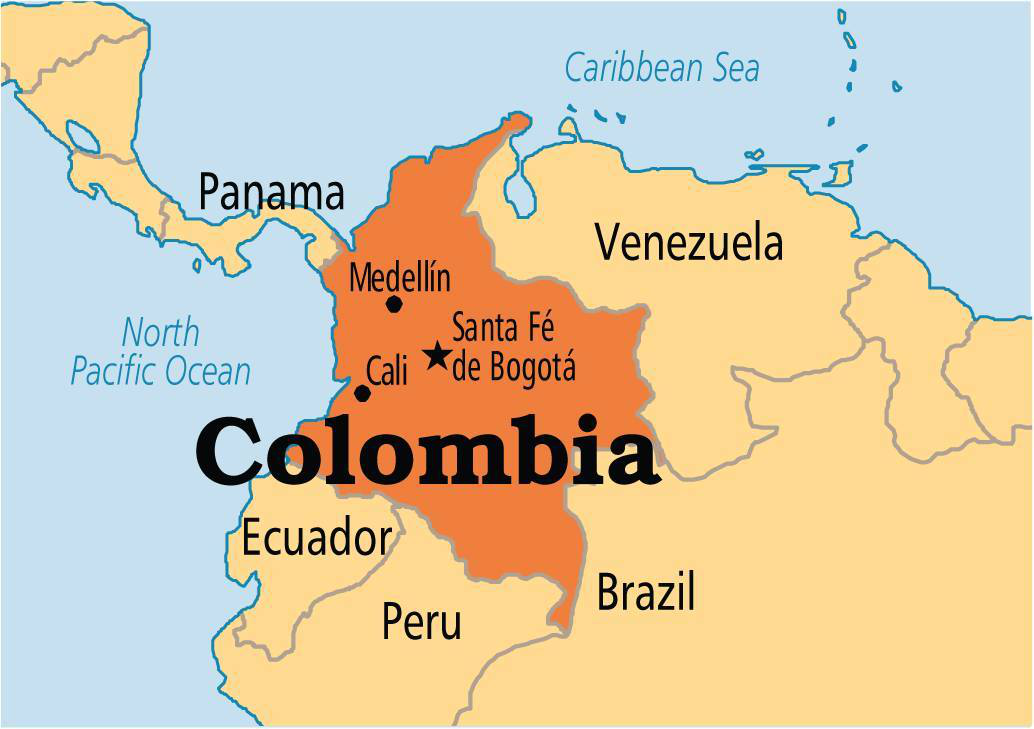
Neighboring Huila and Cauca, Tolima is flanked by the Andes and Cordillera mountain ranges, with the Magdalena River running through it. Agriculture in this region is largely cooperative-based, with farmers often delivering fresh cherries to shared processing stations, though some opt to process their daily harvest using small-scale, on-site equipment.
Cauca, officially recognized as Colombia’s coffee origin, generally sits between 1,758 and 2,100 meters above sea level. Blessed with steep slopes, diverse microclimates, and fertile volcanic soils, it is an ideal location for cultivating high-quality coffee. The region experiences a distinct single-peak precipitation pattern, with a dry season from August to September followed by a rainy season that triggers intense flowering and leads to a bountiful harvest several months later.
Nariño lies in the southwestern corner of Colombia, bordering the Pacific Ocean and Ecuador. The Andes Mountains run through the region, and coffee is mostly grown in high-altitude cloud forests between 1,600 and 2,300 meters. The soil is rich in volcanic nutrients, and although the beans are relatively small, they are dense and bright green in color. Most of the production here is directly purchased by international buyers, and carefully selected beans are relatively rare, with only about 6,000 bags of premium beans produced annually, making them highly collectible.
Colombia’s volcanic activity has unexpectedly contributed positively to coffee flavor. For instance, volcanoes in the Huila region have erupted multiple times since 2008, releasing mineral-rich ash—without accompanying lava flows—that has provided natural nutrients to surrounding coffee farms. Some farmers believe this is one of the behind-the-scenes factors behind Colombia’s repeated successes in international coffee competitions.
Colombia is suitable for growing a variety of coffee cultivars, including Typica, Bourbon, Caturra, Pacamara, and Geisha. Among them, Caturra—a natural mutation of Bourbon—originated in Brazil but thrives in Colombia’s medium-to-high altitudes and large diurnal temperature variations, making it one of the country’s main planted varieties. Colombia has also successfully developed the disease-resistant and flavor-elegant “Colombia variety,” as well as the second-generation disease-resistant Castillo variety, which became farmers’ top choice after the 2008 leaf rust epidemic.
While washed processing remains dominant in Colombian coffee, the rise of the specialty market has led more farms to adopt innovative methods like anaerobic fermentation, adding richer flavor layers. Below is a detailed breakdown of several common processing methods:
Washed Process (Washed)The most traditional and widely used method, it involves removing the pulp and mucilage, followed by washing and drying to deliver bright acidity and a clean profile. The process starts by placing coffee cherries in a water tank to remove floaters, then using a depulper to strip the outer skin and pulp. The mucilage-covered beans are then fermented in tanks for 16 to 36 hours, allowing microbes to break down the mucilage. Afterward, the beans are rinsed and dried either in the sun or by machine.
Anaerobic Fermentation Process (Anaerobic Fermentation)This method ferments coffee in an oxygen-free environment, often using stainless steel tanks to control temperature, pH, and time, thereby influencing the final flavor. Variants include anaerobic natural, anaerobic washed, and the more advanced anaerobic double-enzyme washed method.
The anaerobic natural process ferments whole cherries in a low-temperature (10–15°C) sealed container to extend fermentation time, enhancing sweetness and complexity before sun drying. The anaerobic washed method first removes defective beans, then ferments the beans in an oxygen-free environment, controlling oxygen supply to slow sugar breakdown for a more balanced acidity and sweetness.
The anaerobic double-enzyme washed method builds on anaerobic washed processing by adding special enzymes for a secondary fermentation to deepen flavor structure and aroma complexity.
The key difference between anaerobic natural and anaerobic washed lies in the former retaining whole cherries for fermentation, resulting in richer sweetness, while the latter removes pulp via washing, yielding a cleaner and brighter acidity. One producer conducted a comparative experiment using the Caturra variety, processing some with anaerobic natural (Floral Moon Night) and others with anaerobic double-enzyme washed (Rose Valley), finding significant differences in green bean appearance, roast curves, and cupping profiles.
In terms of green beans, anaerobic natural beans appear yellow-green with more silver skin due to lack of washing, while anaerobic washed beans, having undergone soaking fermentation and silver skin removal, show a blue-green hue with less silver skin.
For roasting, to preserve the fermentation characteristics of anaerobic natural, Floral Moon Night is roasted to a medium level to highlight body and sweetness; Rose Valley emphasizes fruity notes and acidity, also using a medium roast but with greater focus on cleanliness and acid-sweet balance.
Cupping results show that Floral Moon Night exhibits berry, strawberry jam, and fermented wine aromas with intense flavors, while Rose Valley presents rose, peach, and liqueur chocolate notes, with bright, layered acidity and sweetness.
For brewing, use a Hario V60 #01 filter, with water temperature controlled at 90–91°C, 15 grams of coffee, a 1:15 coffee-to-water ratio, and a medium-fine grind size (about 80% passing through a #20 sieve). Employ a three-stage extraction: start with a 30-second bloom using 30 grams of water, then pour in stages to 125 grams and 225 grams, with total extraction time around 2 minutes to 2 minutes 10 seconds. This approach fully highlights the unique flavor profiles of each processing method.
The above content is compiled by CoffeeHunters, a coffee news website.


