








Introduction:Grind size is one of the key factors that affect coffee flavor — from over-extracted bitterness to under-extracted flatness, everything is closely related to grind coarseness. Commercial grinders often indicate settings from 1 to 10, but the actual grind sizes can vary greatly between different models and need to be adjusted according to the brewing method. This article delves into the ideal grind ranges for common brewing methods such as pour over, espresso, and siphon, offers medium-fine and medium-coarse grind recommendations for both medium-light and medium-dark roasted beans, and provides a detailed explanation on how to test the passing rate using a 0.85mm No. 20 sieve to help you precisely control coffee powder coarseness and improve your brewing quality.
Grind size directly influences the extraction results of coffee: too fine a grind can lead to over-extraction and bitterness, while too coarse a grind may result in under-extraction, making the flavor seem thin. Although many grinders on the market mark their settings from 1 to 10, the actual grind sizes vary by model — typically, a smaller number indicates a finer grind, but adjustments still need to be made based on the specific brewing method. This article will explore the grind ranges suitable for different brewing methods, including pour over, espresso, siphon, and French press, and provide medium-fine or medium-coarse grind suggestions for both medium-light and medium-dark roasted coffee beans. It also shares practical steps for testing the passing rate with a 0.85mm No. 20 sieve to help you find the most suitable grind parameters.
So which setting between 1 and 10 on a coffee grinder represents the finest grind? Generally speaking, most grinders follow the rule that the smaller the number, the finer the powder. Grind size is crucial in the coffee extraction process: too fine a grind can cause over-extraction, while too coarse a grind may lead to under-extraction. Since coffee beans from different regions have varying characteristics, the suitable grind standards also differ, making how to correctly adjust the grind setting an important practical issue. Commercial grinders often label their settings from 1 to 10 — so how should you adjust them specifically? The following will delve into the standards of coffee powder grind coarseness.
The impact of grind degree on coffee can be explained by the interaction between hot water and coffee grounds: particle size determines how well the water penetrates and extracts. In theory, the more uniform the particles, the more consistent the overall extraction effect and the better the flavor performance. When the grind is finer, both concentration and extraction rate increase, and the surface area of the coffee grounds expands, allowing more flavor compounds to be released; conversely, a coarser grind reduces the surface area, shortens the water contact time, and extracts fewer substances. Additionally, the surface area also affects the rate of carbon dioxide release, further influencing the flavor profile of the coffee.
Common grind sizes can generally be divided into three categories: extremely fine grinds for espresso, a medium range covering various brewing methods, and coarse grinds for bold brewing techniques. Referring to standard grinder settings, several typical grind levels can be distinguished: the finest is used for Turkish coffee, followed by the very fine grind required for espresso, then a medium-coarse grind suitable for pour over or drip brewing, slightly coarser for siphon pots, and the coarsest for French press.
Espresso grind is fine, which is closely related to its short extraction time (usually 20 to 30 seconds), and since espresso often serves as the base for other coffee drinks, it needs enough coffee material to support subsequent dilution with water or milk. Therefore, its grind is much finer than other brewing methods.
Pour over coffee has a relatively moderate extraction time, averaging around 2 minutes, with a possible range of 1 to 3 minutes, and most single-serving recipes fall around the 2-minute mark. Compared to espresso, pour over doesn’t require an overly fine grind to avoid over-extraction, so its grind falls within the medium-coarse range.
French press has a longer extraction time, usually 4 minutes or more, so its grind is typically the coarsest to prevent over-extraction due to prolonged steeping and to ensure balanced flavor.
Regarding adjustments between grind settings 1 to 10, due to differences in grinder designs, some models set at 3 are already very fine, while others need to be set to 1 to achieve that level. In such cases, it’s recommended to confirm the actual grind size through sieving. The following takes pour over coffee as an example to illustrate how to adjust grind parameters.
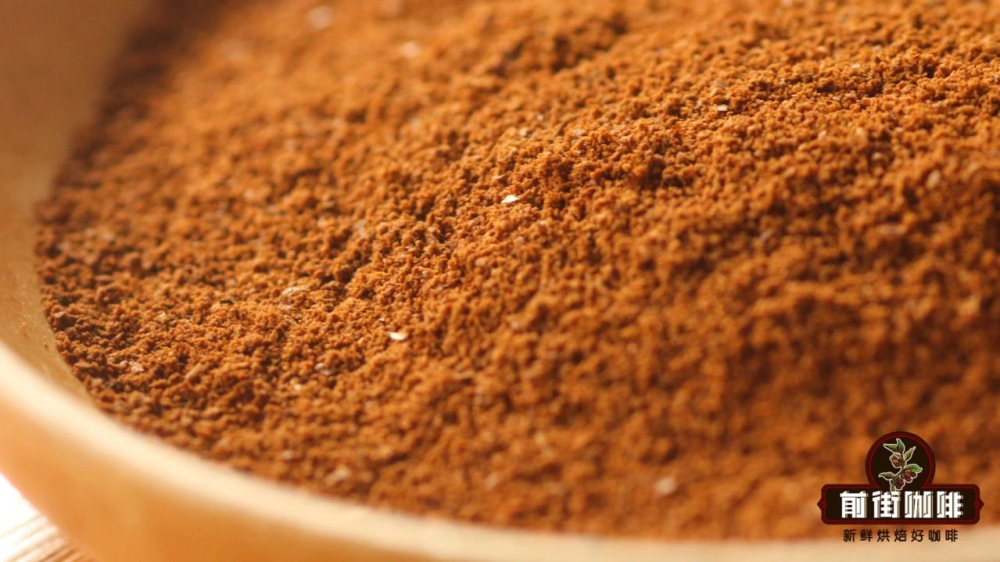
What kind of grind should be chosen for pour over coffee? Taking medium-light and medium-dark roasted coffee beans as examples, the suitable grind sizes differ. Medium-light roasted beans, such as those with common fruity or floral flavor profiles, usually have more pronounced acidity and less caramelized material extracted, so a medium-fine grind is recommended (tested with a 0.85mm No. 20 sieve, with about 80% passing rate, similar in size to fine sugar). This grind size slows down the water flow through the coffee bed, helping to fully extract acidity, sweetness, and caramelized compounds, resulting in a more balanced overall flavor. It’s recommended to brew at a water temperature of 90–91°C: too high can cause excessive release of caramelized materials, leading to bitterness; too low may only extract part of the acidity and sweetness, resulting in a flat flavor.
As for medium-dark roasted beans, such as those with a rich and bold flavor profile, which have lower acidity and abundant caramelized material, a medium-coarse grind is recommended (with about 70% passing rate using a 0.85mm No. 20 sieve, similar in size to coarse sugar). This grind size speeds up the water flow through the coffee bed, preventing over-extraction of caramelized materials, delivering a sweet and full-bodied taste while reducing unpleasant bitterness. The recommended water temperature is adjusted to 88–89°C: too high can cause bitterness, too low may lack flavor and seem monotonous.
How to use a 0.85mm No. 20 sieve for testing? It’s recommended to confirm grind size through sieving. If you don’t have a professional sieve, you can also observe the water flow speed: if the flow is too fast, it usually means the grind is too coarse; if it’s too slow, the grind may be too fine.
The specific steps are as follows: prepare 10g of coffee beans, and use fine sugar and coarse sugar as initial references for grind texture. After grinding, pour the coffee powder into the sieve, cover it with the lid, and gently shake it from side to side until no more coffee powder passes through. Then, use an electronic scale to weigh the sieved coffee powder: if 8g passes through, it’s a medium-fine grind; if 7g passes, it’s a medium-coarse grind. If the passing rate is too high, it’s recommended to adjust to a coarser grind; if the rate is too low, adjust to a finer grind.
Below are the sieve passing rate data for reference for different brewing methods: pour over and siphon around 80%, American drip around 75–80%, cupping around 70–75%, French press around 65–70%. Higher values indicate a finer grind, lower values a coarser one.
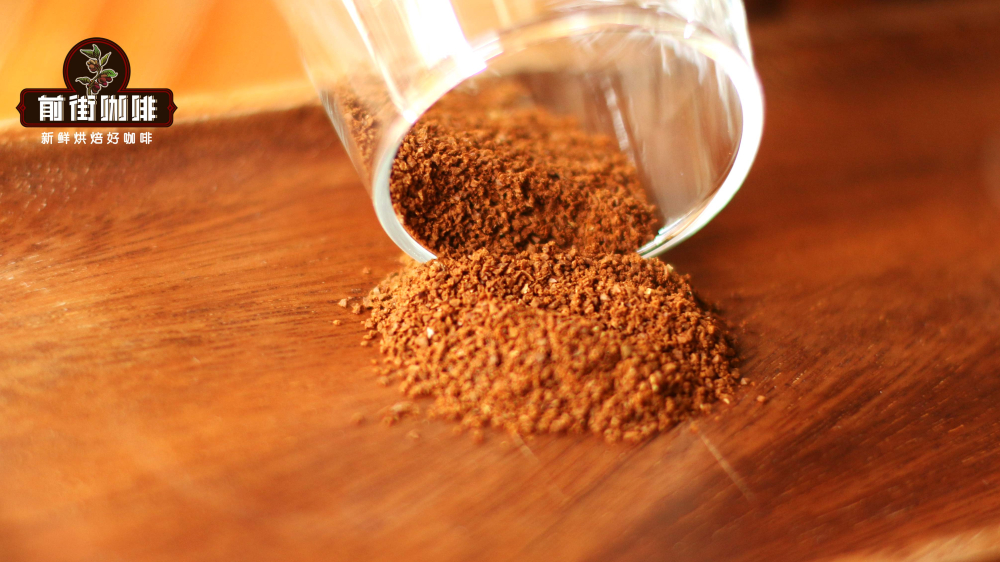
The uniformity of grind size is equally important. The distribution of particle sizes in ground coffee directly affects extraction flavor. If the particles are too concentrated at one extreme (too coarse or too fine), it will lead to uneven flavor: too many coarse particles may prevent deep flavors from being released, while too many fine particles can cause over-extraction, resulting in a chaotic and bitter flavor. If severe inconsistency in grind uniformity is noticed, it’s recommended to change the grinder to ensure extraction quality.
The above content is compiled by CoffeeHunters, a coffee news website.


