








Introduction:Indonesian coffee enjoys global acclaim, but "kopi luwak" may not be your top choice for an introductory experience. This article delves into the origins, production process, and controversies surrounding this legendary coffee, while also recommending five more worthwhile beans from Indonesia and around the world—including Panamanian Geisha, Ethiopian Huika, Brazil, and Golden Mandheling—along with detailed brewing parameters and flavor profiles to help you find the coffee experience that best suits your taste.
Indonesian coffee is renowned worldwide for its diverse flavors and rich regional variety, among which "kopi luwak" stands out as a mysterious and legendary presence. However, professionals well-versed in coffee generally agree that this coffee, famed for its rarity and unique processing method, is not necessarily the best starting point for appreciating Indonesian coffee. This article will begin with its history and production techniques, gradually uncovering the true nature of "kopi luwak," while also recommending five specialty coffee beans from Indonesia and other parts of the world—each with distinct flavors and greater appeal—to help broaden your perspective on coffee selection.

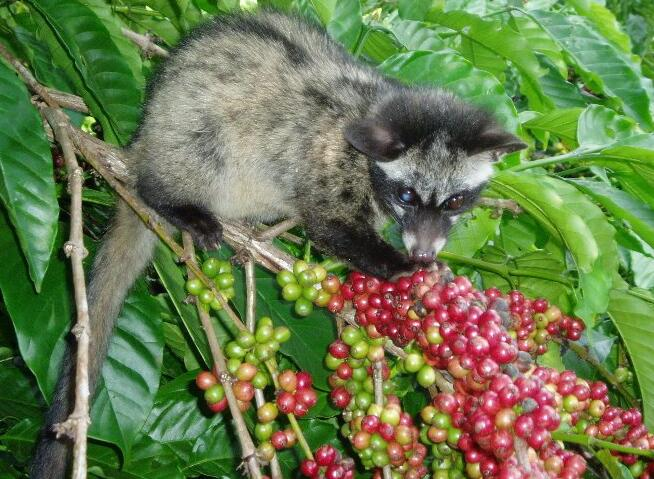
The so-called "kopi luwak" originates from the Indonesian island of Sumatra. Local civet cats (luwak) have a habit of eating ripe coffee cherries but cannot digest the coffee beans inside. Through fermentation in the civet’s intestines and the action of digestive enzymes, the outer fruit flesh and some mucilage are removed from the beans, which are then excreted, collected manually, cleaned, and roasted. This process gives the coffee a distinctive flavor, said to be rich in herbal notes and full-bodied layers, with an unusually smooth mouthfeel. However, this type of coffee is produced in extremely limited quantities, commands a high price, and is accompanied by significant ethical concerns.
In the 17th century, Dutch colonists introduced coffee cultivation to Indonesia, particularly to Sumatra, whose favorable environment enabled the production of high-quality Arabica coffee. However, local civet cats had a tendency to steal and eat the coffee cherries, much to the frustration of farmers. Legend has it that a Dutch officer accidentally tried a beverage brewed from coffee beans excreted by civets and was amazed by its smoothness and unique flavor, leading to the gradual spread of the fame of "kopi luwak." However, the beans consumed by the civets in those early days were mostly Robusta variety, and their flavor significantly differed from the more commonly seen Arabica versions on today’s market.
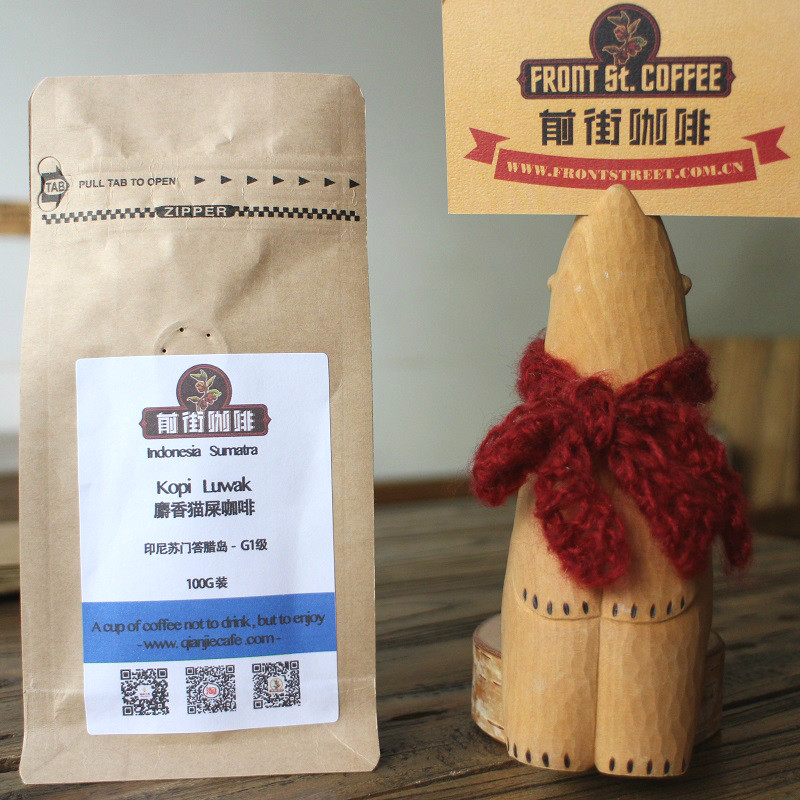
Currently, the more widely circulated "kopi luwak" on the market is often marketed as pure Arabica, collected by local farmers from civet excrement, then screened, cleaned, and roasted. Such coffee is typically graded as G1, indicating high quality. However, because civets are mostly active at mid-to-low altitudes, even the Arabica variety can differ in flavor from the typical high-altitude Arabica. Civets tend to select ripe red cherries, so theoretically the beans entering their digestive tract are of higher quality, but in practice, the fermentation process within the animal's body still introduces unpredictable effects on flavor.
Civets mainly inhabit tropical and subtropical forest edge areas below 2,100 meters in altitude. They are nocturnal and use their keen sense of smell and vision to pick the ripest coffee cherries. As a result, the excreted coffee beans are usually quite mature, but the digestive process transforms their flavor into a profile that is bold and carries earthy and herbal characteristics. Some consumers who enjoy aged beans or bold, heavy flavors might develop a particular fondness for this unique taste.

The so-called "in-body fermentation method" refers to using the natural enzymes and microbial environment in the civet’s intestines to ferment the coffee beans, removing the pulp and outer impurities. This processing method is not unique to Indonesia; similar animal-fermented coffees exist in South America, India, and Sri Lanka—for example, luwak coffee, monkey coffee, and elephant coffee. However, such coffees are generally produced in very small quantities, are expensive, and raise serious concerns about animal welfare. Many of the so-called "kopi luwak" products available in the modern market actually come from caged civets, whose living conditions and forced feeding practices are highly controversial.
The imported Indonesian kopi luwak is medium-dark roasted to highlight its distinctive herbal and nutty tones. It is recommended to use a KONO filter for pour over brewing, as this filter enhances body and a round, smooth aftertaste. Although its gas release is slightly inferior, it prolongs water-to-powder contact time, helping extract more soluble flavor compounds. The recommended brewing temperature is 86–87°C, with a grind size similar to that of white sugar, a coffee-to-water ratio of 1:15, and total extraction time controlled between 1 minute 50 seconds and 2 minutes.
The specific brewing steps are as follows: start with a 30-gram bloom using 25 seconds of water; then pour 125 grams of water, and when the water level drops halfway, pour the final 225 grams. Be sure to discard the last 5 grams at the end of extraction to avoid over-extraction. These parameters fully showcase the boldness and herbal aroma of kopi luwak, but due to its high price and associated ethical issues, many coffee enthusiasts turn to other alternatives that offer outstanding flavors and more sustainable sourcing.
If you wish to explore exciting coffees from Indonesia and other regions, the following five recommendations are worth considering: First is Panamanian Geisha, known for its floral and citrus notes, an international competition favorite, ideal for those who appreciate delicate aromas; second is Ethiopian Huika, featuring bright black tea and berry acidity, with a fresh and lively flavor; third is Brazilian coffee, offering nutty and chocolatey tones with a balanced profile, suitable for everyday drinking; fourth is Golden Mandheling, a high-altitude Arabica from Sumatra known for its full body and low acidity, meticulously hand-sorted with an extremely low defect rate; finally, there are other locally grown high-altitude Arabicas in Indonesia, such as those from the Lintong or Mandheling regions, which also showcase distinct regional flavor profiles quite different from kopi luwak.
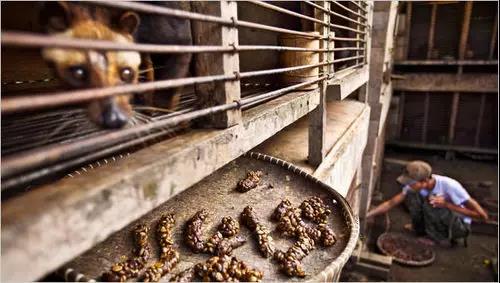
In conclusion, although "kopi luwak" has captured the curiosity of many with its unique processing and legendary backstory, its high price, animal welfare concerns, and flavor unpredictability make it not necessarily the first choice for every coffee lover. You might instead begin your coffee journey by exploring the five specialty beans mentioned above—each hailing from different regions, with clear flavor profiles and great value—for a more sustainable and rewarding coffee experience.
The above content is compiled by CoffeeHunters, a coffee news website.


