







Introduction:The Gedeo Cooperative, located in the Gedeb micro-region at the southern end of Yirgacheffe in Ethiopia, has emerged as a standout in the global specialty coffee market since breaking away from the Wotecha Cooperative in 2012. Utilizing traditional washed and natural processing methods, this cooperative is making a name for itself with traceable specialty coffees. This article delves into the regional background, geographical environment, and variety characteristics of Gedeo, details the differences between washed and natural processing methods, and provides professional roasting curves and pour-over parameters to give you a comprehensive understanding of these beans, hailed as the "pure land of Yirgacheffe."
As a representative specialty coffee region in Ethiopia, Yirgacheffe is beloved by coffee enthusiasts worldwide for its unique jasmine floral notes, citrus acidity, and tea-like aftertaste. In the southern part of Yirgacheffe lies the Gedeb micro-region, where the Gedeo Cooperative, which became independent from the Wotecha Cooperative in 2012, has risen as a new star in traceable specialty coffee through its traditional washed and natural processing methods. This article will take you on an in-depth journey into these captivating beans, covering everything from regional history and geography, variety traits, processing differences, to roasting and pour-over recommendations.
Yirgacheffe was originally just a small town within Ethiopia’s Sidamo Province. In the ancient language, "Yirga" means "to settle down," and "cheffe" refers to "wetlands." Since ancient times, it has been an area abundant in wetlands. It is one of the highest-altitude coffee-growing regions in the world, with elevations ranging between 1,700 and 2,100 meters. The cool, foggy climate and spring-like seasons year-round provide ideal growing conditions for specialty coffee beans. Strictly speaking, Yirgacheffe was originally a sub-region of Sidamo but later gained independent status due to its distinctive flavors, becoming synonymous with Ethiopia’s specialty coffee.
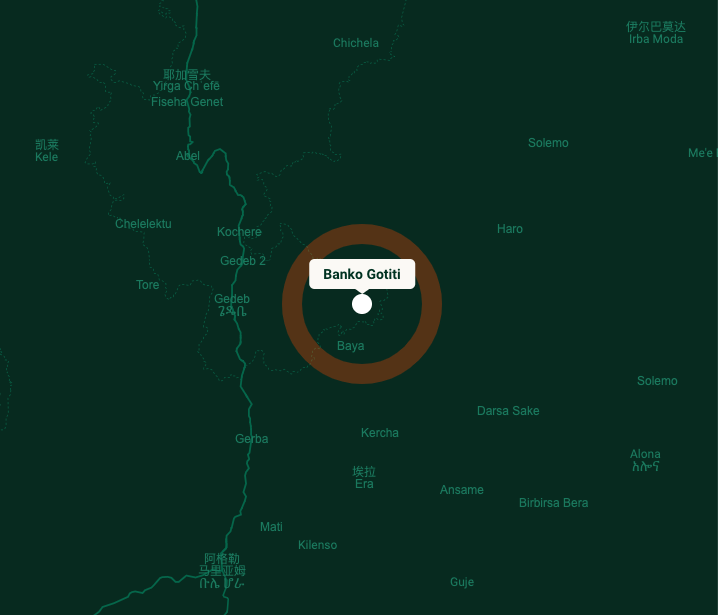
Gedeb is located below the town of Kochere, approximately 60 kilometers from Yirgacheffe town, and sits at an even higher elevation, between 1,900 and 2,200 meters, making it a gradually more noted micro-region. Although it is grouped under the Kochere region in the ECX auction market, it actually shares the same administrative level as Kochere town. The specialty coffee community often regards it as a parallel sub-region to Kochere. The Gedeo Cooperative is situated within the Worka Kebele area of this micro-region.
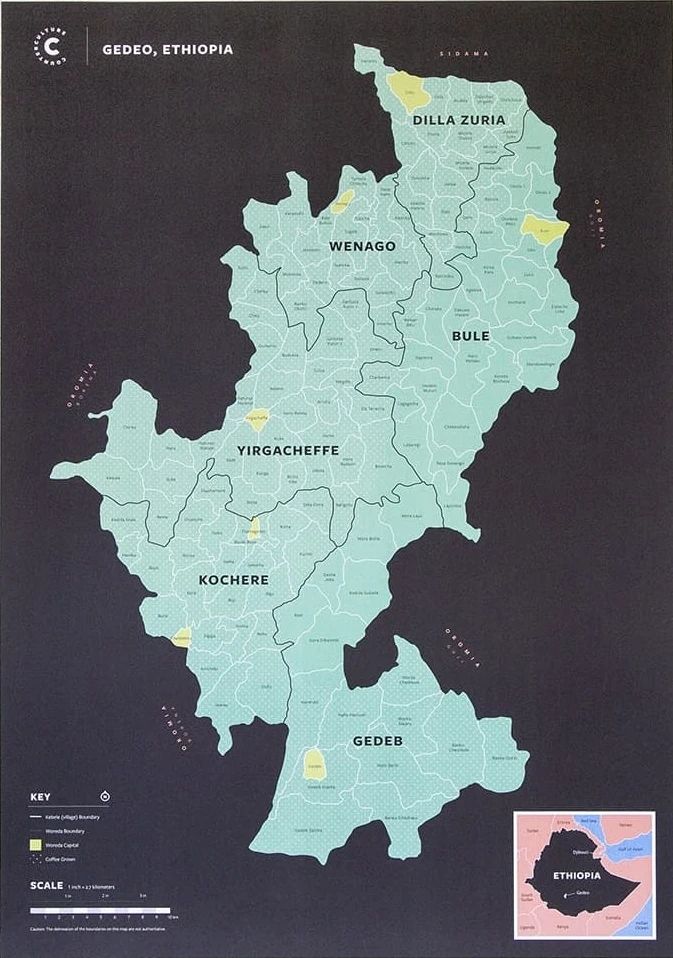
Originally part of the Wotecha Cooperative under the Yirgacheffe Coffee Farmers Cooperative Union (YCFCU), the Gedeo Cooperative officially became independent in 2012. It currently consists of about 300 smallholder farmers. Following the reform of the ECX system in 2018, the traceability of coffee batches has improved, intensifying competition between cooperatives and private processing facilities, which has also driven progress in the overall specialty coffee industry. The Gedeo Cooperative remains committed to traditional washed and natural processing methods and is hailed as the last pure land of Yirgacheffe.
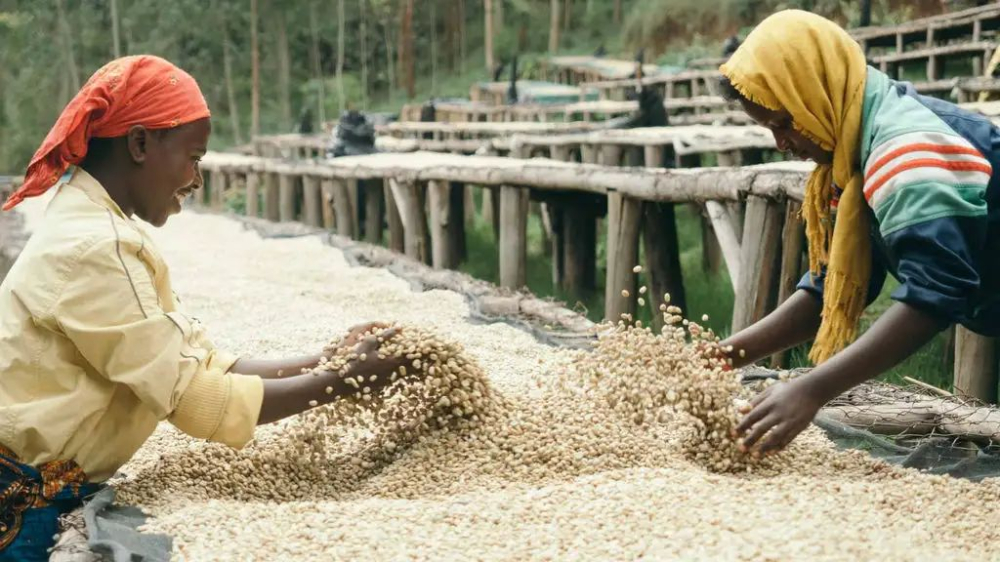
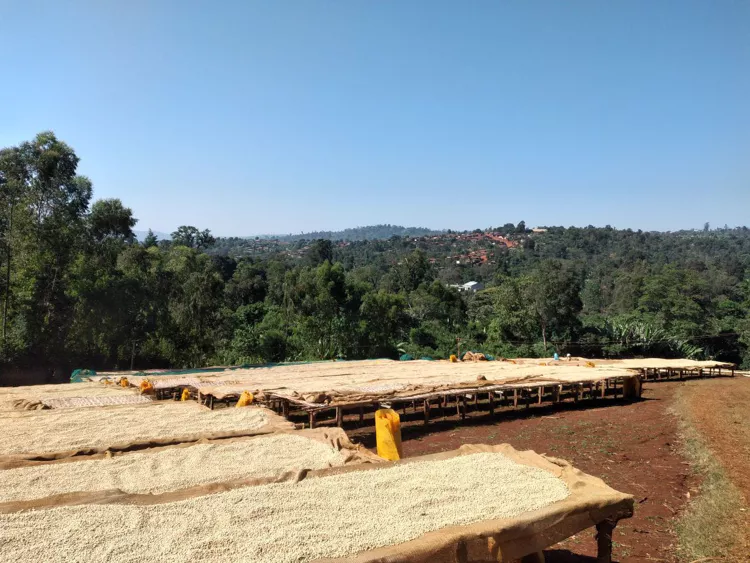
Ethiopia’s washed coffee processing technique was introduced from Central and South America in 1972. The process is relatively complex and water-intensive, resulting in higher costs. The steps of washed processing include: first soaking the coffee cherries in water to remove unripe ones using buoyancy, then using machines to remove the skin and pulp, followed by fermenting the parchment coffee in tanks for 18 to 36 hours until the mucilage layer breaks down. After fermentation, the beans are washed with water to remove impurities and finally dried on African-style raised beds. This method highlights the inherent citrus and lemon tones along with white floral notes of the coffee, resulting in a bright and delicate flavor profile.
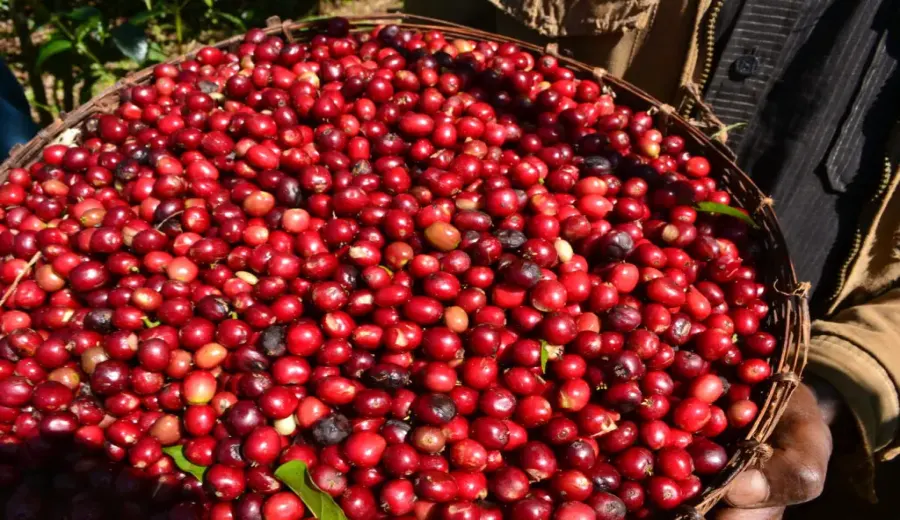
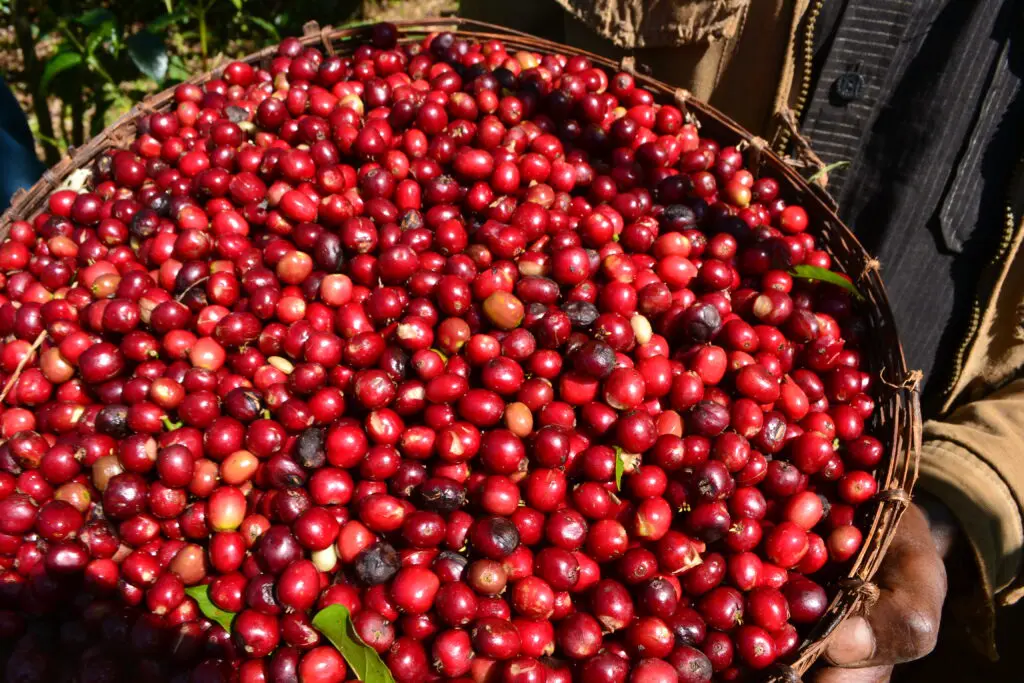
As for the varieties used in processing, most are Ethiopian heirloom varieties. With over 2,000 coffee varieties in Ethiopia, including 1,927 native ones, the government has not fully disclosed varietal information in order to protect genetic diversity. These heirloom varieties usually grow in wild or semi-wild states, and coffee from the same region is often a blend of various natural mutations, forming a unique and consistent flavor foundation for that region—such as intense floral and fruity notes.
In terms of roasting, a light roast better highlights the floral and fruity profiles of Yirgacheffe. Taking a certain brand’s natural-processed lot as an example, the roaster used is a Yangjia 800N (300g capacity), with a charge temperature of 175°C, air damper set to 3, and heat at 120. The turning point occurs at 1 minute and 32 seconds, and when the drum temperature reaches 140°C, the air damper is adjusted to 4. At 166°C, the heat is reduced to 100, and at 176°C, it is further reduced to 80, until at 8 minutes and 28 seconds, the beans show wrinkles and dark spots, signaling the prelude to first crack. First crack begins at 9 minutes and 38 seconds, the air damper is adjusted to 5, and after 1 minute and 30 seconds of development, the beans are dropped at 193.5°C. Agtron bean color value is 74.6, crema color value is 79.8, and Roast Delta is 5.2.
Cupping results show that this natural-processed Gedeo lot offers diverse flavors, including tropical fruits, cream, honey, berries, and citrus, with rich layers. Recommended pour-over parameters are as follows: use a Hario V60 filter, water temperature at 91°C, coffee dose of 15 grams, water-to-coffee ratio of 1:15, and grind size at medium-fine (80% passing through a Chinese standard No. 20 sieve). The pouring technique employs a pulse method: start with a 36-second bloom using 34 grams of water, then pour in small circles to reach 120 grams for the first pour, pause when the water level drops, and continue pouring to 229 grams before stopping, with total extraction time around 2 minutes. These parameters fully showcase Gedeo’s fermented aromas, tropical fruit character, and the citrusy acidity and sweetness in the aftertaste.
In summary, the coffee beans from the Gedeo Cooperative in Yirgacheffe stand out with their high-altitude growing environment, traditional processing techniques, and unique flavor profile, making them an unmissable choice for global specialty coffee lovers. From regional background to processing details, and practical pour-over suggestions, this article aims to help you better appreciate this “pure land of Yirgacheffe” coffee.
The above content is compiled by CoffeeHunters, a coffee news website.


