








Introduction:Colombia is one of the world's top three coffee-producing countries, renowned for its diverse growing regions and rich flavor profiles. This article takes you on an in-depth journey through Colombia’s major coffee-producing areas from north to south, exploring how terrain and altitude influence flavor, detailing the characteristics of mainstream varieties such as Caturra and Castillo, and analyzing four classic single-origin Colombian coffees in terms of processing methods, pour-over parameters, and full flavor profiles — a practical guide for selecting and brewing Colombian beans.
Colombian coffee is not only a globally recognized origin, but also one of the few single-origin coffees directly named after a country. Unlike Brazil, which dominates production but relies heavily on technology, Colombia’s mountainous terrain, active volcanoes, and consistent rainfall nurture high-quality coffee beans with bright acidity, pronounced fruity notes, a clean cup, and a long, lingering finish. Its annual production consistently ranks among the world’s top three, sharing the global supply with Brazil, accounting for about15%.
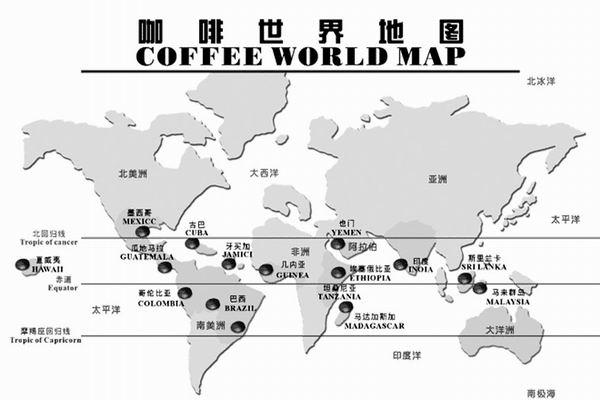
Spanning the northern tip of South America and bordered by the Caribbean Sea and the Pacific Ocean, most of Colombia lies between 4°N and 12°N latitude, situated within the global coffee belt. Its main coffee-growing regions are concentrated in the southern part of the Andes Mountains, specifically the renowned Cordillera mountain range. This area features a cool and humid climate with significant diurnal temperature variations, providing an ideal environment for coffee cultivation.

Northern Colombian regions such as Bucaramanga, with elevations of around1,000 meters, may not be as famous as the higher-altitude southern zones, but their coffee typically offers soft acidity, a rounded and slightly sweet profile, and is easy on the palate. The flavor sometimes resembles that of Indonesian Mandheling, making it suitable for drinkers who prefer low-acidity and full-bodied cups.
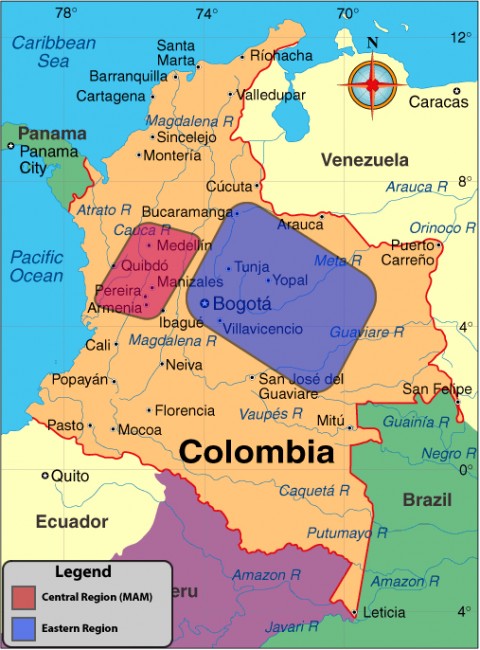
The central region is known for the so-called “MAM” triangle, comprising Medellín (Medellin), Amagá (Amenia), and Manizales (Manizales). This area is the country’s primary source of commercial beans, with large production volumes but generally more moderate flavor profiles, catering to mass-market demand and less favored by the specialty coffee community.
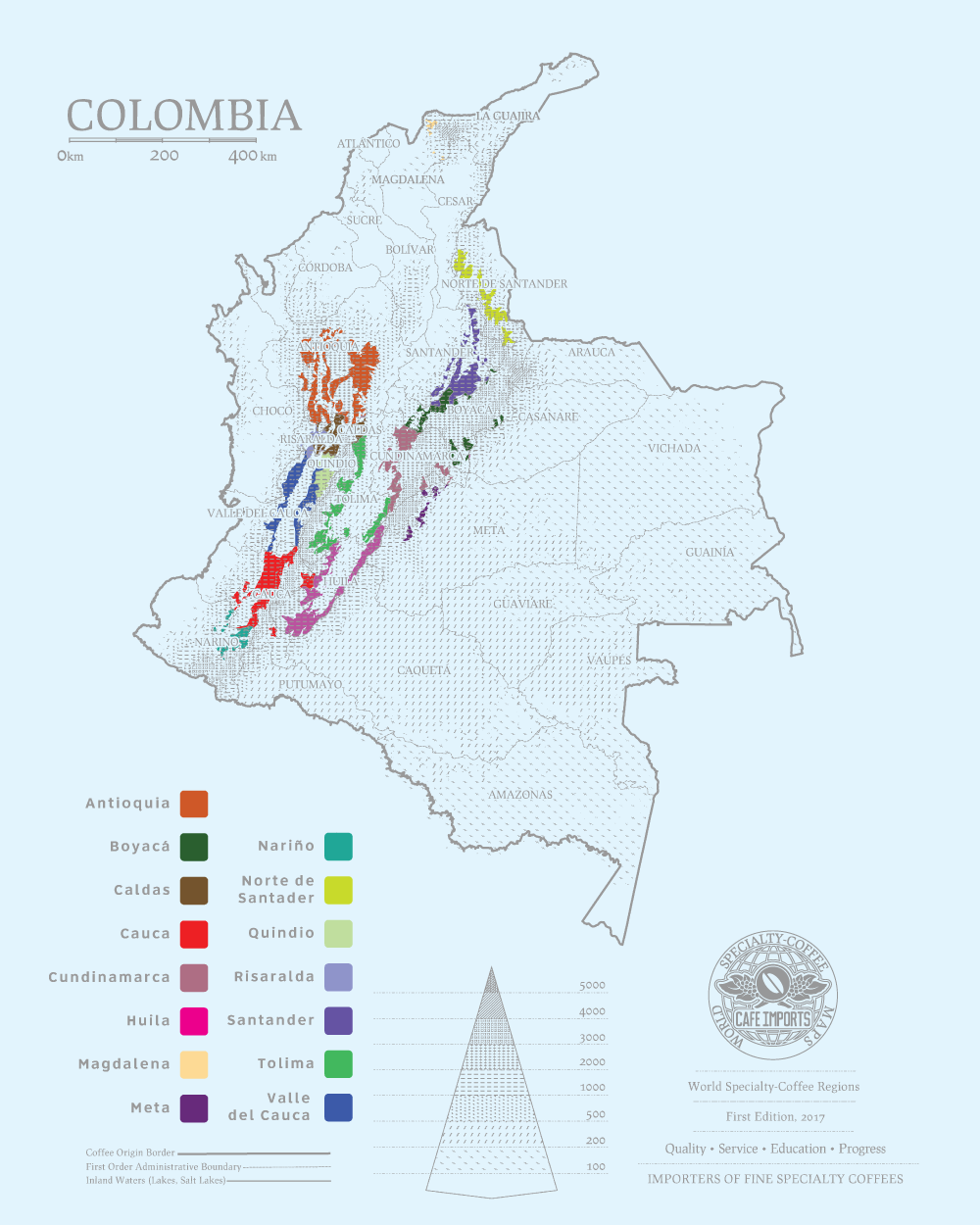
The true essence of Colombian coffee, however, is found in its southern specialty regions, including Santander, Antioquia, Tolima, Huila, Cauca, and Nariño. These areas generally sit at elevations above1,500 meters, with cool climates and fertile soils, producing coffees that often exhibit delicate acidity, berry-like tones, and distinct sweetness — a must-try for specialty coffee enthusiasts.
Santander is located in northern Colombia, with planting altitudes of around1,400 to 1,600 meters, known for its strong herbal undertones and intense aftertaste. A certain brand’s “Colombia Rose Valley” comes from this region, produced at Finca El Granjero at an elevation of1,700 meters, with the Caturra variety and an anaerobic enzymatic washed process, resulting in a complex flavor profile.
Antioquia is an important mid-northern region, accounting for about18%of the country’s coffee production. Its mountainous terrain is occasionally moderated by the warm currents of the Caribbean Sea, contributing to stable and diverse coffee expressions.
The name Tolima in English originates from the indigenous “Pijao people,” meaning “covered in snow.” Local farms are mostly medium-sized, typically between10 to 15 hectares, and often process coffee collectively through cooperatives, while some farmers handle small-batch processing independently to ensure fresh fruit is processed immediately.
The Huila region is located in southwestern Colombia and is one of the country’s premier specialty coffee origins, accounting for about12%of national production. A certain brand’s “Colombia Moonflower Night” comes from Finca El Edén, at an elevation of1,800 meters, with the Caturra variety and an anaerobic natural process, showcasing intense berry and fermentation aromas; another offering, “Colombia Huila,” uses the washed process to highlight a balanced profile of nuts, chocolate, and caramel.

The Cauca region is located in southwestern Colombia, with an average elevation of1,758 meters, reaching up to 2,100 meters. The significant diurnal temperature variation helps coffee ripen slowly and accumulate flavor compounds. A certain brand’s “Colombia Sakura” comes from Finca Paradise, at an elevation of2,050 meters, with the Castillo variety and a special “double anaerobic washed” process, imparting strawberry jam and floral notes, along with a cool herbal finish.
Nariño is Colombia’s southwesternmost region, close to the equator with elevations mostly around1,600 meters. Its volcanic soils are fertile, and the coffee often carries cocoa, nutty, and delicate sweetness notes, with intense aromas and a rounded mouthfeel — a very appealing specialty origin with well-balanced flavor characteristics.
Colombia cultivates a wide variety of coffee cultivars, including Typica, Bourbon, Caturra, Maragogype, Pacamara, Catimor, and Geisha. Among them, Castillo is a particularly noteworthy variety, developed by Colombia’s coffee research institution through multiple generations of backcrossing to address the shortcomings of early Catimor lines. It has now become the country’s flagship cultivar — disease-resistant, high-yielding, and with increasingly refined flavors.
Below are four recommended Colombian single-origin coffees, along with actual pour-over suggestions and flavor profiles:
Brewing Parameters: Water temperature90°C, Coffee dose15 grams, Coffee-to-water ratio1:15, Grind size medium-fine, similar to granulated sugar (approximately80%passing rate through a Chinese No. 20 sieve).
Pour-over Steps: First pour30 grams of waterfor a30-second bloom, followed by pouring95 grams of water(total around 125 grams) over about1 minute; when the water level drops to two-thirds of the coffee bed, pour the remaining100 grams of water(total around 225 grams) over approximately1 minute 35 seconds. Total brew time is about2 minutes, then remove the filter to complete extraction.
Colombia Rose Valley: A blend of peach sweetness and rose floral notes, lively acidity akin to black grapes, a creamy toffee-like mouthfeel, and a winey chocolate finish.
Colombia Moonflower Night: Intense strawberry jam and fermented berry aroma, bright cranberry acidity upon entry, juicy berry flavors filling the palate, with the finish transitioning into winey chocolate.
Colombia Sakura: Wet aroma presents strawberry jam and chamomile notes, with distinct strawberry acidity and fermentation on the palate, followed by herbal notes such as basil and rosemary, and a cool mint-tea-like aftertaste.
Colombia Huila: Overall balanced with prominent sweetness; black chocolate, nuts, and caramel layers are distinct on the palate, and gentle fruit acidity can still be perceived even as the cup cools.
The above content is compiled by CoffeeHunters, a coffee news website.


