








Introduction:Americano is one of the most popular black coffees in the world, offering unique flavors and suitable scenarios whether served hot or iced. This article delves into the definition and flavor characteristics of Americano, and provides a detailed comparison of the preparation methods and core differences between Americano, Long Black, Lungo, and Ristretto. It also offers practical extraction ratios and parameters. Whether you're a coffee beginner or an enthusiast looking to replicate café flavors at home, you’ll find useful guidance here.
Among the many coffee options, Americano stands out with its simplicity and refreshing qualities, making it a daily pick-me-up for many. But do you know the origins of Americano, and how it specifically differs from other similar black coffees like Americano, Long Black, and Lungo? This article will take you on an in-depth exploration of the various facets of Americano—from its historical background to actual preparation, and even how to adjust the recipe according to personal taste—getting all the key points sorted in one go.
Broadly speaking, what we call Americano refers to black coffee made using drip extraction methods, typically taking around four to five minutes to brew, which also results in a relatively higher caffeine release. This type of coffee emphasizes a balance between convenience and taste. Compared to the intense espresso, it better showcases the original layers and flavors of the coffee beans—bright, acidic, and sweet—making it ideal for those who prefer a refreshing taste.

The commonly known "Americano" is actually made by diluting one or more shots of espresso with hot water. Legend has it that this method originated during World War II when American soldiers stationed in Italy, unaccustomed to the strong flavor of espresso, added plenty of hot water to dilute it, gradually evolving into what we now know as Americano. Interestingly, this globally popular drink was even mockingly referred to as "sock juice" by some Europeans in its early days, showing how its acceptance varies by region.
In terms of taste, the performance of Americano depends on the ratio of extraction to water. Many chain store versions, due to over-extraction or poor control of coffee-to-water ratio, can easily produce a noticeable bitter or astringent taste. However, by mastering an appropriate coffee-to-water ratio—such as 1:4.5—you can maintain the coffee’s richness while highlighting the fruitiness and sweetness inherent in the beans, making it suitable for slow sipping and enjoyment.
If you want to make Americano at home, the method is actually very simple. All you need is a basic drip coffee maker. Just add the right amount of coffee grounds and hot water in proportion, wait for about two minutes, and you can enjoy a fragrant cup of Americano. It’s recommended to use medium-fine grind, with water temperature controlled between 88°C and 94°C, which can extract the essence of the coffee more efficiently while avoiding over-extraction that leads to bitterness.
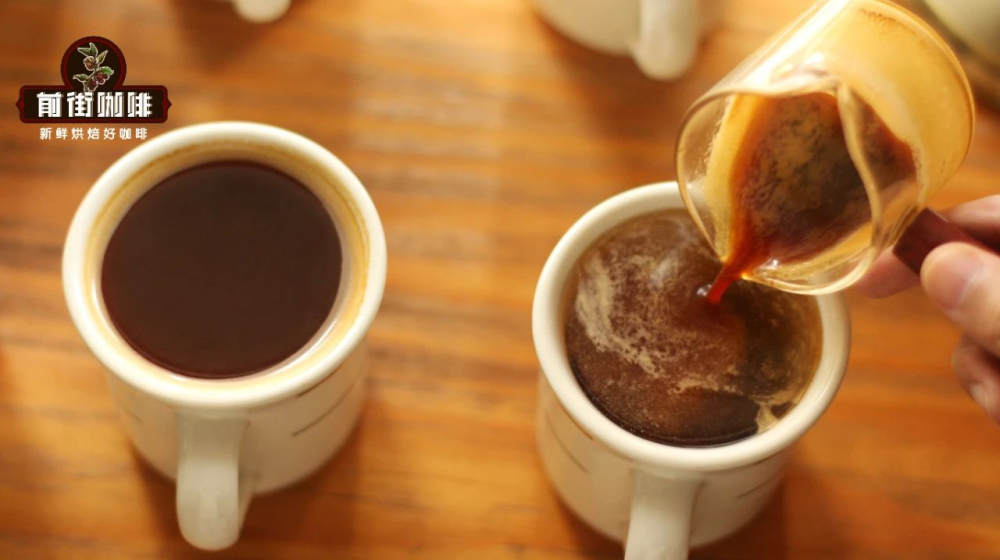
Beyond basic hot Americano, common variations on the market include Americano, Long Black, and Lungo. These three may seem similar, but they actually differ significantly in preparation order, coffee concentration, and taste. The method for Americano is to pour espresso into hot water, usually resulting in a larger cup size of about 250 milliliters, suitable for those who prefer a lighter taste. Long Black, on the other hand, does the opposite—pouring espresso into a cup that already contains hot water, preserving more of the crema layer and resulting in a richer taste, which is especially favored by consumers in Australia and New Zealand.
Lungo is made by adjusting the grind size and extraction time so that espresso is extracted at a faster flow rate with the same amount of water, yielding a larger volume—typically around 60 milliliters. Due to the relatively shorter extraction time, more crema is retained, and the flavor is more concentrated. Ristretto, on the other hand, is the opposite of Lungo—it uses the same amount of coffee but extracts less liquid, resulting in a flavor that is stronger and more intense, suitable for those who enjoy a bold coffee experience.
For those who want to challenge themselves to make professional-grade Americano at home, you can refer to the actual recipe from a specialty coffee shop: using 20 grams of double-shot coffee grounds, extracting for 28 to 33 seconds to produce 40 grams of espresso, then adding 180 grams of 80°C hot water at a 1:4.5 coffee-to-water ratio to complete a cup of Americano with balanced acidity and sweetness, and clearly layered flavors. It’s recommended to use a ceramic cup with a capacity of about 250 milliliters, first pouring in the hot water, then slowly pouring the espresso on top, which helps the flavors blend more evenly.
As for iced Americano, there are also two common methods. One involves placing 3 large ice cubes in a cup, filling it with plain water to about nine-tenths full, then pouring the espresso on top for an immediate cool and refreshing taste. The other method is to pour the espresso directly into a cup filled with ice cubes, allowing the ice to melt naturally and slowly dilute the strong flavor of the espresso, suitable for those who enjoy flavor layers that change over time. Either way, you can find your own optimal balance between different temperatures and tastes.

The above content is compiled by CoffeeHunters, a coffee news website.


