







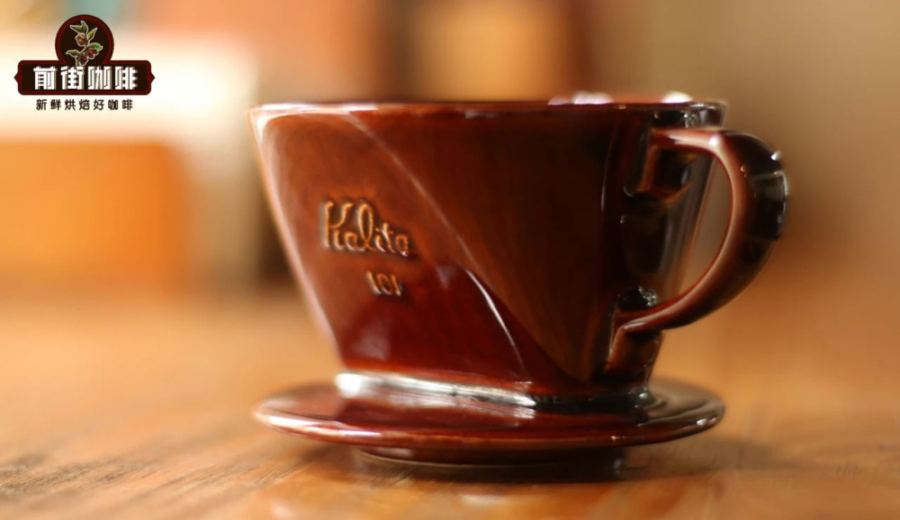
Introduction:In the world of specialty pour over coffee, the design of the dripper has a critical impact on the extraction flavor. The conical structure of the Hario V60 emphasizes layers and fruit acidity, while the flat-bottomed design of the Kalita Wave leans more toward stability and sweetness. This article delves into the extraction characteristics of both through aspects such as dripper structure, rib design, showerhead hole configuration, and coffee bed thickness, and provides a practical three-step pour over parameter guide for the Kalita Wave to help you choose the right tool based on your preferences and adjust to achieve your ideal coffee flavor.
The reason pour over coffee has gained widespread popularity during the third wave of specialty coffee movement is not only because of its intuitive operation and strong sense of ritual, but more importantly, it can clearly showcase the origin flavors of coffee beans and present a clean, bright mouthfeel. Among these factors, the choice of dripper plays a pivotal role. Taking the Hario V60 and Kalita Wave as examples, the two differ significantly in coffee extraction direction due to their distinct design philosophies.
The V60 is a classic conical dripper. Its smooth arc and single large showerhead hole allow for a relatively fast water flow rate, which helps highlight highly volatile substances in coffee, such as fruit acidity and aroma, resulting in an overall layered flavor profile. In contrast, the Kalita Wave is a flat-bottomed dripper. Its flat base and multi-hole design result in more stable and even water flow, often producing coffee with a more balanced mouthfeel and more pronounced sweetness.
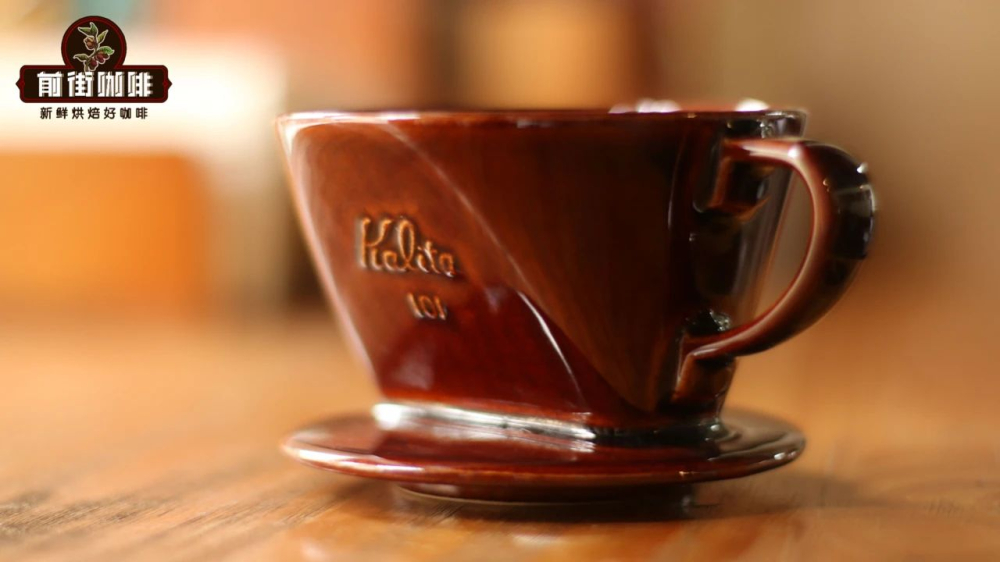
When evaluating the quality of pour over coffee, "extraction uniformity" is a core metric. Regardless of which dripper you choose, the goal is to ensure that each coffee particle is evenly exposed to water, thereby releasing consistent flavor compounds. In past discussions about why the V60 became mainstream, its circular opening design is often mentioned as helping achieve a more consistent pouring path, thereby improving overall extraction consistency.
As a later entrant, the Kalita Wave also emphasizes uniform extraction, but it takes a different design approach. So how does the flat-bottomed dripper actually perform in real use?
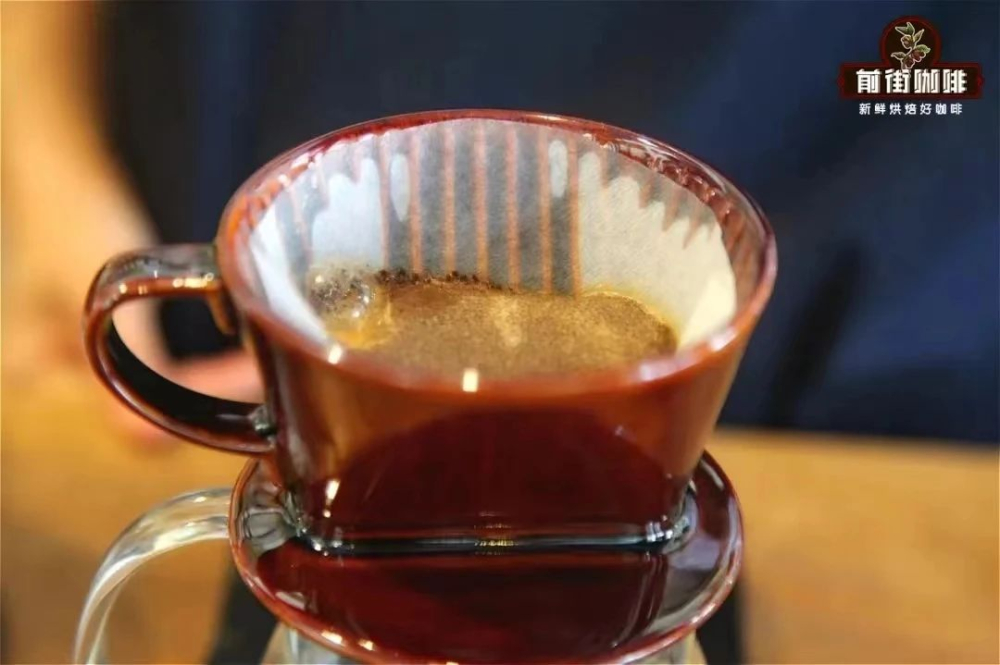
The concept of the flat-bottomed dripper was first introduced by Kalita. The brand was originally known for its fan-shaped drippers. After the rise of the V60, it launched the Wave series as a competitive market product. In 2010, Kalita officially released the Wave series drippers, featuring a flat bottom with a circular opening. The filter paper, which expands outward resembling a cupcake, is also referred to as a "cake dripper." Although it is often seen as a counterpart to the V60, the Wave series actually initiated the trend of flat-bottomed drippers, and later brands including Brand B and Blue Bottle also introduced similar designs.
How do drippers promote uniform extraction of coffee grounds? First, it’s important to understand that achieving completely uniform extraction is nearly impossible, so “uniform” refers to a relative sense of balance. For example, the V60, when viewed from above, has a circular opening that makes it easier to achieve even water distribution. Compared to other drippers with harder-to-control pouring shapes, its extraction performance is usually more consistent.
The flat-bottomed dripper also uses a circular pouring inlet, making its pouring uniformity comparable to the V60. But its greater advantage lies in the coffee bed thickness. Observing from the side, the V60 tapers sharply at the bottom, so as the height increases, the surface area of the coffee bed gradually expands, leading to uneven bed thickness—the central area is thicker, while the edges are thinner, which can easily cause differences in extraction rates across regions. In contrast, the flat-bottomed dripper, with its flat base, results in a thinner and more evenly distributed coffee bed under the same amount of coffee, and with even pouring, can extract flavors more stably.
Therefore, the V60 can usually bring out richer aromas, brighter acidity, and fruity notes, with a strong sense of layers; whereas the Kalita Wave tends to showcase a softer, more balanced mouthfeel with highlighted sweetness.
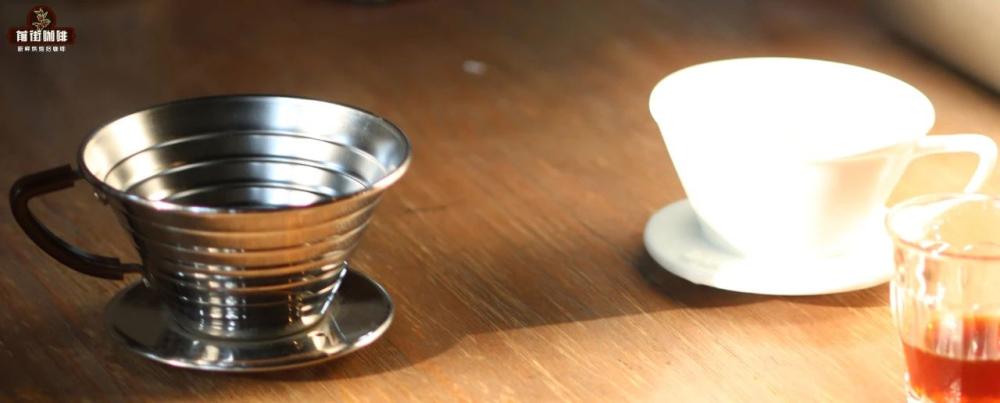
It’s worth mentioning that even among flat-bottomed drippers, design details can affect the final extraction outcome. The bottom of the dripper is typically composed of showerhead holes and a filter paper support structure. Most flat-bottomed drippers use a multi-small-hole design, where the water flow speed is closely related to the total area and distribution of the holes—the larger the total area, the faster the water flows through. For example, some recent flat-bottomed drippers have adopted large-area or even nearly open-bottom designs to further enhance water drainage efficiency.
Additionally, the bottom of the dripper usually features a skeleton structure to support the filter paper and prevent it from fully adhering to the base, ensuring smooth water passage. If the filter paper fully adheres to the base, it will impede water flow and affect extraction efficiency.
The rib design on the inner wall of the dripper is equally crucial and mainly falls into two types: one is water-retention type, and the other is flow-guiding type. For example, the Kalita Wave has horizontal ring ribs that can slow down the water flow and help maintain an even water level inside the dripper—water flows along the ring structure from high to low, further enhancing extraction stability.
As for vertical ribs similar to those on the V60, they help guide the water flow and prevent blockages, making the extraction process smoother.
However, the effectiveness of the ribs on flat-bottomed drippers is relatively less pronounced. Because the cake filter paper used by Kalita only has its outer folds tightly attached to the dripper, meaning the ribs only function partially where the filter paper contacts the cup wall, and the large-scale rib structure cannot fully exert its effect.
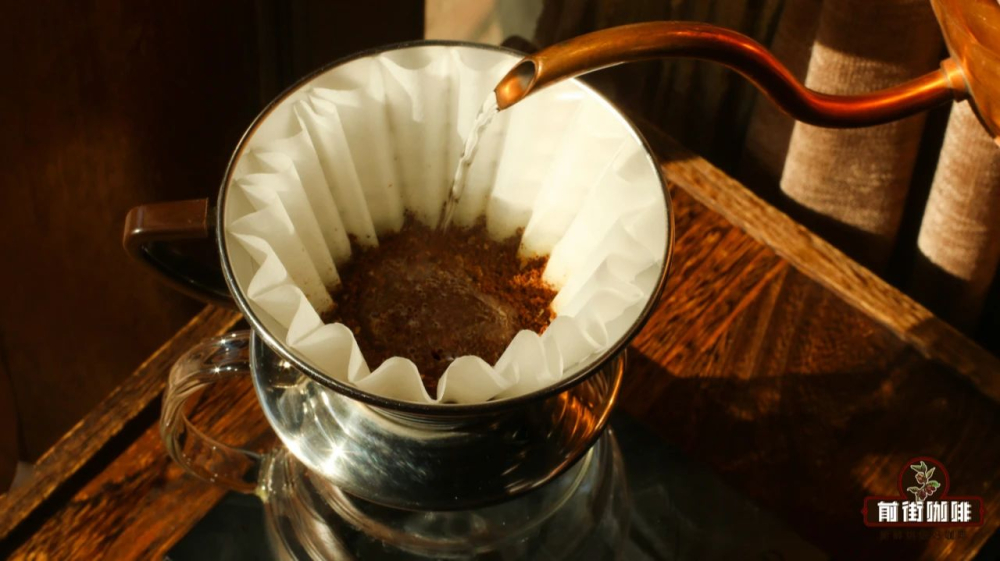
After understanding the design principles of drippers, let’s share a practical set of three-step pour over parameters for the Kalita Wave, suitable for coffee enthusiasts who want to try a flat-bottomed dripper. It is recommended to control the water temperature at around 90°C, and the total coffee dosage can be adjusted according to cup size, generally around 15–20 grams.
The first step is the bloom. Pour approximately 40 grams of hot water. This is especially important for flat-bottomed drippers because the coffee bed has a larger contact area with the filter paper, and thorough wetting is needed to initiate extraction. The bloom time is recommended to be about 30 seconds.
The second step, after the bloom, begin the first pour by slowly and evenly circling the water to reach a total of 125 grams. You can slightly slow down the pace at this stage to allow the coffee grounds to fully expand. Then let it sit for about 10 seconds.
The final step is to pour again in circles until the total water volume reaches 225 grams. The overall extraction time is recommended to be controlled at around 2 minutes. Such parameter settings help achieve a balanced and sweet coffee profile, suitable for users who prefer a smooth mouthfeel and gentle layers.
The above content is compiled by CoffeeHunters, a coffee news website.


