








Introduction:Mastering the art of crafting elegant etched latte art is not just a display of skill, but also a hallmark of a professional barista. However, to pour symmetrical and delicate patterns, in addition to diligent practice, it’s crucial to master the quality of espresso crema and the nuances of jug handling. This article delves into common issues—such as asymmetrical designs, uneven or overly thick line textures—and provides practical steps, from jug strength training with an empty pitcher to water simulation exercises, to help you steadily improve your latte art skills.
Achieving symmetrical and fine etched lines is never just about repeated practice. The foremost priority is ensuring that the espresso you’re working with has a rich and well-textured crema. Many people encounter problems such as asymmetrical patterns, inconsistent line density, or overly coarse lines during etched latte art practice—all of which are often closely related to jug angle, pressure control, and milk foam thickness.
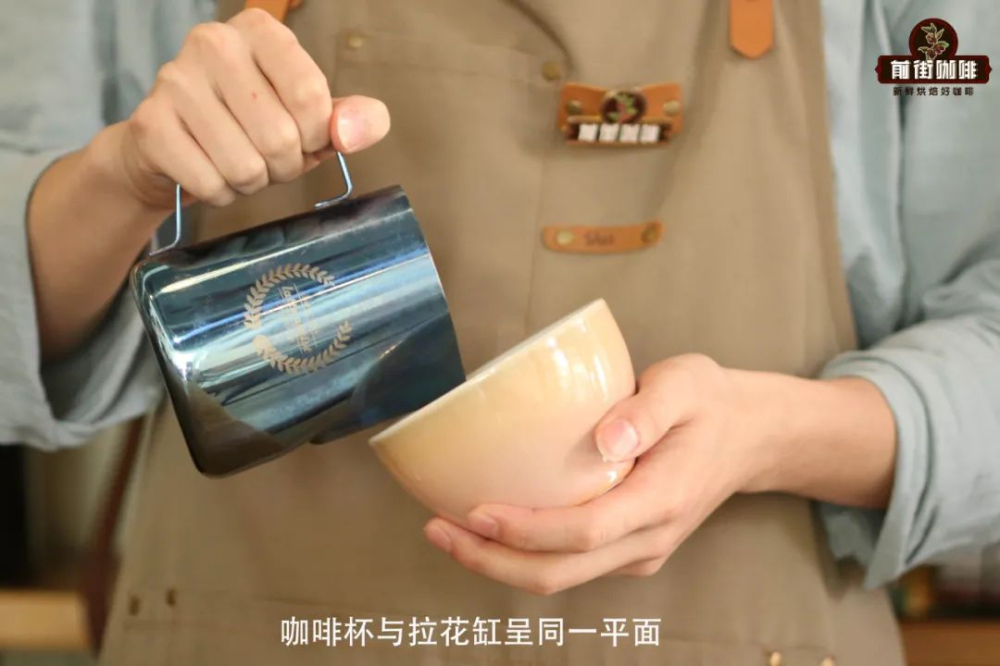
For example, if you find that your poured designs are always asymmetrical left to right, the most common reason is that the pouring jug and coffee cup are not aligned along the same straight line. When viewed from the front and side, you should only see the flat outlines of the jug and cup—not their three-dimensional shapes. When looking down from above, it’s recommended to position the cup handle towards your body’s center, and ensure the central axis of the jug is parallel to that of the cup. Only then can the pattern achieve symmetry.

Another common issue is etched lines being tightly packed on one side while sparse on the other. This can stem from two factors: first, failing to maintain left-right symmetry when positioning the jug, and second, applying uneven force during the pouring motion—that is, putting too much pressure on one side and not enough on the other.
It’s recommended that beginners first focus on finding the feel of applying force using an empty jug before moving on to milk. As shown in the following video, stabilize the jug body with your thumb, use the other four fingers to apply force, and pivot from the handle to create back-and-forth pouring motions. The key lies in sensing the rhythm between where force is applied and how the jug rebounds.
Once you’re familiar with the basics of applying force with an empty jug, you can move on to simulated practice using water. Unlike the empty jug, water creates resistance, so the tactile sensation during pouring will change. The focus at this stage is on simultaneously controlling the flow of water and the range of your pouring motion, and adjusting your force as the water level in the jug gradually decreases to maintain fluidity. As seen in the video, as the water level drops, the pouring motion becomes lighter—this is also an important process for building muscle memory.

Overly thick etched lines usually stem from two main reasons: first, the milk foam is too dense and of poor texture; second, there's a habit of pouring too close to the rim of the cup, which might help with stability when creating heart or tulip patterns, but actually hinders etched techniques. When the spout is too near the liquid surface, the motion is more likely to be obstructed, affecting not only line smoothness but also making the white patterns appear coarse and lacking in fine detail.
To improve such issues, it’s recommended to start by adjusting the texture of the milk foam, ensuring it is fine, even, and of moderate thickness. In addition, consciously maintaining an appropriate distance between the jug and the cup rim during practice helps improve line accuracy and fluidity. Though these details may seem minor, they are key factors influencing the final texture and quality of your work.
In summary, there are no shortcuts to mastering etched latte art. Beyond understanding the principles behind each movement, it’s essential to build stable muscle memory through repeated practice. From correct jug positioning and force control to adjusting milk foam texture, every step plays an indispensable role. Only by fully grasping these fundamentals can you gradually pour etched patterns that are symmetrical, delicate, and rich in layering.
The above content is compiled by CoffeeHunters, a coffee news website.


