








Introduction:As temperatures rise, many coffee enthusiasts have once again turned their attention to iced pour over. This article uses Ethiopian Natural Red Cherry beans as an example, testing two pour over methods—adding ice before brewing versus adding it afterward—using the Hario V60 dripper. Under identical conditions of coffee-to-water ratio, water temperature, and grind size, we explore the significant differences in flavor profiles. Whether you're just starting out or already experienced, you can gain more precise extraction skills and flavor assessment abilities from this comparison.
As the weather gradually warms up, many pour over coffee lovers begin to favor the refreshing taste of iced pour over. This time, we use an Ethiopian Natural Red Cherry coffee bean as the base, employing the Hario V60 dripper to compare two common methods: "adding ice cubes before brewing" and "completing the brew first and then pouring in ice cubes." Even under completely consistent parameters such as a coffee-to-water ratio of 1:10, a water temperature of about 91–92°C, 15 grams of coffee grounds, and 100 grams of ice, the final flavor layers exhibited by the two methods are drastically different.

Why do the same coffee beans and basic parameters, with only the order of adding ice changed, result in such vastly different flavors? The key lies in the design characteristics of the V60 and the distribution of flavor compounds released at each stage of the brewing process. The spiral ridges of the Hario V60 extend the water path and brewing time, concentrating the flow of water along the spiral walls downward, which compresses the coffee bed and extracts a diverse range of flavors. The timing of adding ice directly affects whether these delicate flavors can be fully expressed.
The Ethiopian Natural Red Cherry beans used in this test come from the Aletalend Estate in the Yirgacheffe region, grown at an altitude between 1700 and 2200 meters. They are of local heirloom variety, processed via the natural method, and feature pronounced sweetness and fruity notes, making them highly suitable for iced pour over experiments. For water temperature, to balance acidity and sweetness, we selected 91–92°C, which for medium-light roasted beans can stably extract desirable aroma and mouthfeel.

The coffee-to-water ratio is set at 1:10, meaning 15 grams of coffee grounds with 150 milliliters of hot water, plus 100 grams of ice added at the end for dilution. The recommended grind size is close to the SCAA standard of 80% extraction, suitable for light roasts, helping to fully release aroma and sweetness even in a lower water temperature environment. If the grind is too coarse, it may lead to under-extraction; if too fine, it might bring out excessive impurities and bitterness.
First, let’s try the first method: adding ice before brewing. The steps are as follows: place 100 grams of ice in the server in advance. Do not preheat or rinse the dripper and filter paper. Pour the coffee grounds directly into the dripper, add 30 grams of hot water for a 30-second bloom to allow the coffee bed to expand into a “hamburger” shape. Then pour water in a circular motion from the center outward up to 90 grams, observing bubble changes and flow rate—this stage mainly extracts acidity and fruity notes. When the water level drops to half of the coffee bed, proceed with a third pour up to 150 grams. The total brew time is about 1 minute and 40 seconds. Finally, mix and stir all the brewed coffee with the ice before tasting.
The flavor produced by this method is relatively simple, mainly showcasing mild berry acidity, an almond-like nuttiness, and a honeyed finish. However, the overall layering is not distinct, and the flavor presentation is rather flat, lacking intensity. The key reason is that the ice directly contacts every drop of brewed liquid, causing the high-concentration initial brew to be rapidly diluted, preventing the formation of noticeable flavor layers.
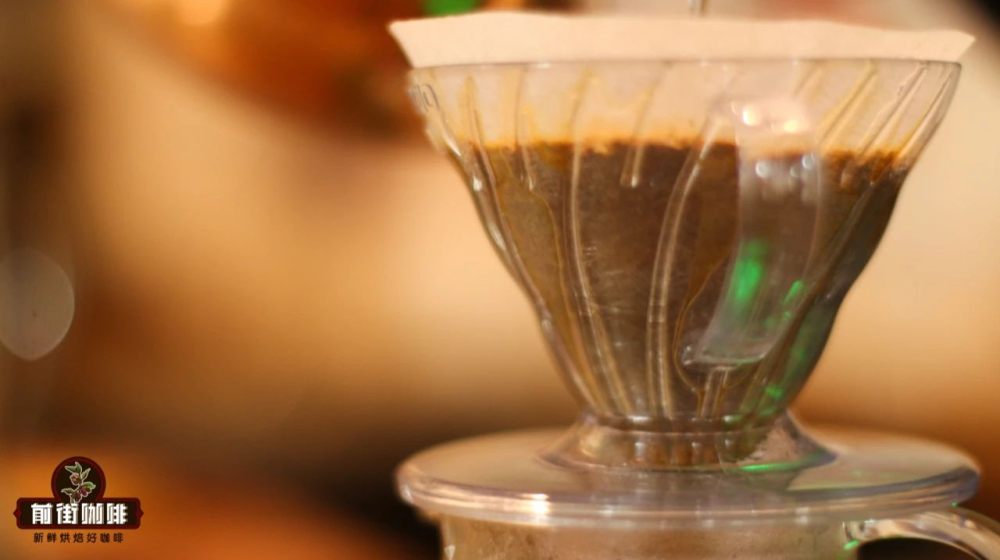
The second method involves completing the full brewing process first, then mixing the hot brewed coffee with ice. For this approach, both the dripper and server are preheated, and the filter paper is rinsed to minimize unwanted odors. After the 30-gram bloom, proceed with pours of 90 grams and 150 grams, with similar timing and foam characteristics as the first method. However, after the 150-gram pour, instead of immediately adding ice, the first brew is poured into another server preloaded with pre-chilled ice, shaken evenly to mix, then transferred into a server containing 100 grams of fresh ice. Finally, stir and enjoy.
The flavor presented by this method is noticeably more three-dimensional: a strong berry juice character, bright and clear acidity, honey-like sweetness running throughout, smooth and delicate mouthfeel, long-lasting aftertaste, and rich, layered complexity. The reason behind this is that the coffee liquid undergoes three full stages of extraction in the dripper, allowing each flavor compound to be fully released and evenly blended before contacting the ice. This avoids the immediate dilution of the concentrated essence, preserving a more complete aroma and layered structure.
Overall, the difference between the two methods primarily stems from the inherent design characteristics of the V60 dripper: the spiral ridges guide the water to flow downward in a concentrated path, enabling the acid, sweetness, and body compounds released at different stages to be presented in layers. If ice is added first, each stage of extracted liquid is instantly chilled and diluted upon contact, preventing the buildup of distinct layers. Conversely, if the full extraction is completed first and then mixed evenly with ice, the various flavor molecules can fully integrate before gradually cooling through the ice, achieving the best possible balance.
For coffee lovers who want to try iced pour over at home, it is recommended to choose the appropriate method based on personal taste preferences: those who prefer a refreshing, low-intensity flavor may try adding ice first; if you hope to experience a richer, more layered interplay of fruit acidity and sweetness, the method of adding ice after brewing and thoroughly shaking is highly recommended. Mastering these details will also allow you to brew a truly impressive cup of iced pour over coffee.

The above content is compiled by CoffeeHunters, a coffee news website.


