







Introduction:The grind size precision of espresso directly affects extraction results, but how do you find the most suitable settings? This article explains in detail how to gradually lock in the ideal extraction range by adjusting grind fineness, controlling extraction time, and maintaining stable coffee dose, water temperature, and pressure. It also further describes how to identify flavor defects through tasting, and how to fine-tune the coffee dose to optimize overall performance when the flavor profile is not ideal.
The grind size used for espresso is much finer than that for pour over coffee—so fine that it cannot be calibrated with standard sieves. Many beginners in the world of espresso often hit a wall with grind settings, either over-extracting and ending up with bitterness, or under-extracting and getting sourness or watery taste. So how should you set it up to brew a cup of espresso with balanced flavor and full body?
First, we need to understand the physical characteristics of espresso coffee grounds. Their particle fineness is roughly between 150 to 300 microns, looking and feeling almost like flour. This extremely fine grind is key to extracting about 30 milliliters (approximately 40 grams) of thick coffee liquid with crema (coffee oils) in a short time (20–30 seconds) under high pressure (typically 9 bar) and appropriate water temperature (around 90.5–96°C).
So, how can you determine whether this finely ground size, which is hard to discern by eye, is appropriate? In fact, the key lies in controlling variables. With fixed coffee dose, beverage weight, water temperature, and pressure, the only adjustable factor is grind fineness. The generally recommended starting parameters are: 20 grams of coffee grounds, extracted at a 1:2 coffee-to-water ratio to yield 40 grams of coffee liquid, with water temperature set at 93°C and machine pressure maintained at 9 bar. This combination is regarded by many professional baristas as a stable and easily adjustable benchmark.
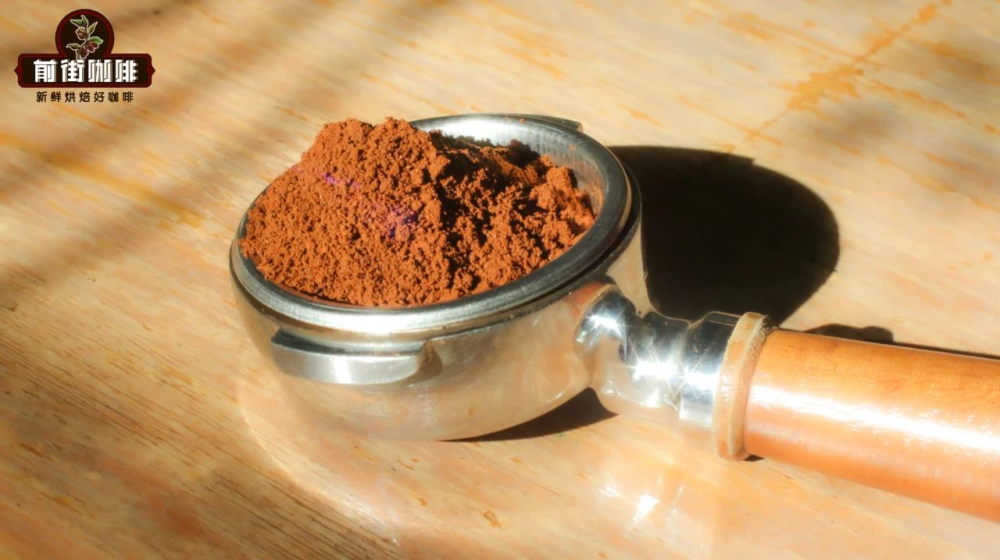
Before making adjustments, make sure the coffee is evenly distributed and tamped with consistent pressure—these human factors, if inconsistent, will directly interfere with your judgment of grind size. Next, observe changes in extraction time by adjusting the grind setting on your grinder. If the grind is too fine, water flows more slowly, extending extraction time and often leading to over-extraction flavors such as bitterness and burnt notes; conversely, if the grind is too coarse, water flows too quickly, shortening extraction time and often resulting in incomplete flavor, presenting as sourness or a watery taste.
Once you’ve adjusted the grind size so that the extraction time falls within the target range of 20–30 seconds, don’t rush to assume you’re done. The truly important next step is to make the final judgment with your taste buds. When tasting, pay attention to whether any unpleasant flavors emerge—such as sourness, bitterness, rough mouthfeel, or obvious “wateriness” (i.e., thin flavor lacking depth). If these negative flavors appear, it may mean your grind size still needs fine-tuning, or the extraction time needs to be recalibrated.
Additionally, it’s worth mentioning that even when the grind size is within a reasonable range, you might sometimes find the flavor performance still falls short of expectations. Take the Colombian Caturra & Gesha Blend (abbreviated as Xi Zha SOE) as an example. When grind and extraction parameters are correct, it should showcase rich aromas of grape, passion fruit, and citrus. But if, under these correct parameters, you still perceive some slight burnt bitterness, you might consider slightly adjusting the coffee dose. For instance, reducing the coffee dose from 20 grams slightly to 19.5 or 19.8 grams can speed up water flow and shorten extraction time, often making the floral and fruity notes inherent to this bean more pronounced.
In summary, to set an ideal espresso grind size, you can’t rely solely on intuition—you need to systematically control variables, adjust step by step, and verify results. First, fix the coffee dose, beverage weight, water temperature, and pressure, then find the right extraction time by adjusting grind size, and finally confirm flavor performance through tasting. If flavors still have flaws, you can further fine-tune the coffee dose or other parameters until reaching the optimal balance point. Through this process, even coffee beginners can gradually develop their own espresso grind and extraction logic.
The above content is compiled by CoffeeHunters, a coffee news website.


