







Introduction:Jamaican Blue Mountain No. 1 coffee is often hailed as the pinnacle of the coffee world, but does its high price and legendary exceptional flavor truly live up to the hype? This article delves into the history, growing conditions, grade classifications, and official certification standards of Blue Mountain coffee. It also explores the unique characteristics of the Typica variety and the washed processing method. Practical recommendations for roasting and pour over parameters are provided to help coffee enthusiasts fully understand the true nature of this top-tier coffee and the key points of its appreciation.
Jamaican Blue Mountain No. 1 coffee is often regarded as the archetype of coffee flavor, with its exquisite balance of acidity, sweetness, and bitterness considered by many coffee experts as a key reference for judging a high-quality cup. However, beyond its flavor, the reasons behind the premium price of this top Jamaican coffee are equally worthy of in-depth exploration. Factors such as regional restrictions, natural disasters, and market supply and demand all contribute to shaping the rare status of Blue Mountain No. 1.
Looking back at history, Blue Mountain coffee once accounted for over 80% of Japan’s coffee imports for a long time due to strong demand from that market, making the amount that flowed to other regions extremely limited. Especially in the era when specialty coffee was not yet widespread, the opportunity to taste authentic Blue Mountain coffee was quite rare. However, the global economic recession of 2008, followed by natural disasters such as leaf rust and forest fires, dealt a severe blow to the Blue Mountain coffee industry and further drove up its market price.
Nevertheless, although Blue Mountain No. 1 is expensive, it is not currently the most costly coffee on the market. With the development of the specialty coffee market, many competition lots, due to their limited production, often achieve astonishing auction prices, and the value of these special bean varieties can sometimes surpass even that of Blue Mountain.
How can you confirm that what you have is authentic Blue Mountain No. 1?
According to the regulations of the Jamaica Coffee Industry Board (CIB), only coffee beans grown in specific areas of the Blue Mountains at elevations above 2,200 feet are eligible to be called Jamaican Blue Mountain. These beans are subdivided into NO.1, NO.2, NO.3, and hand-picked peaberry PB based on bean size and quality. Among them, Blue Mountain No. 1 green beans must meet strict criteria such as a screen size of 17 or higher, a defect rate below 3%, and a moisture content of around 13%.
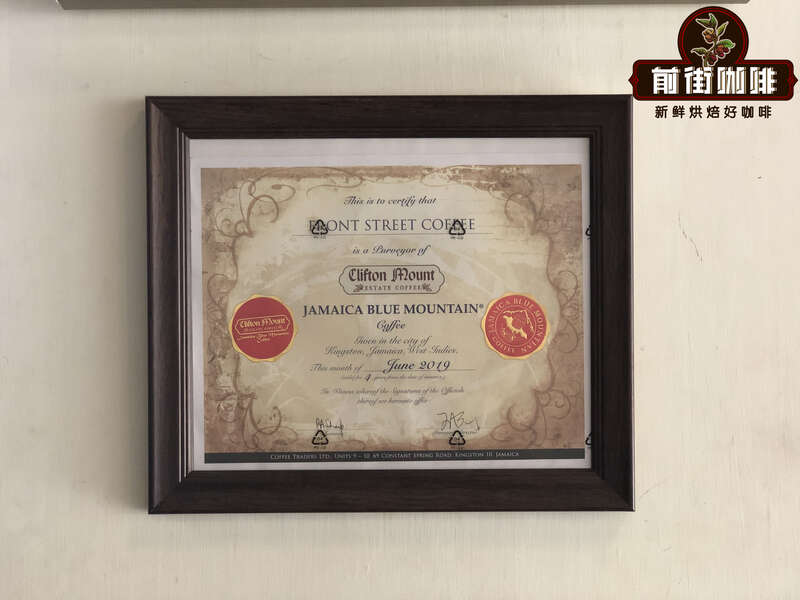
Currently, the Jamaica Coffee Board provides three official certificates for all exported Blue Mountain coffee: a quality certification, an authorized sales certificate from the producing farm, and a certificate of origin. These three certificates are important criteria for verifying the authenticity of Blue Mountain No. 1. In addition, the export and production of Blue Mountain coffee are strictly regulated, with only four government-licensed processing factories and sixteen exporters qualified to participate.
The Growing Region and Environment of Blue Mountain Coffee
Authentic Blue Mountain coffee can only be grown in the Blue Mountains of eastern Jamaica, an area with elevations between 1,000 and 1,700 meters, featuring fertile volcanic soil and a consistently humid climate. With an average annual rainfall of up to 1,980 millimeters and temperatures stable around 27°C, along with year-round foggy conditions, the environment provides ideal growing conditions for coffee trees. It is worth mentioning that the Blue Mountains derive their name from the blue haze reflected by sunlight on the sea and mountaintops, and this unique landscape also contributes to the distinctive flavor profile of Blue Mountain coffee.
Local coffee cultivation often employs mixed planting methods, with coffee trees grown alongside banana and avocado trees on steep terraces. This not only increases biodiversity but also provides natural shade and nutrients for the coffee trees. However, due to the rugged terrain, harvesting is extremely challenging and is usually carried out manually by experienced local female workers, who must accurately judge the ripeness of the coffee cherries—any slight misjudgment can affect the final coffee quality.
Clifton Estate and Blue Mountain Grade Classifications
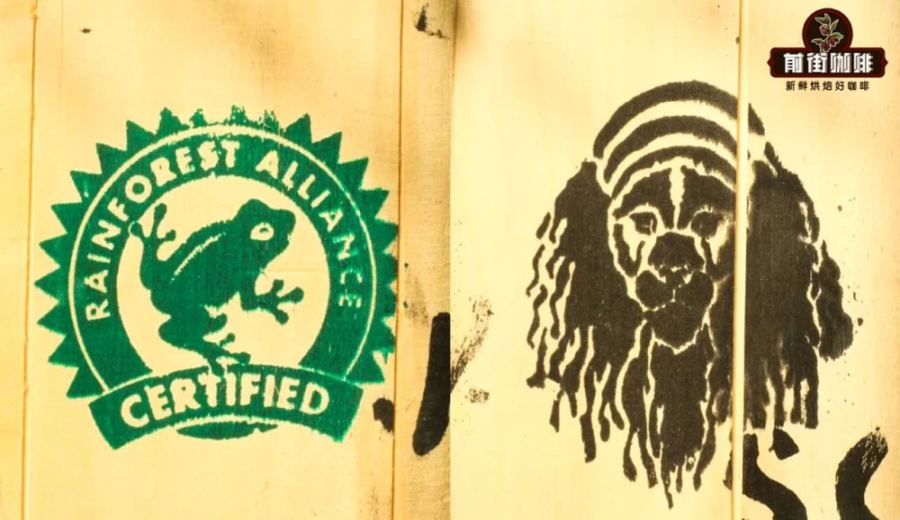
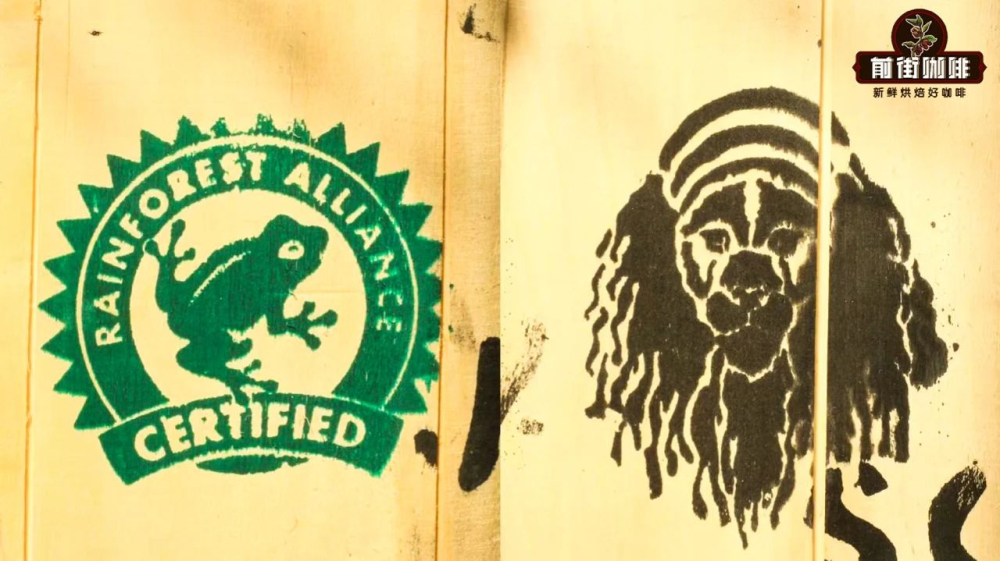
Clifton Estate is one of the oldest and still-operating coffee-growing regions in the Blue Mountains, situated at an elevation of 1,310 meters and also one of the few farms in Jamaica to receive “Rainforest” certification. As early as the mid-18th century, coffee cultivation began in this area, which still consists of small farms operated by multiple generations of family-run operations, with many estate owners having farmed here for over two centuries.
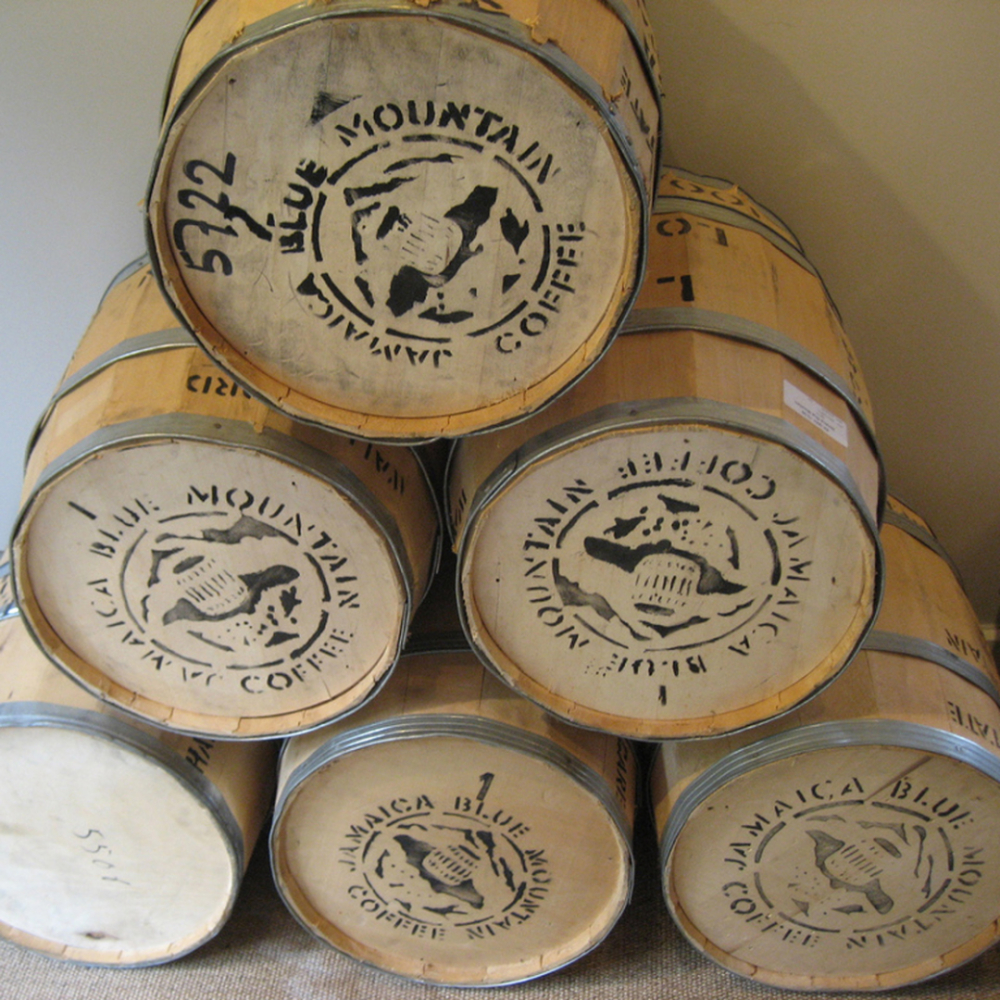
Blue Mountain coffee is divided into four grades based on bean size and defect rate: NO.1 requires 96% of beans to be 17/18 mesh with a defect rate no higher than 2%; NO.2 is 16 mesh, NO.3 is 15 mesh, and peaberry PB is 10 mesh. The Blue Mountain No. 1 selected from this region comes from export companies designated by the National Coffee Board, is shipped in wooden barrels, and holds Rainforest certification, ensuring its authenticity and quality.
Typica Variety and Washed Processing Method
Blue Mountain coffee mainly uses the Typica variety, which has bronze-colored leaves and elliptical or slender pointed beans. It offers elegant flavors but has low yield and weak disease resistance. Typica coffee cherries turn bright red when ripe, resembling cherries, and are the preferred variety for many top-tier coffees.
In terms of processing, Blue Mountain coffee has long exclusively used the washed method. This process involves fermenting and washing to remove the pulp and flesh, then using water flow and friction to clean the beans until they are smooth and clean. The processed beans remain wrapped in their parchment layer and must undergo proper drying to reduce the moisture content to 12–14% before storage and further processing. Each step in this series requires precise control to ensure the purity and stability of the final flavor.
Roasting and Pour Over Recommendations
Given the characteristics of Blue Mountain No. 1, it is recommended to use medium-dark roasting to fully bring out its rich flavors. The roasting profiles in this region are divided into washed and natural types, each suitable for different flavor-oriented brewing methods. For brewing, it is recommended to use a Kono filter, with water temperature controlled at 88°C, a coffee-to-water ratio of 1:15, and grind size set to 70–75% passing through a 20-mesh sieve. These parameters effectively prevent over-extraction while preserving the distinctive dark chocolate and nutty aromas of Blue Mountain coffee, delivering a creamy-smooth mouthfeel and a perfect balance of acidity, sweetness, and bitterness.
In practice, a three-stage pouring method can be used: the first stage involves a 30-second bloom with 30 grams of water, followed by the first small circular pour to reach 125 grams before pausing, then pouring again after the liquid level drops to reach 225 grams for completion, with a total brew time of about 2 minutes. This extraction method fully showcases the delicate layers and rich flavors of Blue Mountain No. 1.
The above content is compiled by CoffeeHunters, a coffee news website.


