








Introduction:Geisha coffee often costs hundreds of dollars per pound—so what justifies such a high price? This article delves into the origins of the Geisha variety, its unique flavor profile, the reasons behind its scarce production, and how Hacienda La Esmeralda helped put it on the global map. We also share practical pour over recommendations and an affordable alternative, helping you understand the value of Geisha from a professional perspective and learn how to brew its elegant floral and fruity classic flavors at home.
Both are coffee, yet some cups cost just a few dozen yuan, while others can be sold at sky-high prices of hundreds of dollars per pound—what’s the difference? Geisha coffee is the most representative example. This article will break down why Red Label Geisha can be auctioned at up to $340 per pound by examining factors such as varietal characteristics, auction market trends, growing region environments, and processing methods. Through actual pour over parameters and tasting experiences of more affordable Geisha offerings, we’ll guide you through the unique charm of this premium coffee in full.

The high price of Geisha (Geisha) first stems from its remarkable performance in auction markets. Since its debut in 2004, it has garnered widespread attention for its distinctive floral and fruity notes. For example, at the 2017 Panama Specialty Coffee Auction, the natural-process Geisha from Hacienda La Esmeralda sold for as much as $601 per pound—nearly double the previous record, equivalent to RMB 8,900 per kilogram of green beans. In 2018, the bidding price for Red Label Geisha was $340 per pound, won by HARU International Corp, while other Geisha lots mostly ranged between $80 and $100. By 2019, bidding prices even exceeded $1,029 per pound, highlighting its strong market demand.
Geisha is an extremely unique variety under the Arabica species, boasting a highly recognizable flavor profile. Common descriptions include intense white floral notes, bright citrus and peach acidity, coupled with a rich, complex fruit-like layering. It feels smooth like butter on the palate, with an aftertaste that carries the delicate sweetness of oolong or green tea. The overall experience is more akin to sipping a premium fruit tea than drinking regular coffee. This flavor originates from the variety’s genetics but is also deeply influenced by cultivation altitude, climate, soil, and post-harvest processing—it is the result of multiple factors perfectly aligning.
Scarcity is another major factor driving up the price. Considering Panama’s annual national coffee production of about ten thousand tons, Hacienda La Esmeralda produces only around 150 bags of green beans annually—approximately 9,000 kilograms. If Geisha accounts for just 3% of that, its annual output is only about 270 kilograms. With ever-increasing market demand and ongoing media coverage of its flavor characteristics, the supply-demand imbalance naturally keeps prices high.
Beyond limited production, Geisha itself is also extremely demanding in its growing conditions. Compared to other mainstream Arabica varieties, not only does Geisha yield less per plant, but it also has higher environmental requirements. It needs to be planted at high altitudes, relying on fertile soil and moderate shade—direct sunlight is not suitable. Its leaves are thinner, resulting in lower photosynthesis efficiency, and its root system is relatively fragile, leading to slow absorption of water and nutrients. As a result, fruit yield is only about half that of the Caturra variety. Both the labor costs of cultivation and harvesting are relatively higher, all of which are reflected in its final retail price.
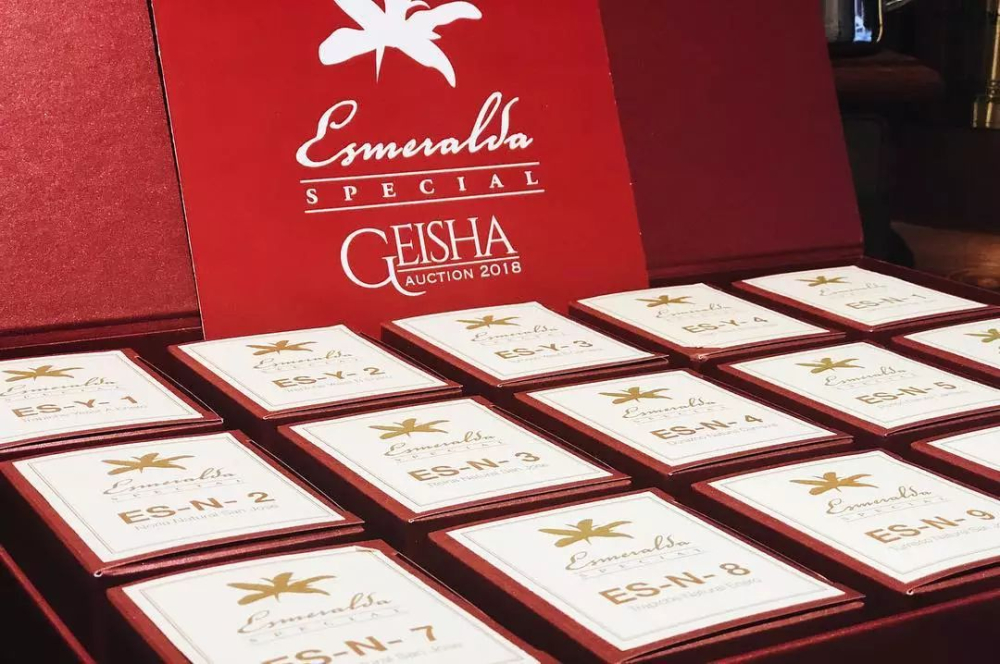
The international fame of Geisha is largely attributed to Hacienda La Esmeralda in Panama. According to the estate's third-generation manager, Daniel, he selected Geisha as the flagship variety after numerous tests and cuppings in 2003. Before the Best of Panama (BOP) competition that year, he discovered during internal selection that this bean exhibited a rich array of flavors—including jasmine, citrus, peach, blueberry, bergamot, and sugarcane. Although slightly different from the mainstream preferences of the time, he decided to enter it into the competition—and it won first place.
In 2005, Hacienda La Esmeralda sent Geisha to compete in the U.S. Specialty Coffee Association (SCAA). It not only received high praise but also consecutively won world championships in 2006 and 2007, propelling Geisha into the global spotlight of specialty coffee. Since then, many producing regions have begun cultivating Geisha, including Taiwan and Yunnan in China. However, most experts still believe that Hacienda La Esmeralda’s natural processing method and strict quality control best showcase the classic flavor characteristics of Geisha.
If you want to experience the flavor of Geisha at a more affordable price, try the washed Geisha from the Boquete region of Panama. This bean is available at related shops for around 30 yuan. Though not from a top-tier auction lot, it still retains the characteristic bright acidity and fruity notes of Geisha. The washed process helps preserve a clean and bright flavor profile, reducing interference from impurities and making the floral and fruity notes more prominent. Its processing steps include: first removing the outer skin and pulp of the coffee cherry, then fermenting the mucilage-covered beans in water for about 24 hours, followed by rinsing with clean water to remove residual mucilage, and finally drying to around 12% moisture content before removing the parchment layer to complete the process.
To fully bring out the delicate flavors of Geisha, setting the right pour over parameters is crucial. Since Panama high-altitude-grown Geisha beans are hard in texture, it is recommended to use a medium-light roast to preserve more acidity and aroma. Industry experts suggest using a V60 dripper, with water temperature controlled at 91–92°C, a coffee dosage of 15 grams, a coffee-to-water ratio of 1:15, and a grind size of around 80% through a #20 sieve (close to the coarseness of fine sugar). Use a three-stage pouring method: the first stage involves blooming with 30 grams of water for 30 seconds, the second stage adds 95 grams of hot water, and after the coffee bed sinks, follow with 100 grams of water to complete extraction. Maintain a small stream and circular pouring around the center throughout to ensure even extraction.
The brewed Boquete washed Geisha delivers a bright acidity of citrus, lemon, and bergamot upon entry, a soft creamy mouthfeel in the mid-palate, and a sweet aftertaste of green tea and honey in the finish. It’s a high-level pour over option perfect for savoring slowly.
The above content is compiled by CoffeeHunters, a coffee news website.


