







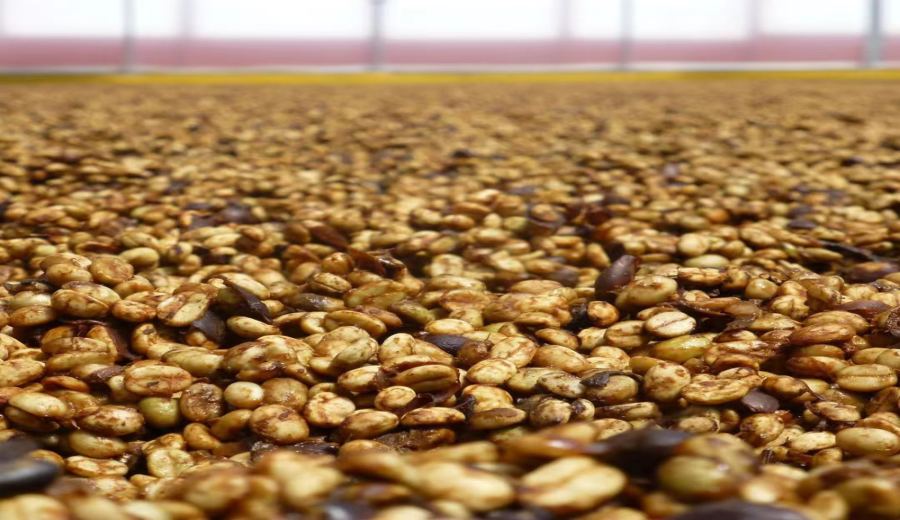
Introduction:Honey processed coffee is widely loved by specialty coffee enthusiasts for its prominent sweetness and balanced acidity. This article delves into the origins of honey processing, its operational procedures, and the differences between the three mainstream methods — yellow honey, red honey, and black honey — while also exploring how drying conditions affect flavor profiles. It also provides professional roasting curves and pour over parameters to help you fully grasp the essence of this popular processing method.
Honey processing (Honey Process or Miel Process), as one of the star techniques in the specialty coffee world, originated in Costa Rica. Its most distinctive feature is the retention of the coffee bean’s outer mucilage layer, which, through sun drying, allows sugars and acids to gradually penetrate the bean, resulting in a unique sweetness and rich mouthfeel. This article not only breaks down the intricate details of honey processing but also introduces the differences among the three common types — yellow honey, red honey, and black honey — as well as their impact on flavor, appearance, and processing difficulty.
What is the “honey” in honey processing? The truth behind the name
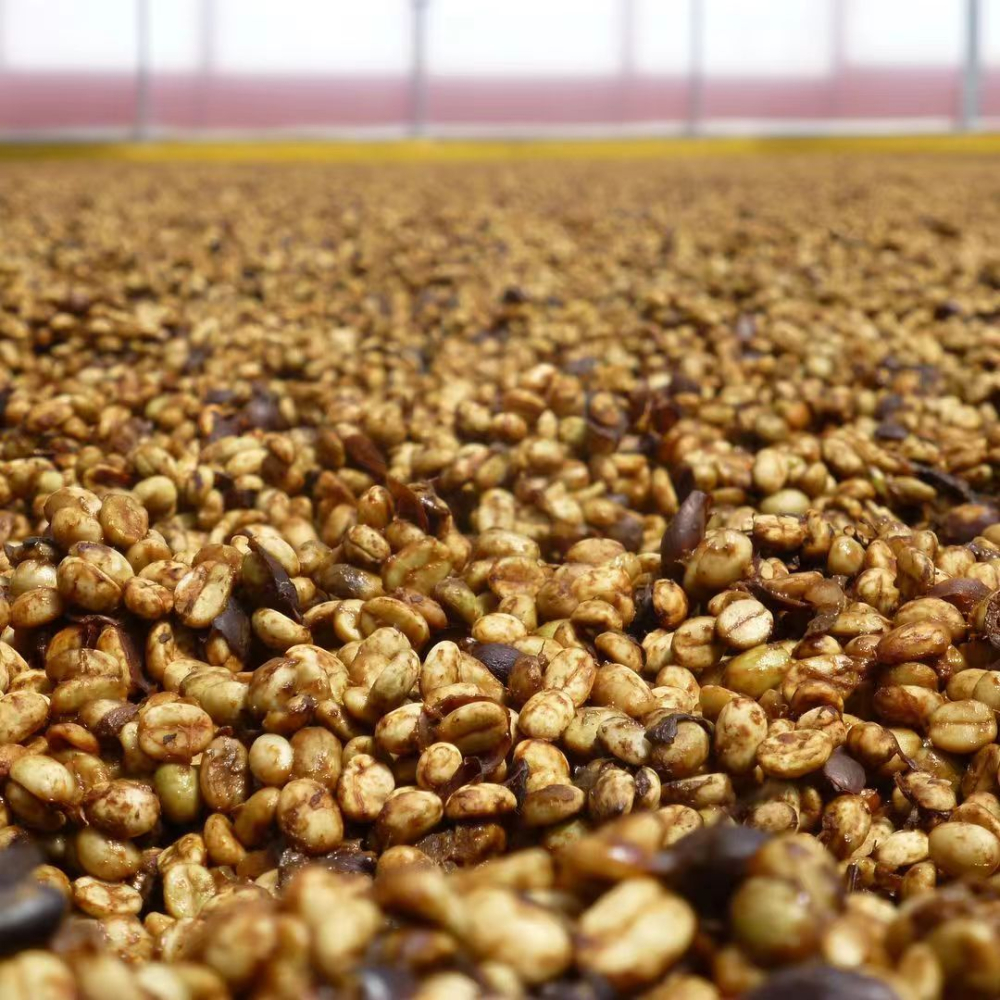
The “honey” in honey processing doesn’t actually refer to the addition of real honey. Instead, it describes the sticky mucilage layer on the surface of the coffee bean that takes on a honey-like texture during drying. The term originates from the Spanish word “Miel,” which means honey. In Costa Rica, coffee professionals were the first to use this term to describe the sticky, sugar- and acid-rich substance left on the beans after the fruit’s pulp is removed, and they developed the honey processing method based on this.
It’s worth noting that honey processing differs from both the traditional natural process (Natural Process) and the washed process (Washed Process). It falls somewhere in between by retaining all or part of the mucilage layer and then undergoing a carefully controlled drying process, resulting in a profile that is sweet without being cloying and has clear fruity notes.
Why do coffee farmers favor honey processing? Practical and commercial considerations
The reason honey processing was born and gradually gained popularity in Costa Rica is mainly because it offers a relatively practical path for quality upgrading. For many coffee farmers, changing the processing method becomes the most direct choice to enhance coffee flavor and selling price, especially when they are not keen on significantly altering tree varieties or adjusting altitudes.
Although honey processing is technically complex and requires strict control of drying time and turnover frequency, compared to introducing new varieties or relocating production areas, it is easier to implement and carries lower risks. By skillfully retaining varying proportions of the mucilage layer and precisely managing sun drying conditions, farmers can produce high-quality coffee with market competitiveness using limited resources.
Key steps in honey processing: from harvesting and depulping to temperature-controlled drying
The first step in honey processing is selecting ripe coffee cherries, followed by removing the outer pulp while retaining varying degrees of the inner mucilage. This mucilage layer is rich in natural sugars and acidic substances, which are key to influencing subsequent flavor profiles. The proportion of mucilage retained determines the intensity of the final flavor and serves as the basis for the classification into yellow honey, red honey, and black honey.
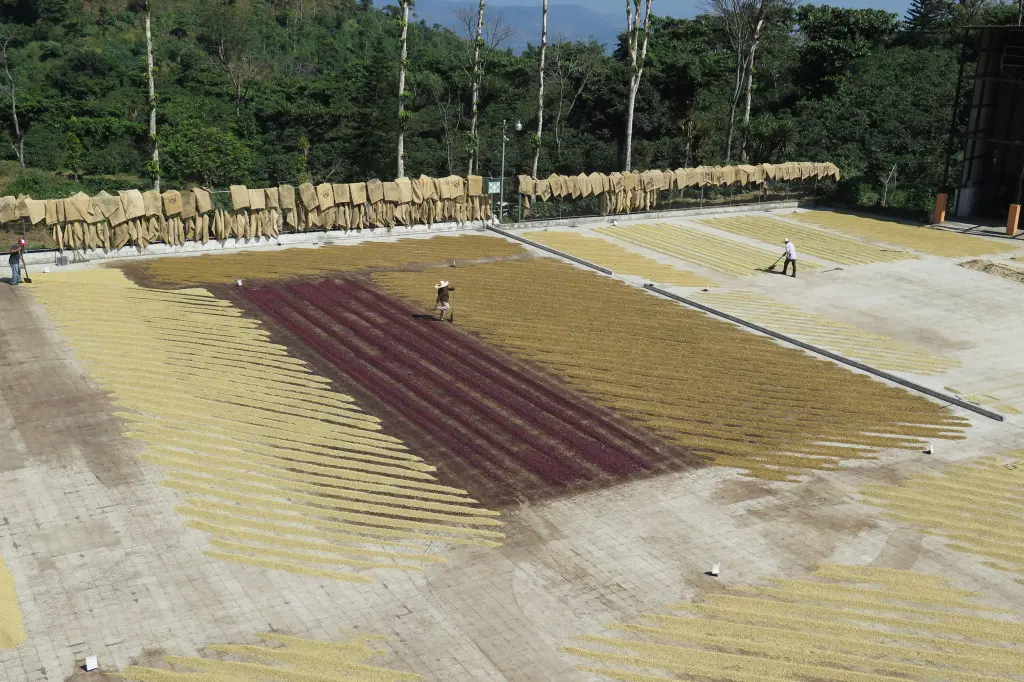
Drying is the most meticulous part of honey processing. Shortly after the pulp is removed, the beans need to be sun dried on specially designed racks or cement surfaces. Within the first few hours, farmers must turn the beans frequently, even hourly, to ensure even heating and avoid localized overheating or uneven fermentation. This stage typically lasts about 6 to 10 hours, followed by daily turning at least once over the next 6 to 8 days. Since nighttime humidity rises and beans tend to reabsorb moisture, the drying process often has to restart the next day, making the overall procedure longer and more labor-intensive.
Analysis of the differences between yellow honey, red honey, and black honey: mucilage ratio and flavor direction
The commonly seen yellow honey, red honey, and black honey on the market are actually categorized based on the proportion of mucilage layer retained during the drying process. Yellow honey typically retains about 25% of the mucilage, is suitable for drying in environments with ample sunlight and little shade, has a shorter drying time, a yellowish appearance, and a flavor that is relatively bright with noticeable acidity but mild sweetness.
Red honey retains about 50% of the mucilage and requires moderate shading during drying. It takes longer overall, results in a sweeter flavor, softer fruit acids, and a caramel-like finish. Black honey, on the other hand, retains nearly 100% of the mucilage layer and needs to be dried slowly over a long period under shaded conditions. As a result, it has the most intense flavor, often featuring rich fruitiness, a full body, and even wine-like layers.
Which type of honey processing is the best? A trade-off between flavor and commercial benefits
If we talk purely about flavor performance, black honey is usually the favorite among cuppers and consumers due to its intense fruitiness, rich sweetness, and full body, which deliver a complex profile akin to fruit wine. However, for coffee farmers, black honey processing comes with high risk and cost — not only is the drying time long, but the fermentation process is also more prone to producing defective beans. It also requires a larger drying area and more frequent turning, greatly increasing labor and space costs.
Therefore, choosing which type of honey processing to use depends not only on flavor considerations but also on balancing commercial feasibility and regional climate conditions. For consumers, understanding these differences can help you choose the coffee beans that best suit your taste preferences and budget.
Practical reference: industry recommendations for roasting and pour over of honey processed beans
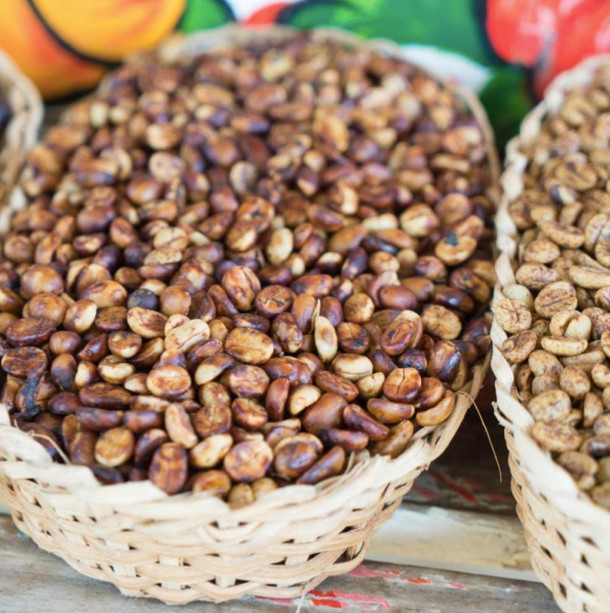
In actual roasting and brewing, honey processed beans — due to their high sugar content — are generally recommended to be roasted to a medium to medium-dark level to bring out their sweetness and body. Below is a set of practically tested roasting and pour over parameters for coffee enthusiasts to reference.
Roasting recommendations (using Yangjia 800N as an example):
- Bean charge: 550g
- Charge temperature: 200°C
- Pre-infusion time: 1 minute, fan speed 3
- Fire adjustment: First drop to 160°C, then to 135°C, aiming for the bean surface to turn yellow and grassy notes to disappear
- First crack: Starts at around 9 minutes 21 seconds, adjust fire to 80°C, fan speed full open 5, drop temperature around 193.4°C
Pour over recommendations:
- Dripper: V60
- Water temperature: 90°C
- Grind size: 80% passing through a #20 sieve
- Coffee-to-water ratio: 1:15, 15g coffee
- Brewing process: 30g bloom for 30 seconds → 95g second pour in circles → 100g third pour, total time about 2 minutes 10 seconds
Cupping flavor profile
According to professional cupping, honey processed coffee often exhibits aromatic layers of preserved plum, honey, brown sugar, orange blossom, and white chocolate. The taste is distinctly sweet, with soft and rounded fruit acids, a long-lasting aftertaste, and is well-suited for drinkers who enjoy balanced flavors and a full-bodied texture.
The above content is compiled by CoffeeHunters, a coffee news website.


