







Introduction:The bottomless portafilter is one of the essential accessories for a semi-automatic espresso machine. Its open design allows for intuitive observation of the extraction process, making it especially suitable for coffee enthusiasts who pursue precise adjustments. This article delves into the structural differences between bottomless and spouted portafilters—from observing flow rate and identifying channeling to practical extraction parameters—and demonstrates a complete workflow using a classic blend to help readers understand the advantages and practical techniques of the bottomless portafilter.
During the use of a semi-automatic espresso machine, the portafilter is one of the key tools that influences the final flavor profile. Currently, the most common types of portafilters on the market fall into two categories: the traditional spouted portafilter, which has a closed bottom with a spout, and the bottomless portafilter, which is fully open at the bottom, allowing direct visibility of the coffee puck. This article will focus on the bottomless portafilter, starting from its basic structure, thoroughly exploring its differences from the spouted version, analyzing their respective pros and cons, and finally guiding readers through a hands-on example of how to optimize the extraction process using a bottomless portafilter.
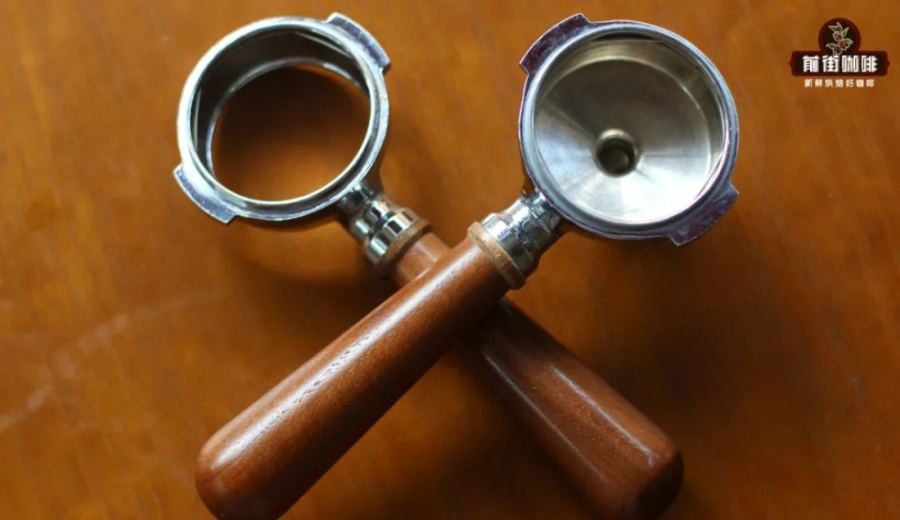
So, what exactly is the difference between a bottomless and a spouted portafilter? Visually speaking, the outlet of a spouted portafilter is typically fitted with a metal closure, leaving only a small hole—sometimes even equipped with a splitter to evenly distribute a single shot of espresso into two cups. In contrast, the bottomless portafilter has no base covering at all, leaving the bottom of the coffee puck fully exposed. This design allows users to instantly observe the flow of coffee liquid, especially when it comes to identifying channeling—any channeling will be immediately visible as jets of liquid spraying out from the bottom of the puck, something clearly observable with a bottomless portafilter but hard to detect with a traditional spouted one. It’s worth mentioning that if your espresso machine only comes with a spouted portafilter, you can actually modify it to function like a bottomless one by simply cutting off the metal bottom part.
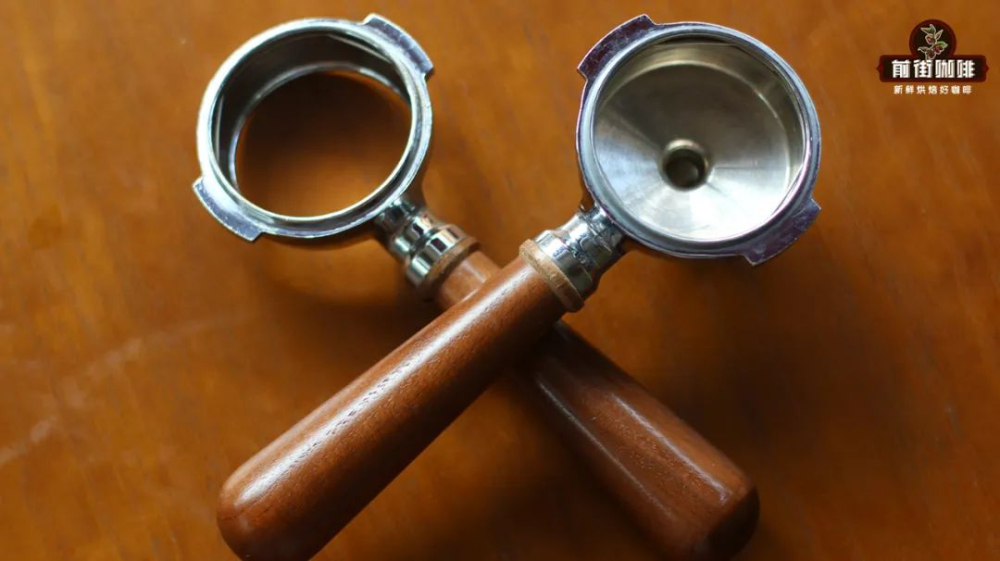
Although structurally enclosed, the spouted portafilter also has its clear advantages. First, its spout design effectively prevents coffee from splashing when poured into a cup, helping to keep the table clean. Second, by adding a splitter, a spouted portafilter can easily divide a single shot of espresso equally between two cups, making it ideal for sharing. However, its disadvantages are also not to be ignored. Since the metal base absorbs heat, it needs to be properly preheated before use; otherwise, it may affect the quality of the coffee extraction. Additionally, the enclosed structure of the spouted portafilter tends to accumulate coffee residue. Without regular removal and thorough cleaning of the coffee puck, subsequent extractions may carry off-flavors, compromising the overall purity of the coffee’s flavor.
In comparison, the bottomless portafilter was created to overcome many of the limitations of the spouted version. Its biggest advantage lies in its ability to visually display the flow of coffee liquid, particularly excelling in observing flow rate and detecting channeling. When channeling occurs, the jetting phenomenon at the bottom of the puck can be immediately noticed, helping to quickly adjust grind size or tamping pressure. Furthermore, when preparing layered drinks like Dirty espresso, the bottomless portafilter offers greater convenience—some espresso machines have limited space between the group head and the drip tray, and a spouted portafilter might not accommodate a cup as tall as 7 cm, whereas the bottomless version saves about 3 to 4 cm of space, offering more flexibility in operation. Of course, the bottomless portafilter also has its downsides, the most obvious being that coffee is more prone to splashing during extraction, requiring attention to the angle and distance during operation.

Many professional baristas prefer using the bottomless portafilter because it provides clearer visual feedback, aiding in the precise adjustment of extraction parameters. The following will demonstrate the full process of extracting espresso using a bottomless portafilter with a classic blend known for its rich crema, including specific grind settings, tamping techniques, and parameter adjustments, so that readers can more intuitively understand the practical value of the bottomless portafilter.
The main equipment and parameters used for this extraction are as follows: the grinder is the Galileo Q18, with a grind setting of 2.1; the espresso machine model is the Pegasus E98, maintaining an extraction pressure of 9±2 bar, and water temperature controlled between 90~96 degrees Celsius. The coffee dose is set at 19.5 grams, with a target yield of 35 grams. First, start the espresso machine and wait for it to complete its automatic heating cycle, ensuring the machine reaches a stable operating temperature. Next, grind freshly roasted coffee beans into a very fine powder, and based on the capacity of the portafilter basket, fill the bottomless portafilter with an appropriate amount of coffee grounds.
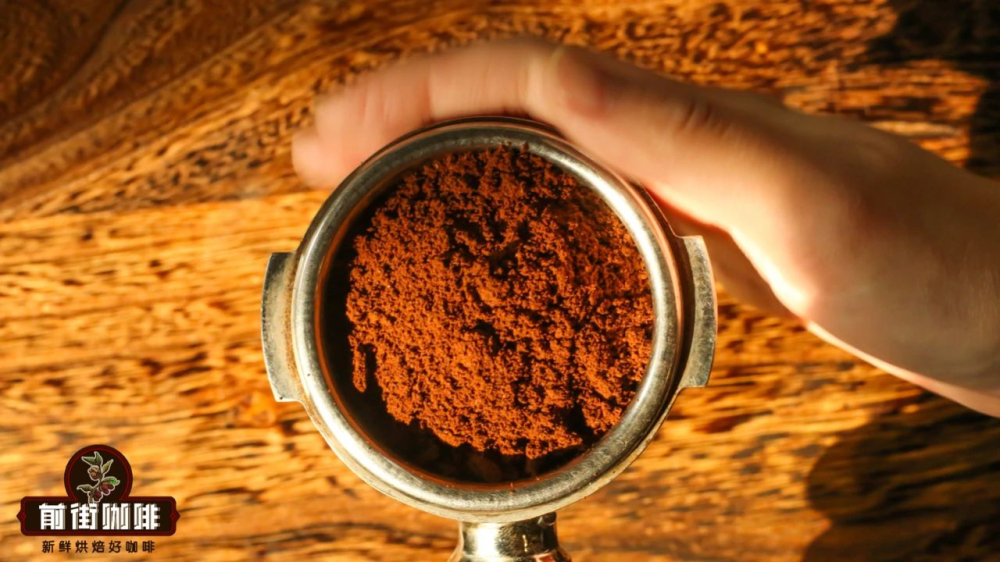
After dosing, it is recommended to use your fingers or the back of a distribution tool to evenly level the coffee grounds, avoiding any localized clumping or air pockets. Then, use the tamper that comes with the espresso machine (or the flat side of the other end of the distribution tool) to apply downward pressure vertically, compacting the coffee bed to ensure uniform puck density—this step is crucial for stabilizing the flow rate during extraction. After tamping, securely attach the portafilter to the machine’s group head, making sure there is no looseness at the connection. Finally, start the extraction process and observe the flow of coffee until the desired yield is reached.
Through the bottomless portafilter, you can clearly observe the extraction of the espresso, particularly the formation of the crema and changes in flow rate. Taking the classic blend used in this example, the resulting espresso has a thick and pronounced crema, with colors ranging from deep brown to golden hues, exuding intense aromas of nuts and cookies. This flavor profile makes it highly suitable for pairing with fresh milk to make a latte—not only delivering a smooth and creamy mouthfeel, but also preserving the nutty character of the espresso itself, adding rich layers of complexity to the overall drink.
The above content is compiled by CoffeeHunters, a coffee news website.


