








Introduction:Geisha coffee is hailed as the dream product of the specialty coffee world, and Panama is the golden land that nurtures this top-tier bean. Since its meteoric rise to fame in the 2004 Best of Panama (BOP) competition, Geisha has not only commanded high prices but also sparked a global craze among coffee enthusiasts. This article will take an in-depth look at three renowned producing regions—Hacienda La Esmeralda, Ninety Plus Gesha Estates, and Finca Sophia—analyzing their varietal characteristics, grading systems, and backstories. We’ll also explore Geisha’s stringent environmental requirements and the flavor differences across various color tags, helping both newcomers and seasoned enthusiasts master the essentials of selection.
Stepping into the world of specialty coffee, the name "Geisha" (瑰夏) is almost mythical for every coffee lover. This coffee variety, originating from Ethiopia, found its spotlight stage in Panama. Especially after its breakout success in the 2004 Panama Best of Panama (BOP) competition, Geisha not only secured its place at the pinnacle of specialty coffee but also became the coveted “coffee white moonlight” in many hearts due to its rarity and exceptional flavors.
Although Panama is not traditionally considered a major coffee-producing country, it is precisely because of Geisha that this small Central American nation has carved out a significant place on the global coffee map. This article will introduce you to three top-tier estates intimately linked with Geisha: Hacienda La Esmeralda (翡翠庄园), Ninety Plus Gesha Estates (90+瑰夏庄园), and Finca Sophia (索菲亚庄园). We’ll unpack the mysteries of these renowned farms step by step—from their varietal backgrounds and grading logic to their unique flavor profiles—while clarifying the differences among various color-tagged Geishas. Whether you’re new to Geisha or already a connoisseur, you’ll gain a deeper understanding.

Many customers who visit this coffee shop often ask, “What’s the best-tasting coffee right now?” There’s actually no definitive answer, as taste preferences vary from person to person. Some love the herbal and dark chocolate notes of Mandheling, others are drawn to the floral aromas and lingering sweetness of Flower Dance, while some are passionate about the intense wine-like flavors and fermentation notes of Sherry. However, if we judge by “price” and “market status,” Geisha is undoubtedly the top choice for many specialty coffee aficionados, akin to a luxury item in the coffee world.
Although Panama is not among the world’s top coffee-producing nations, it has shone brightly on the international stage thanks to Geisha. Since its rise to fame in the 2004 BOP competition, Geisha’s prices have remained consistently high, making three renowned Geisha estates—Hacienda La Esmeralda, Ninety Plus, and Finca Sophia—the focus of the industry. Below, we’ll break down their stories and characteristics one by one.
First, let’s visit Ninety Plus Gesha Estates (90+瑰夏庄园). The inspiration for this estate comes from the natural, forest-grown coffee environment of Ethiopia. It’s worth noting that the Geisha variety originally comes from the wild forests of Ethiopia. These heirloom varieties have extremely long life cycles, with some even surviving for over a century, but their yields are relatively scarce. In 2009, founder Joseph Brodsky purchased approximately 200 hectares of land and planted Ethiopian native Geisha varieties that thrive in shaded environments. By 2014, large-scale planting commenced, and within the next six years, the estate won the World Brewers Cup Championship five times.
Currently, the Ninety Plus estate is divided into several series, including:Signature (签名系列), which includes five varieties—Nekisse, Lycello, Juliette, Perci, and Lotus—plus one heirloom blend;Innovation (创新系列), featuring Ruby, Carmo, Tigre, Yuzo, and Kule;Founder’s Selection (创始人系列), which currently includes three Geisha lots (#0602, #0526B, #0317), with a starting price of $200 per 10 grams;Limited Edition (限量版), which consists of only one blended Geisha variety, containing just 1 gram of Geisha per serving; andAscent (上升系列), which includes Drima Zede, Kemgin, and Kambera, priced at $19, $21.85, and $24.70 per serving, respectively.
It’s important to note that the name “90+” does not refer to a cupping score of 90 or above, but rather represents a carefully curated line of premium coffee. The brand collaborates with multiple estates, participating in the entire process from planting, harvesting, processing, to cupping. They meticulously classify beans based on varietal, climate, and ripeness to deliver the most complete flavor expression, ultimately selling under the 90+ brand.
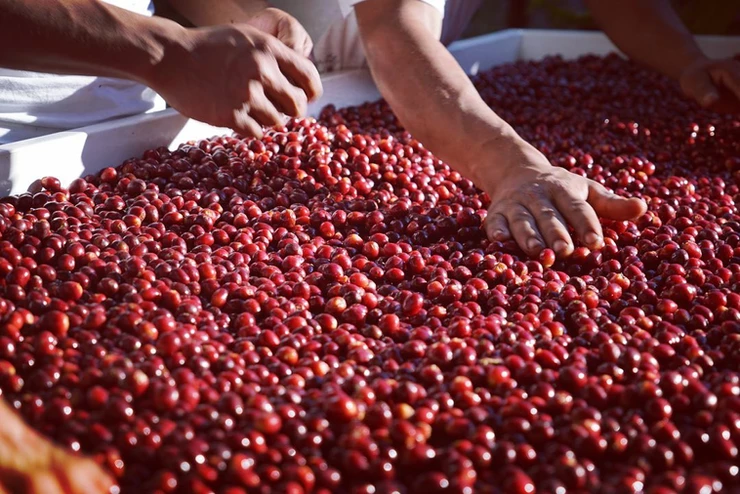
Beyond its exceptional flavors, Ninety Plus also deserves recognition for its efforts in sustainability and environmental friendliness. The company has initiated coffee forest restoration projects spanning over 1,500 hectares in Panama and Ethiopia. Not only has it built a globally renowned brand, but through technology transfer and economic support, it has also improved the lives of coffee farmers and maintained ecological balance. This combination of quality, sustainability, and social responsibility has earned Ninety Plus the reputation of being the “LV of the coffee world,” highly revered by coffee enthusiasts worldwide.
Next, we have Hacienda La Esmeralda (翡翠庄园), a renowned estate located in Panama and synonymous with Geisha in the minds of many coffee fans. As early as 1967, Swedish-American banker Rudolph A. Peterson purchased this land, originally used for grazing. It wasn’t until 1997 that his family acquired the higher-altitude Jaramillo farm, dedicating themselves to cultivating high-quality coffee.
It’s said that Geisha was initially planted merely as a windbreak. However, in 2004, during a casual cupping session, Hacienda La Esmeralda discovered its astonishing flavor profile. The bean went on to win that year’s BOP championship, setting the highest auction price at the time. Notably, Hacienda La Esmeralda pioneered the independent bidding system based on different plots and processing batches during that competition, laying the foundation for future Geisha grading systems.

At Hacienda La Esmeralda, Geisha is primarily divided into three grades:Red Label Geisha (Hacienda Special), which selects Geisha beans grown at altitudes of 1600–1800 meters with cupping scores above 90. These are limited to independent bidding lots from the Jaramillo and Cañas Verdes farms. Nowadays, non-bidding Red Labels are also available on the market. Although they come from the same farms, they did not participate in bidding and are relatively more affordable.Green Label Geisha (Private Collection), also grown at 1600–1800 meters altitude, but is a blend of micro-lots from multiple plots. Specific regions are not indicated. Its flavor is similar to the Red Label but is slightly lower in grade, yet still retains the classic floral, fruity, and citrus acidity notes of Geisha.Blue Label Geisha (Geisha 1500), although discontinued in 2021, is still worth mentioning. It used a blend of beans grown at 1400–1500 meters altitude, with a lighter flavor profile but still exhibiting the basic characteristics of Geisha.
The uniqueness of Geisha lies in its extremely high environmental demands. The harsher the conditions, the more it can bring out its distinctive flavors. However, this also makes harvesting difficult and yields scarce—not every estate can produce high-quality Geisha. This is precisely the key to Hacienda La Esmeralda’s standout success.
Finally, let’s introduce Finca Sophia (索菲亚庄园), a high-altitude estate established in 2008, located near Nueva Suiza in Panama. It boasts breathtaking views and dense forests of Cerro Punta and Volcán Barú, with an altitude of2100 meters, its greatest advantage. Finca Sophia focuses on experimental coffee cultivation under extreme conditions. In 2016, it won the Good Food Awards, claimed the BOP washed category championship in 2017, and secured second place in the natural category in 2020, making it a rising star in the Geisha scene in recent years.
The above content is compiled by CoffeeHunters, a coffee news website.


