








Introduction:Want to learn how to showcase the unique flavors of Yunnan coffee through pour over? This article delves into the differences between two processing methods—natural Ethiopian Typica and Baoshan washed Catimor—and provides practical three-stage pour over parameters and techniques. From bean variety characteristics and processing details to grind size, water temperature, and pouring methods, it helps both beginners and advanced enthusiasts master the key points of brewing Yunnan beans to enhance extraction quality and flavor expression.
Yunnan coffee has gradually entered the specialty coffee scene in recent years, but to fully present its potential through pour over, brewing strategies need to be adjusted according to different processing methods. Taking naturally processed Ethiopian Typica and washed Catimor from Baoshan in Yunnan as examples, this article breaks down the pour over parameters and flavor profiles of these two beans step by step, starting from variety traits and processing differences. It also details the practical aspects of three-stage pouring. Whether you're a beginner or an experienced coffee lover, you can gain a useful reference framework from this guide.

The variables in pour over coffee are diverse, including coffee dosage, coffee-to-water ratio, grind size, water temperature, pouring method, and total extraction time—all of which affect the final flavor. Brewing a balanced and layered cup of coffee hinges on understanding the interplay among these variables. Using two representative beans from the Yunnan region as examples, this article analyzes how to adjust parameters based on variety and processing method to bring out the best flavors.
What are the flavor differences between sun-dried and washed Yunnan coffee?
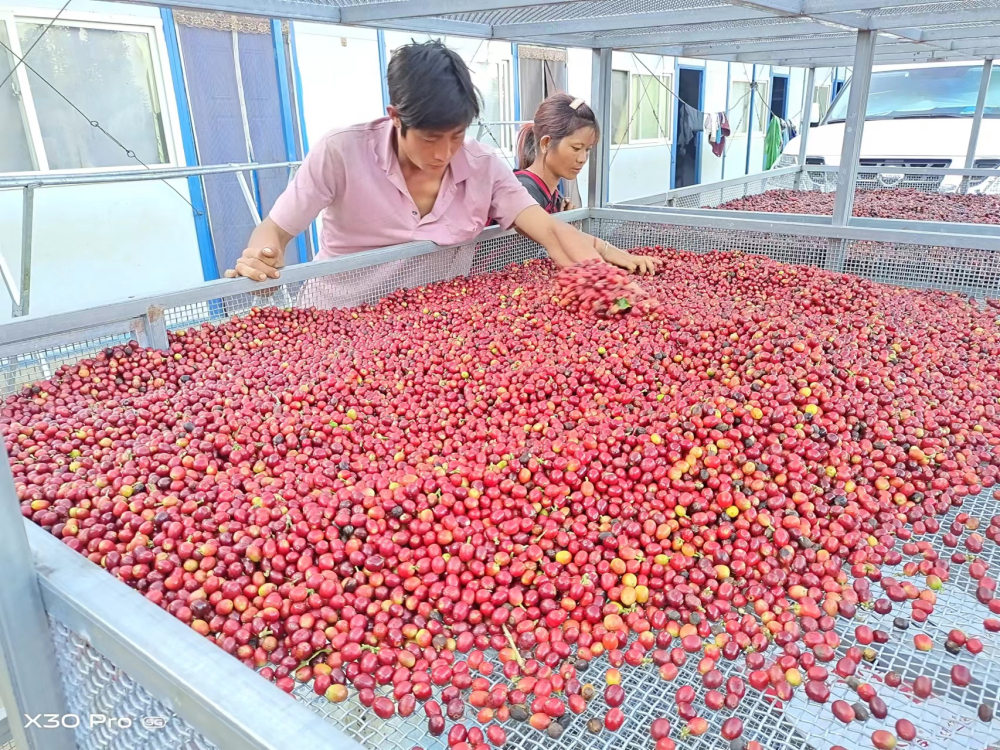
Currently, the mainstream coffee processing methods can be divided into sun-dried and washed categories, and Yunnan’s coffee production includes both. The "sun-dried Ethiopian Typica" featured in this article uses a full red cherry sun-drying process. It is an original variety meticulously developed by a team that traveled to Lincang, Yunnan in 2013—from site selection and seedling cultivation to harvesting and processing. Influenced by the warm, humid airflows of the Indian Ocean and the southwestern monsoon, Lincang’s climate features distinct dry and wet seasons, abundant sunshine, and rare frost damage, making it highly suitable for growing Arabica. The commonly found “Yunnan small beans” are mostly Catimor varieties, which, compared to medium-sized Robusta from Hainan, offer a softer flavor with less pronounced bitterness.
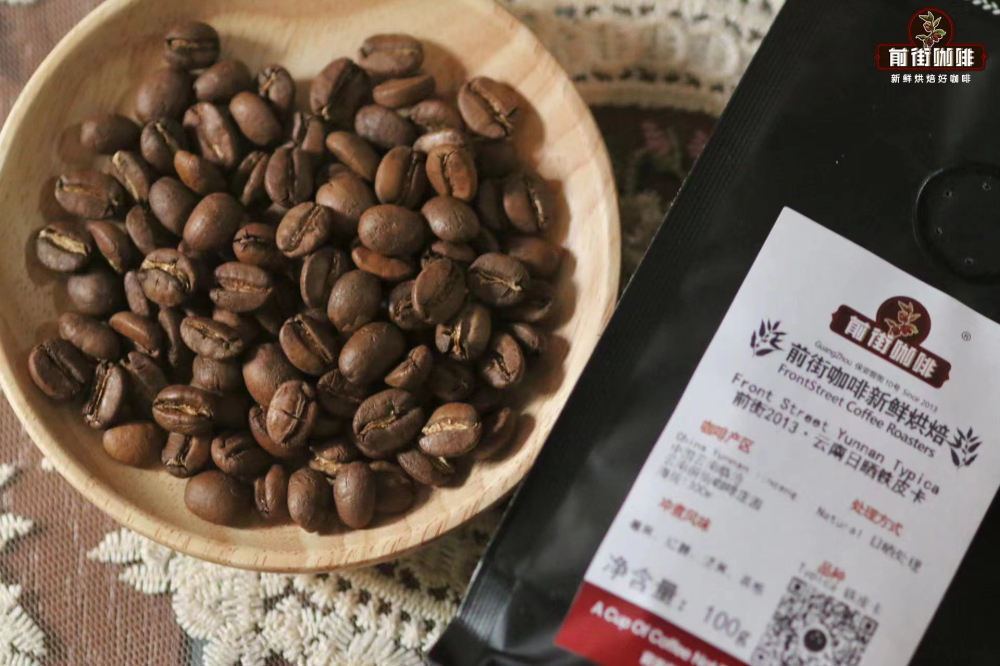
As one of the most original Arabica varieties, Ethiopian Typica has relatively low yield and weaker disease resistance, but it possesses an elegant and pure flavor profile. After years of cultivation management, a certain brand first harvested these fruits in 2020 and processed them using the sun-dried method, giving them a rich and mellow character. In contrast, the other bean, "Baoshan washed Catimor," reduces defect rates and enhances overall cleanliness and stability through washed processing.
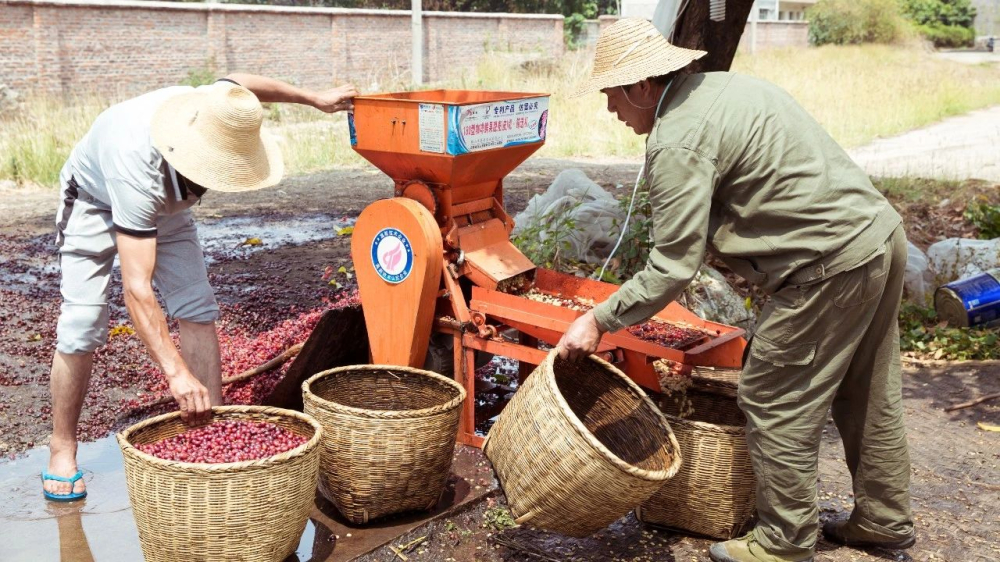
Sun-dried processing involves exposing whole red coffee cherries directly to the sun until their moisture content drops to around 11%, then removing the dried pulp, skin, and mucilage. This process relies on stable weather conditions, and equipment drying may be used if rain occurs. Washed processing, on the other hand, removes the pulp and ferments to eliminate mucilage, followed by washing and drying. This effectively minimizes the intrusion of impurities and undesirable flavors, resulting in a cleaner and clearer taste profile.
According to cupping results, Baoshan washed Catimor exhibits a complex flavor profile of nuts, herbs, sweet potato, melon, brown sugar, cream, plum, and caramel, with a mild taste and distinct layers. In contrast, sun-dried Ethiopian Typica showcases a richer fermentation character, with a medium-to-high body, a clean mouthfeel, and a black tea-like aftertaste. Its flavor layers are more diverse and dynamic.
Preparation before pour over
Before starting your pour over, gather the essential tools: pour over kettle, filter cone, server, grinder, filter paper, digital scale, and thermometer. The filter cone and filter paper mainly serve to trap coffee grounds and absorb some oils, resulting in a cleaner mouthfeel. Common filter cones such as Hario V60 and KONO are suitable for different roast levels—the former works better for lighter roasts, while the latter is more suited to medium-to-dark roasts. The digital scale is used to accurately measure coffee beans and water, ensuring consistency in each brew. The thermometer monitors water temperature, keeping it within the optimal extraction range.
When brewing light roasts with a V60, it is recommended to set the water temperature between 90–92°C; for medium-to-dark roasts, lower it to 88–89°C. The choice of grinder is equally crucial, as coffee grind size directly affects extraction efficiency and flavor expression. Grinds that are too coarse may lead to under-extraction and a thin flavor, while overly fine grinds may cause over-extraction and bitterness. A certain brand recommends using a Chinese No. 20 0.85mm standard sieve, aiming for a 75–80% filtration rate for light-to-medium roasts and 70–75% for medium-to-dark roasts.
Recommended pour over parameters and practical details
To fully showcase a coffee’s potential, it is recommended to use freshly roasted beans, ideally within 5 days of roasting. The sun-dried Ethiopian Typica introduced in this article is medium roasted, blending sour, sweet, bitter, and umami notes, but overall leaning toward a rich profile of nuts and chocolate. Due to the medium roast, the bean structure becomes more porous, increasing water absorption. Therefore, it is suggested to choose a medium grind size and extract with 90°C water using a KONO filter cone.
The KONO filter cone has a unique design with exhaust ribs only at the one-quarter mark. When the water level exceeds the ribs, internal pressure inside the cone gradually increases. Coupled with a relatively narrow spout, this extends the contact time between coffee grounds and water, helping to more efficiently extract soluble substances and thereby enhancing body and richness.
Compared to light roasts, medium-to-dark roasted sun-dried Ethiopian Typica has a looser structure and is prone to releasing large bitter molecules, so over-extraction must be avoided. Therefore, it is recommended to set the grind size to 75% filtration rate using a No. 20 standard sieve (e.g., with an EK43s grinder, the setting is about 10.5). For water temperature, aim for 91–93°C for light roasts and reduce to 87–90°C for medium-to-dark roasts to control extraction efficiency and minimize off-flavors.
It is recommended to use a KONO filter cone, set the water temperature to 90°C, grind size to 75% filtration rate using a No. 20 standard sieve (EK43s setting 10.5), use a 1:15 coffee-to-water ratio, 15 grams of coffee, and a total of 225 milliliters of water. For beginners, the three-stage pouring method can effectively enhance the layering of flavor extraction and prevent over-extraction due to prolonged steeping.
The specific steps for three-stage pouring are as follows: First, pour 30 grams of water for a 30-second bloom, using a small stream and circling from the center outward to ensure even saturation of the coffee bed. After 30 seconds, steadily pour 95 grams of water with a slightly larger stream (completed in about 55 seconds, totaling 125 grams). Keep the water column vertical and even to help lift the coffee bed. When the liquid level drops to half, switch to a small stream and circle narrowly to pour the final 100 grams of water (totaling 225 grams). Control the water flow intensity to avoid disrupting the coffee bed. The total extraction time is approximately 2 minutes. After brewing, gently shake the server to evenly distribute the coffee liquid before enjoying.
Note that the above parameters can be fine-tuned based on personal preference and actual bean conditions. Pour over coffee is essentially an experiment combining science and experience. A deeper understanding of how each parameter influences the brew is key to gradually developing your own brewing framework, thereby improving the quality and enjoyment of every pour over session.
The above content is compiled by CoffeeHunters, a coffee news website.


