







Introduction:Caturra and Catuai are very common coffee varieties in Central America, often appearing together in the same harvest. Do you know which varieties they originated from? And what are their differences in appearance and flavor? This article delves into the historical background, plant characteristics, cultivation advantages, and cupping performance of these two varieties, and explains why many farms choose to interplant them. Understanding these details can help you choose the coffee beans that better suit your taste.
When visiting coffee-growing regions in Central America, you’ll often find both “Caturra” and “Catuai” listed together in the variety column of many specialty coffee beans. Not only do their names sound similar, but their cultivation and harvesting methods are also often grouped together. However, these two varieties each have their own unique traits, from their origins and plant appearance to flavor profiles and planting strategies, all of which are worth exploring in depth.
Caturra was first discovered in 1915 in Minas Gerais, Brazil, as a natural mutation of the Bourbon variety. The most significant characteristic of this mutation is that the plant is noticeably shorter, hence the local Guaraní word “Caturra,” meaning “small,” was used to describe it. Compared to traditional Typica or Bourbon, Caturra can grow well without shade and even performs excellently in high-altitude and high-light environments. It is suitable for planting at altitudes between 700 and 1700 meters and can be cultivated at higher densities, effectively increasing yield per unit area.
Another major advantage of Caturra is its strong adaptability to the environment. It not only thrives in sunny regions but also exhibits richer flavor profiles as altitude increases. However, due to its short stature, it is more susceptible to pests, diseases, and weather impacts, requiring more meticulous management.
As for Catuai, it was later developed by the Agricultural College of São Paulo State in Brazil through crossbreeding Yellow Caturra with the New World variety. The New World variety itself is a natural hybrid of Bourbon and Typica, so Catuai can be said to combine multiple superior genetic traits. It inherits Caturra’s short tree structure and tolerance to strong sunlight, as well as the New World variety’s high yield, good disease resistance, and bright acidity. In addition, Catuai has stronger resistance to wind and rain, making it suitable for stable growth under variable climate conditions.
Interestingly, the name Catuai comes from the Guaraní word “catuai,” meaning “very good,” reflecting its high regard locally. However, Catuai also has its weaknesses, such as being relatively susceptible to leaf rust, so protective measures are still needed in management.
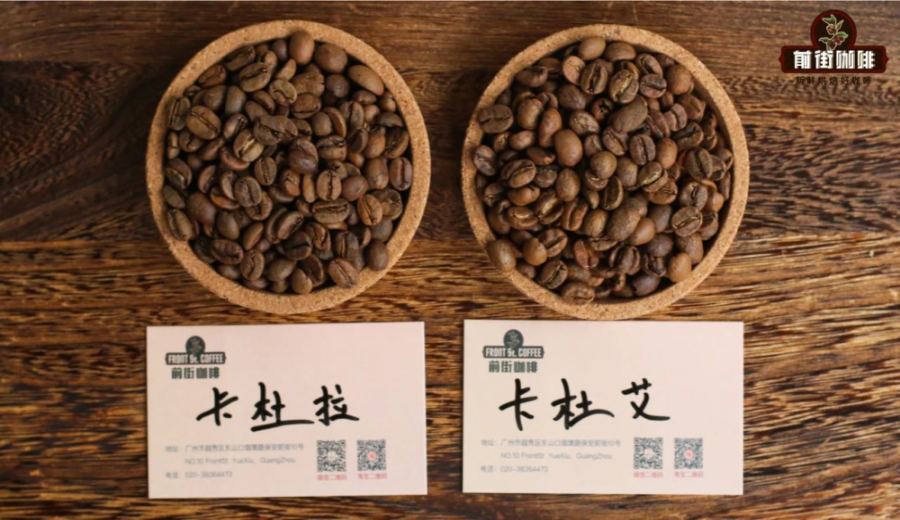
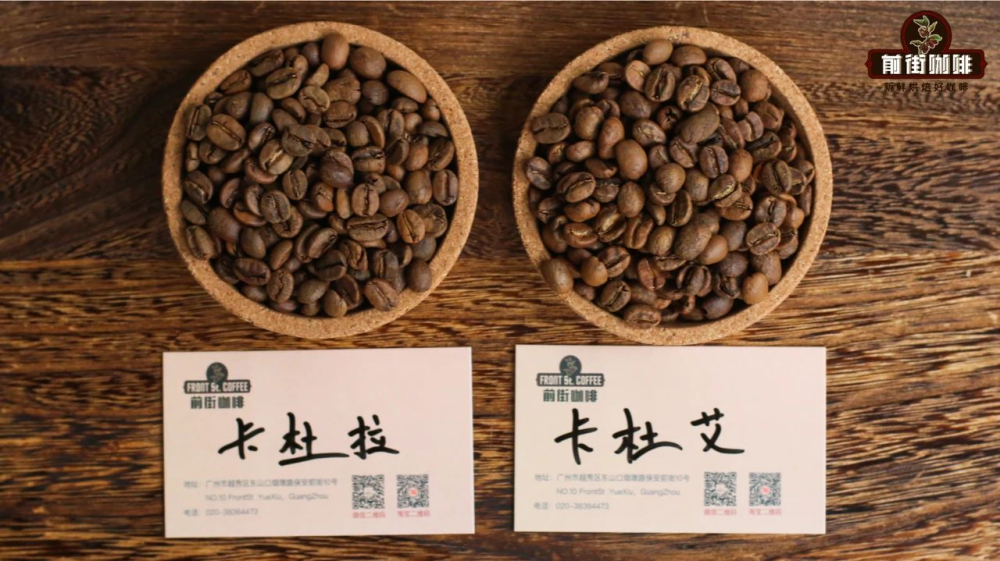
If distinguishing purely by appearance, Caturra coffee beans are slightly rounder and longer in shape, often with a natural curve at the bean’s end; whereas Catuai beans are more oval and flat, with a narrower and more elongated bean tip. In terms of cupping flavors, Caturra often exhibits bright acidity, a clean mouthfeel, and prominent sweetness, making it suitable for drinkers who prefer a refreshing flavor profile. In contrast, Catuai has softer acidity, an overall clean taste, and is rich in fruity aromas, with a more mellow and diverse flavor complexity.
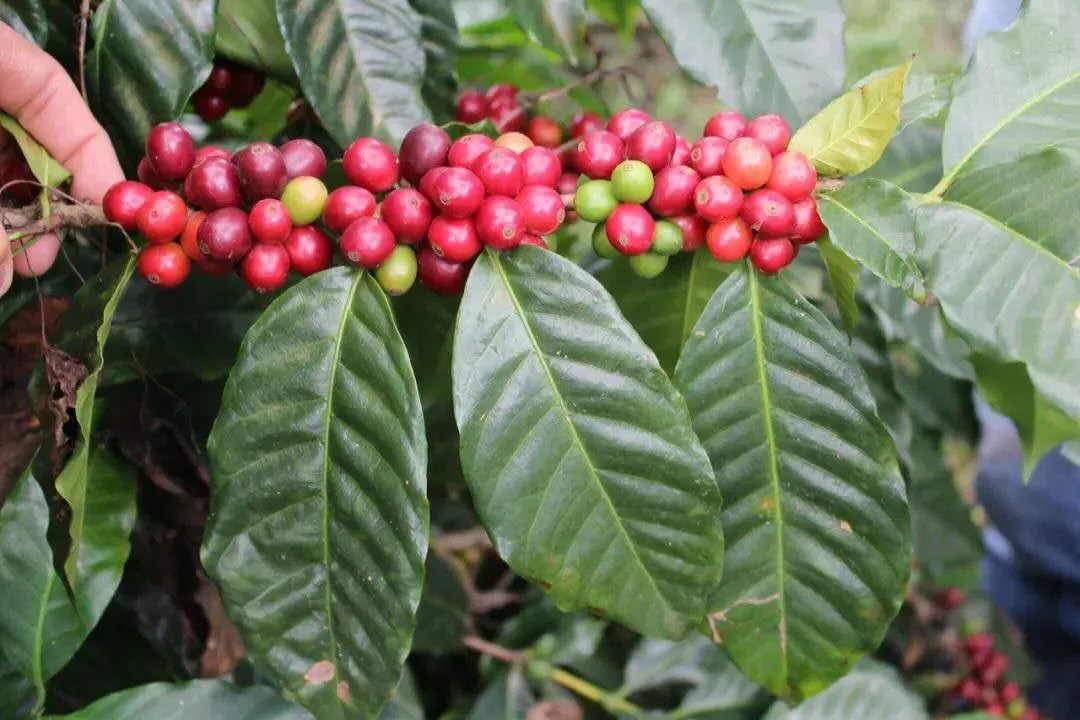
So, why are Caturra and Catuai often interplanted or even co-harvested in many coffee farms in Central America? According to research by the Honduran Coffee Institute (IHCAFe), these two varieties show no significant difference in yield, and their growth habits gradually converge due to their close genetic relationship. Additionally, since they both originate from Caturra, they share similar plant size and cultivation requirements. Forcing separate planting and harvesting would instead increase unnecessary labor and time costs.
Therefore, many farms choose to plant, manage, and harvest the two varieties together. This not only simplifies the operational process but also achieves a balanced and complementary flavor profile in the blended coffee. Many well-known blends or specialty lots on the market contain these two varieties. Examples include Honduras sherry-aged coffee beans, Panama Geisha Honey, and various specialty beans from Costa Rica’s Tarrazú region—all of which feature contributions from both Caturra and Catuai.
In summary, although Caturra and Catuai share a common origin and similar appearance, they each have their own distinct merits in detail. Understanding their history, characteristics, and cupping performance can not only help you choose the coffee flavors you prefer more accurately but also allow you to more deeply appreciate the unique charm of Central American origins when tasting.
The above content is compiled by CoffeeHunters, a coffee news website.


