







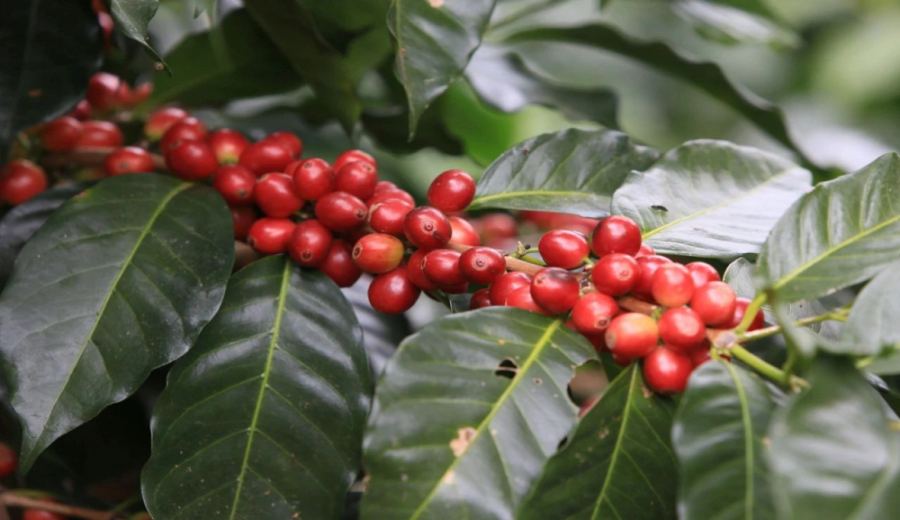
Introduction:Delve into the intricate grading system of Indonesian Mandheling coffee — from varietal evolution due to leaf rust, to the G1 to G6 defect rate classification, 17/18 mesh bean screening, and the unique triple-hand-picked standard of Golden Mandheling. This article explains the packaging details, roasting recommendations, and KONO filter brewing method for top-tier beans from PWN, guiding you to master the flavor essence and brewing essentials of this classic Sumatran bean.
As one of the world’s major coffee-growing regions, Indonesia’s coffee cultivation history dates back to the 17th-century Dutch colonial period. The Typica variety introduced at that time suffered greatly from leaf rust, prompting the continuous introduction of more disease-resistant foreign varieties such as Timor, Catimor, Caturra, S795, and even Robusta. Due to the many localized names derived during the cultivation of these introduced varieties, as well as regional naming conventions based on growing areas or ethnic groups (such as Toraja in Sulawesi, or Kopi Luwak named after its special processing method), Indonesia’s coffee varietal system is exceptionally diverse and difficult to categorize.
Take the highly regarded Mandheling as an example — its name originates from an ethnic group in northern Sumatra, not a specific coffee variety. Currently, the main beans used for Mandheling are Ateng, which is actually the local name for Catimor in the Aceh region, particularly concentrated in the Gayo highlands. Understanding this historical background helps interpret the complex context behind Indonesian coffee labels and serves as an important foundation for appreciating its flavors.
Indonesia’s green bean grading system primarily uses the number of defective beans as the basis for judgment, supplemented by bean size screening. The defect rate grading ranges from G1 to G6 across six levels, whereG1 is the highest grade, requiring fewer than 11 total defects in a 300g sample, representing the purest quality of green beans. As the grade descends, the allowable number of defects increases, directly affecting the final flavor’s purity and consistency.
In addition to defect rates, some higher-grade Indonesian coffees also indicate screen size, such as the renowned Golden Mandheling, often labeled as 17 or 18 mesh, signifying larger and more uniform bean size, which contributes to more stable heating during roasting and better flavor expression. While screen size is not an absolute standard, it is generally associated with higher quality.
Many specialty-grade Indonesian coffees also undergo multiple rounds of manual hand selection to remove defects and off-color beans. Common labels include double-picked (twice selected) and triple-picked (three times selected), among whichGolden Mandheling is a prime example of triple-picked beans. This process effectively enhances batch uniformity and bean appearance quality, especially critical during the wet-hulled processing method where multiple hand selections play a vital role.
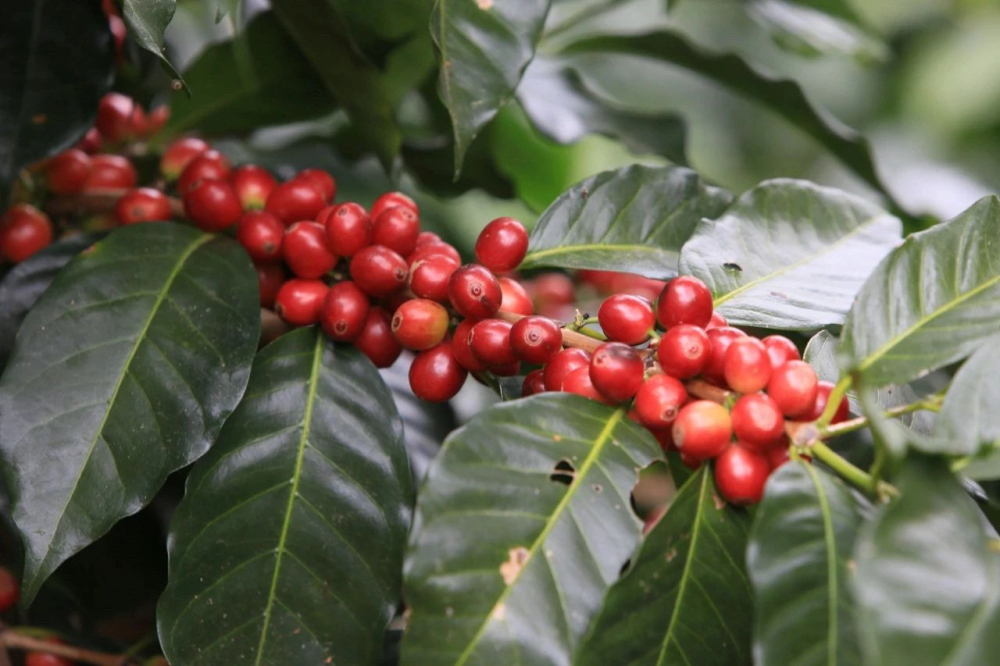
Take the Golden Mandheling from PWN as an example: its packaging clearly displays key information — PWN as the producer’s mark, GOLDEN MANDHELING indicating the product name, TRIPLE PICKED highlighting the premium standard of triple hand selection, and COFFEE ARABICA specifying the Arabica variety. These beans come from the Gayo highlands in Aceh, the northernmost part of Sumatra. In recent years, due to varietal grafting in the Sidikalang area leading to declining quality, PWN shifted its sourcing here, using the locally termed Ateng, which is Catimor. The package is also marked GRADE 1, Indonesia’s highest grade G1, with fewer than 11 defects, and notes the origin as Indonesia (PROD.OF INDONESIA), net weight of 30kg (actually including jute sack), and expiry date of October 2024, corresponding clearly to the new crop harvested in October 2020.
In terms of roasting performance, Golden Mandheling exhibits characteristics distinct from typical Lintong Mandheling. It showcases prominent herbal notes, outstanding caramel sweetness, gentle and layered acidity, along with body and spicy undertones. Roasters are advised to finish roasting just before the first crack becomes intense, in order to preserve better clarity and sweetness. Compared to traditional Lintong Mandheling, which is usually roasted through the second crack, Golden Mandheling offers greater flexibility and a wider range for flavor interpretation.
Practical roasting parameter suggestions are as follows: preheat the roaster to 200°C before dropping the beans, set the initial air vent to 3. After one minute, reduce heat to 160°C, keeping the air vent unchanged. Around 5 minutes and 40 seconds, when the temperature drops to 148°C and the beans turn yellow with grassy aromas dissipating, adjust the heat to 140°C and increase the air vent to 4. By 9 minutes and 40 seconds, as the beans show wrinkles and dark spots, and the smell transitions from toast to coffee aroma, approaching first crack. At 9 minutes and 54 seconds when first crack begins, immediately reduce the heat to 60 and fully open the air vent. Finally, drop the beans at 204.5°C. Mastering the heat and fine-tuning the air vent will better present its unique aromatic profile.
For brewing, if you want to highlight Golden Mandheling’s rich, clean, and aromatic profile, it is recommended to use a KONO filter with medium-dark roasted beans. Set the grind size to medium-coarse (with a reference of about 57% passing through a #20 standard sieve), use a 1:13 coffee-to-water ratio, 20g of coffee, and water temperature controlled at 87°C. During brewing, focus on maintaining steady pouring motions to avoid vigorous shaking of the filter, which may affect the degassing effect during the bloom phase.
Specific steps: First, slowly pour the coffee grounds into the center of the filter and gently level them. The first pour involves adding 40g of water for blooming, for about 30 seconds, during which the beans will expand into a “hamburger” shape. Then, the second pour circles from the center outward with 120g of water, moving slowly and close to the coffee bed to avoid excessive agitation. Finally, the third pour adds 100g of water, and extraction is complete once all the coffee liquid has dripped through the filter. Total brew time should be around 2 minutes to help achieve optimal balance.
In terms of flavor, Golden Mandheling exhibits pronounced notes of nuts, chocolate, and spices, with herbal and earthy tones significantly reduced compared to traditional Lintong Mandheling. The sweetness is focused with outstanding caramel aroma, the acidity is gentle and bright, and the overall mouthfeel is clean and layered. It is highly suitable for coffee lovers who enjoy a rich yet clear and articulate flavor profile.
The above content is compiled by CoffeeHunters, a coffee news website.


