







Introduction:Geisha coffee is hailed as the top variety in specialty coffee, but its price and flavor profile actually vary widely, with options ranging from everyday drinking to competition-level pour over beans. This article delves into the origins of Geisha coffee, price differences across producing regions, explains the grading system of Red Label, Green Label, and Blue Label, and provides practical pour over methods and extraction tips to help readers master this uniquely flavorful coffee bean from beginner to advanced level.
Geisha (Geisha) coffee is often referred to as the “Hermès” of the specialty coffee world, but its high price is not without reason—it stems from its distinctive flavor profile and complex historical development. From everyday-friendly entry-level Geisha to Red Label Geisha that sells for astronomical prices at auctions, the depth of this variety is well worth exploring for every coffee enthusiast. This article will take you through the pricing distribution, regional characteristics, classification levels, and how to bring out its best flavors through pour over brewing.
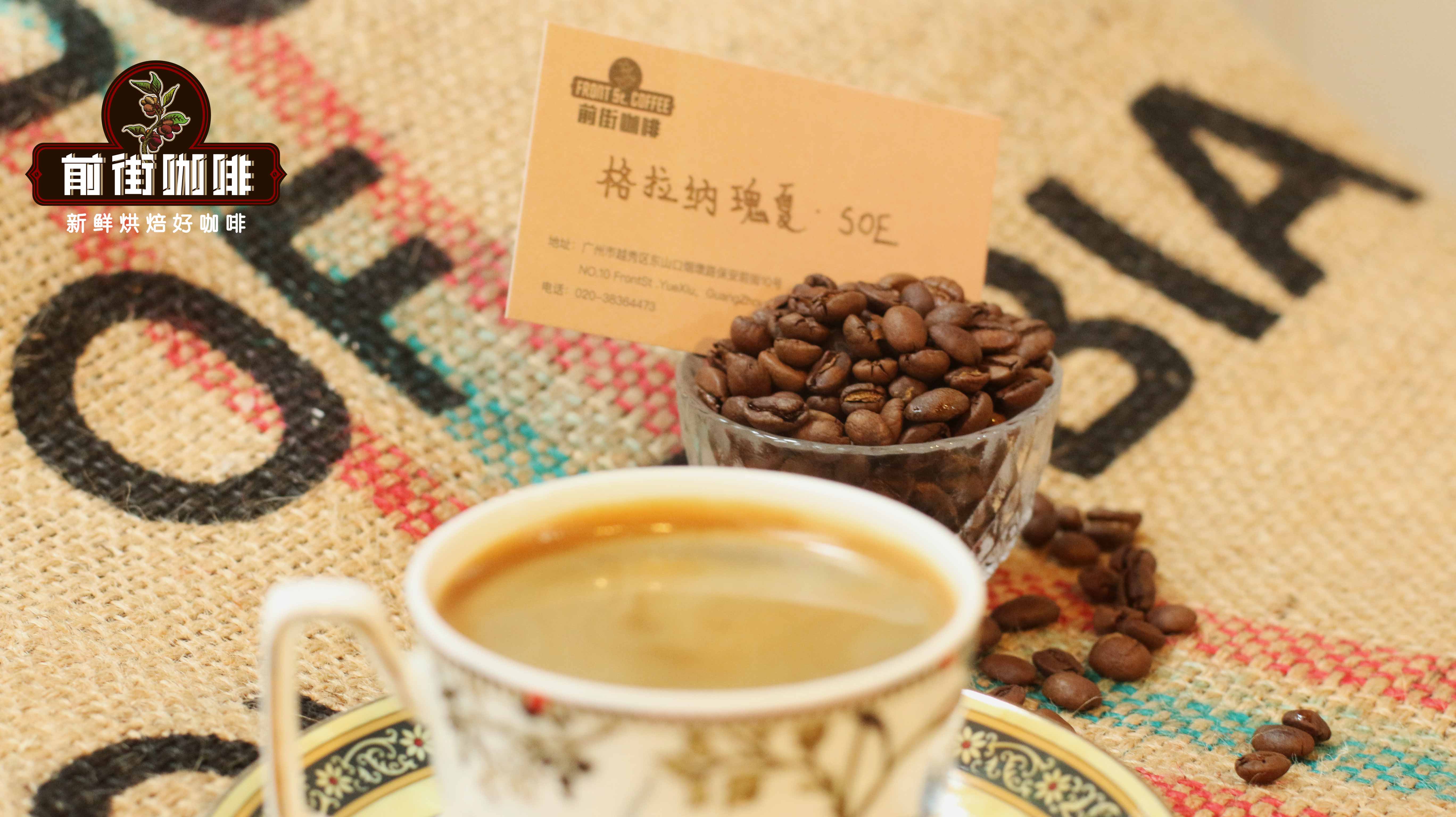
 When many people first hear the name “Geisha,” they often associate it with unattainably high prices. However, there are still plenty of everyday-drinking Geisha options on the market. For example, some naturally processed Geisha beans from Panama often exhibit bright notes of apricot, berries, and citrus, with a refreshing and layered flavor profile—perfect for practicing pour over or French press. These types of Geisha typically cost between 30 and 75 yuan per cup, with whole bags priced around 85 to 380 yuan. They offer a relatively balanced quality-to-price ratio and serve as an excellent starting point for getting to know the flavor of Geisha.
Geisha is not synonymous with any particular producing region, but rather a coffee variety within the Arabica family. Interestingly, it was not initially noted for its floral and fruity aromas. As early as 1931, Geisha was discovered in Ethiopia’s Gesha Forest, then sent to the Kenya Coffee Research Institute, and subsequently introduced to Uganda, Tanzania, and Costa Rica. It wasn’t until the 1960s that Panama’s Hacienda La Esmeralda imported the variety from CATIE’s seed bank in Costa Rica. Initially, it was mainly used to enhance the disease resistance of other coffees, but due to its low yield, it remained overlooked for a long time.
 The turning point for Geisha came at Panama’s Hacienda Esmeralda. It’s said that the owner’s son noticed an unusually captivating aroma coming from one particular variety in the plantation and decided to cultivate and process it separately, submitting samples to the 2004 Best of Panama (BOP) green coffee competition. The result? This coffee stunned everyone by winning the championship, thus kicking off the specialty coffee legend of Geisha. Before that, Geisha had remained relatively unknown for nearly half a century, but after this victory, it consistently ranked at the top of major green coffee competitions. It even led to the creation of a dedicated Geisha category in later competitions to avoid unfair competition against other varieties.
The flavor potential of Geisha is closely related to its growing altitude. It is generally believed that Geisha grown above 1,600 meters is more likely to display complex floral, tropical fruit, and tea-like notes, while Geisha grown around 1,500 meters may still have aroma, but with a generally thinner flavor profile. Many well-known plantations in Panama, taking advantage of their high-altitude terrain, have invested in Geisha cultivation. However, this has also led to significant differences in flavor expression among Geisha beans produced by different farms and even micro-lots. In terms of price, factors beyond the variety itself—including the farm’s reputation, competition-winning records, and overall flavor evaluation—also come into play. Among these, the auction-grade Red Label Geisha from Hacienda Esmeralda once reached a sky-high price of over 20,000 RMB per kilogram.
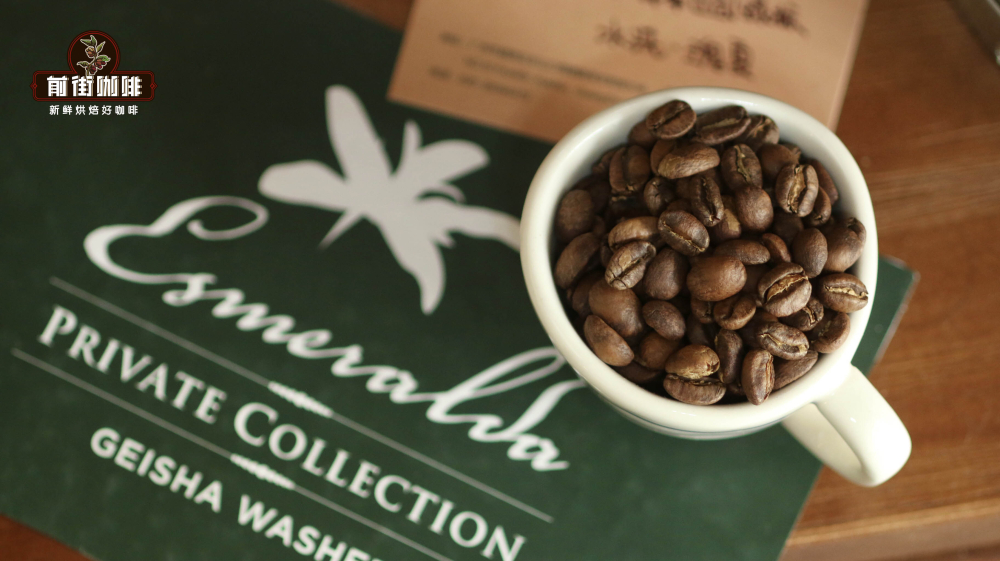 Within Hacienda Esmeralda’s product grading, Geisha is divided into three tiers: Red Label (Esmeralda Special), Green Label (Private Collection), and Blue Label (Gesha 1500). It’s important to note that since 2022, the Blue Label tier has been discontinued. The beans previously in this grade are now acquired by external green coffee traders and renamed as Volcán Geisha. According to cupping comparisons, Volcán Geisha’s flavor profile is extremely similar to the original Blue Label and can essentially be regarded as a continuation of the same beans. Red Label Geisha uses micro-lots of Geisha grown above 1,700 meters and undergoes strict selection, often sourced from renowned micro-lots such as Jaramillo, Cañas Verdes, and El Velo—making it the top choice sought after by specialty coffee enthusiasts. Green Label consists of multi-lot blends from altitudes between 1,600 and 1,700 meters, offering relatively higher cost-performance. Blue Label (now Volcán Geisha) is mostly a blend sourced from Geisha grown around 1,500 meters.
Currently, Red Label, Green Label, and Volcán Geisha from Hacienda Esmeralda can all be purchased through various channels. Aside from the premium-priced auction-grade Red Label, Green Label and Volcán Geisha are also great options for consumers who want to experience Geisha flavors but have a more limited budget. Additionally, the market also offers Geisha from brands like 90+, Hacienda La Hope, the Boquete region, as well as regional Geisha blends like Flower Dance, providing a diverse range of choices.
Due to being grown at high altitudes, Geisha coffee beans are dense and hard, making them prone to sinking and clogging the filter basket’s drainage holes during brewing. Therefore, it is recommended to use a medium-fine grind, roughly around 78% passing through a Chinese standard No. 20 sieve—similar in coarseness to fine sugar. As for water temperature, it is advised to keep it between 90–91°C, which helps fully extract its rich aromas and achieve a balanced acidity and sweetness.
Here is a practical pour over recommendation: Use 15 grams of coffee grounds with a Hario V60 small filter cone, at a 1:16 coffee-to-water ratio. Employ the three-pour method: First, pour 30 grams of water for blooming at the start of timing, and let it sit for 30 seconds. Then, pour in a circular motion with a small stream of water up to 125 grams, and wait until the water level drops by about half before continuing. For the final pour, slowly add water with a small stream up to 225 grams. The total extraction time is recommended to be between 2 minutes 10 seconds and 2 minutes 20 seconds, which helps highlight the delicate and layered flavor profile of Geisha.
The above content is compiled by CoffeeHunters, a coffee news website.


