








Introduction:Costa Rican Tarrazú coffee is renowned for its bright and clean flavor profile, making it a daily favorite for many coffee enthusiasts. This article delves into the geographical characteristics of the Tarrazú region, the differences between washed and honey processing methods, and analyzes the production processes of various honey processing levels (white honey, yellow honey, red honey, black honey). It also compares the flavor profiles of traditional washed processing with anaerobic heavy honey processing. Additionally, practical V60 pour-over brewing parameters are provided to help you better appreciate the unique charm of Costa Rican coffee.
The Tarrazú region in Costa Rica has long been beloved by coffee lovers worldwide for producing beans with clean flavors and distinct layers. These coffees are not only suitable for everyday drinking but also serve as a classic choice for many beginners. This article will explore the typical flavor characteristics of Tarrazú coffee from the perspectives of the growing environment and processing methods, comparing the different flavor profiles brought by washed and honey processing — including detailed processes of common honey processing methods such as white honey, yellow honey, red honey, and black honey. It will also share practical V60 pour-over brewing parameters so you can brew coffee at home that closely resembles the flavors of the region.

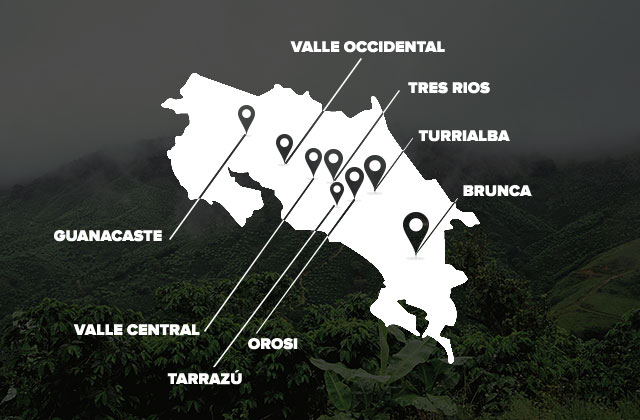
Costa Rica is divided into eight major coffee-growing regions: Tarrazú, West Valley, Tres Ríos, Guanacaste, Turrialba, Orosi, Brunca, and Central Valley. According to data from local official institutions, all these regions adhere to strict quality management protocols, ensuring that only fully ripe coffee cherries are harvested. As a result, Costa Rica grows almost exclusively Arabica varieties. Among these eight regions, some are located at lower altitudes, but many are situated in volcanic terrain exceeding 1,200 meters above sea level. Coffee produced in these high-altitude areas typically exhibits more pronounced acidity, rich aromas, and bold body. The Tarrazú coffee selected here is grown at elevations above 1,500 meters, placing it within a high-altitude premium growing zone.
Located southeast of the capital, San José, Tarrazú’s coffee farms are mostly distributed across high-altitude valleys and mountain slopes, benefiting from an exceptionally favorable growing environment. Shielded by the Pacific slope mountain range, the area enjoys an outstanding ecological setting — not only ideal for coffee cultivation but also home to numerous rare bird species. Tarrazú coffee beans are known for their dense, bluish-colored appearance, representing high-quality Arabica beans that are iconic to the region. The annual coffee production here is approximately 650,000 quintals, cultivated across around 22,000 hectares. The majority of these are small-scale farms averaging about 2.5 hectares in size, with roughly 95% of the coffee classified as Strictly Hard Bean (SHB), indicating high bean hardness and significant flavor potential.
In terms of processing methods, the selected Tarrazú coffee primarily undergoes washed processing. The hallmark of washed processing lies in the use of fermentation and washing procedures to remove the majority of the fruit mucilage, resulting in clearer regional characteristics and acidity. For coffee enthusiasts seeking the “terroir” flavors of the origin, washed processing highlights the purity and delicate acidity of the coffee, making it an ideal choice for experiencing the classic flavors of Tarrazú. Compared to other processing methods, washed beans typically exhibit brighter acidity, medium body, and a finish reminiscent of dark chocolate.
In addition to washed processing, honey processing is another very common and popular method in Costa Rica. Depending on the amount of mucilage retained, honey processing is categorized into four main types: white honey, yellow honey, red honey, and black honey. These methods vary in the degree of mucilage (i.e., fruit pulp) retained before drying, which in turn influences the final flavor and sweetness of the coffee.
White Honey: During processing, about 80–90% of the mucilage is removed. The beans are usually dried quickly on raised beds, exposed to relatively high temperatures, resulting in lighter-colored parchment, a cleaner flavor profile, and mild sweetness.
Yellow Honey: About 50% of the mucilage is retained. Drying is carried out in low-wind and moderate-sunlight conditions, with beans being turned 3 to 4 times daily. The overall drying period lasts about a week. The flavor is balanced, with soft sweet notes.
Red Honey: Around 80–90% of the mucilage is retained. Drying is typically done under overcast or shaded conditions at low temperatures and is slower. The stirring frequency is lower. The resulting flavor is richer, with more pronounced sweetness and fruity notes.
Black Honey: Almost all the mucilage is retained. The drying process requires complete shading with minimal stirring — often none at all initially. The total drying time can last up to three weeks. The flavor is the most intense, with rich sweetness and a distinctly bold body.
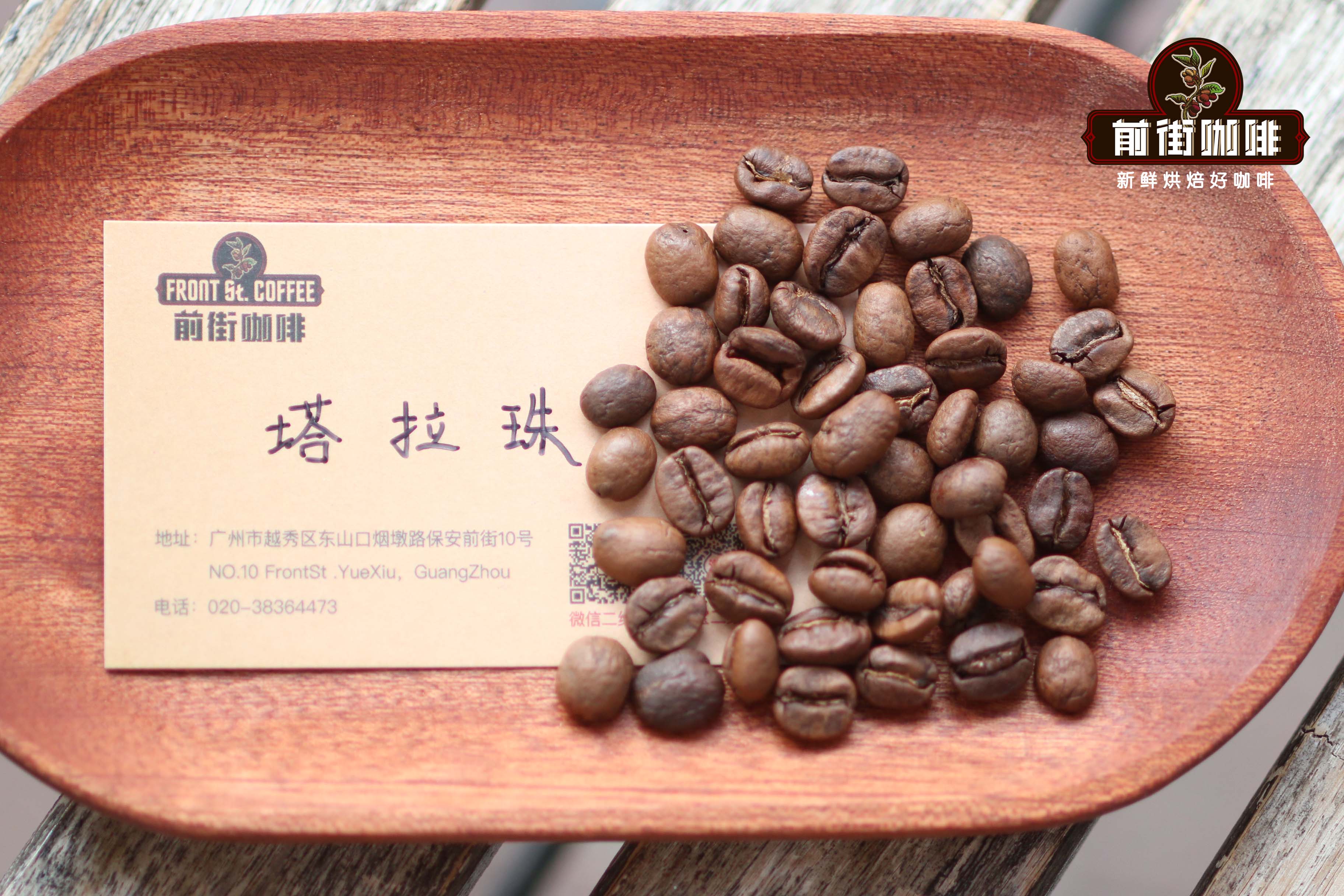
Beyond the traditional honey processing methods, Costa Rica has seen the rise of many innovative techniques in recent years, such as anaerobic heavy honey processing. This method combines elements of washed and natural processing and is a semi-industrialized specialty approach. The process involves placing depulped coffee beans still covered in full mucilage into sealed containers where they undergo fermentation in an oxygen-free environment to enhance flavor complexity. After fermentation, the beans are moved to a greenhouse or raised beds for prolonged drying, typically maintained at temperatures above 21°C. The entire process, adjusted according to climate conditions, may take around 4 days of fermentation plus 18 days of drying.
Using the same pour-over parameters allows for a clearer comparison of flavor differences across processing methods. Below are the recommended V60 pour-over brewing parameters:
V60 dripper
Water temperature: 91°C
Coffee-to-water ratio: 1:15
Coffee dose: 15 grams
Grind size: 80% passing through a Chinese Standard No. 20 sieve (approximately medium grind)
Brewing technique: Start with a 30-gram bloom for 30 seconds, then pour in a slow circular motion until reaching 125 grams for the first pour. When the water level drops close to exposing the coffee bed, continue pouring to 225 grams, then stop. Once the water level nears the coffee bed again, remove the dripper. Total brew time is about 2 minutes.
With the above parameters, Tarrazú washed beans typically showcase a clean and bright flavor profile, with round and soft acidity and a hint of dark chocolate in the aftertaste — representing a classic and beginner-friendly expression of Costa Rican coffee. In contrast, coffee processed with anaerobic heavy honey may present more pronounced fruity characteristics, such as distinct blueberry aromas, with a stronger directional flavor and enhanced sweetness. Comparing these different processing methods and their flavor expressions can help you gain deeper insight into the diversity and regional identity of Costa Rican coffee.
The above content is compiled by CoffeeHunters, a coffee news website.


