







Introduction:Costa Rica's honey processing method is highly regarded in the global specialty coffee scene, with black honey processing being the most intense and sweet among them. This article delves into the historical origins of honey processing, the grading standards and process differences from black honey to white honey, and further analyzes the innovative technique of raisin honey processing. It also provides a detailed roasting profile for a black honey bean from Costa Rica’s Diamond Series, V60 pour over recommendations, and actual flavor notes — perfect for coffee enthusiasts who want to deeply understand the characteristics of honey processing and replicate professional extraction at home.
Honey processing (Honey Process) can be said to be the most representative post-harvest technique in Costa Rica. However, many may not know that depending on the amount of mucilage retained, it can be further divided into black honey, red honey, yellow honey, and white honey grades, each significantly influencing the final flavor profile. This article takes a black honey processed coffee from Costa Rica’s Diamond Series as an example, comprehensively analyzing the evolution background of honey processing, the process characteristics of different grades, and introducing the emerging innovative approach of raisin honey processing. At the same time, it compiles practical roasting parameters, pour over suggestions, and actual cupping results to help coffee lovers better understand this richly flavored and multi-layered processing method.
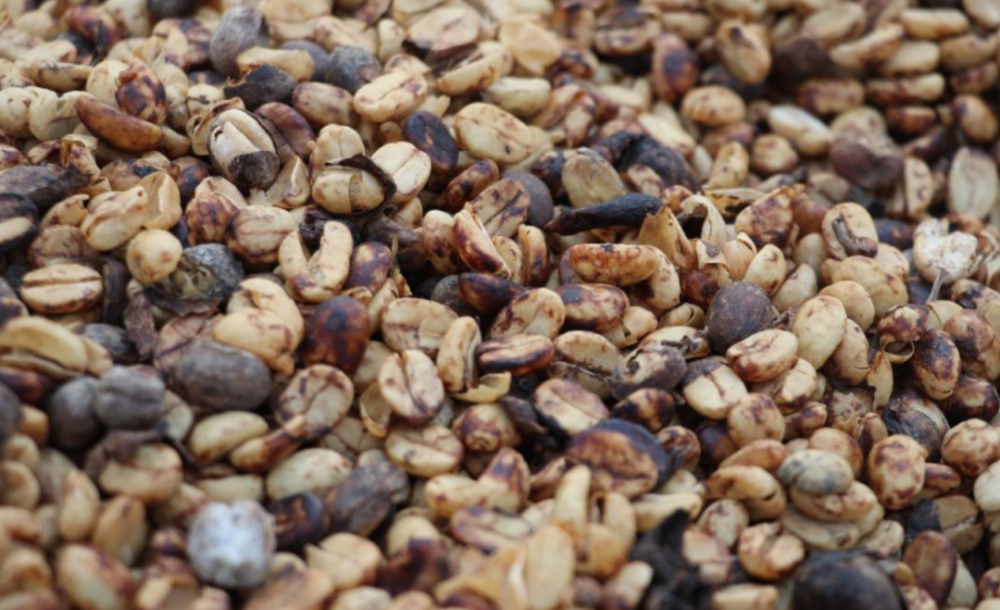
Honey processing originated from Brazil's semi-washed method developed in the 1990s. Around the year 2000, Costa Rica introduced it and adapted it to local climatic and cultivation conditions, gradually forming what is widely known today as honey processing. The most distinctive feature of this method is that after removing the outer skin of the coffee cherry, part or all of the mucilage layer is retained, followed by sun drying. Because the mucilage is rich in sugars and has a sticky, viscous texture — similar in appearance and feel to honey — it earned its name.
Honey processing not only reduces the use of large amounts of water and requires relatively simple equipment, but it also effectively minimizes defective flavors caused by prolonged exposure to the sun. Compared to traditional washed processing, honey processed coffee often exhibits richer tropical fruit aromas and fermented sweetness, making it highly competitive in the international market. However, based on the amount of mucilage removed, sun drying intensity, and frequency of turning, honey processing is also divided into multiple grades, resulting in quite varied flavor profiles.
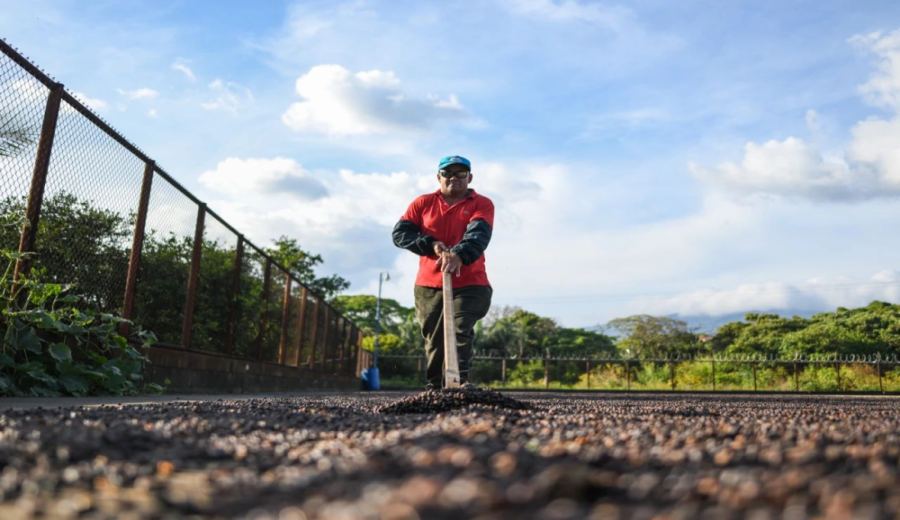
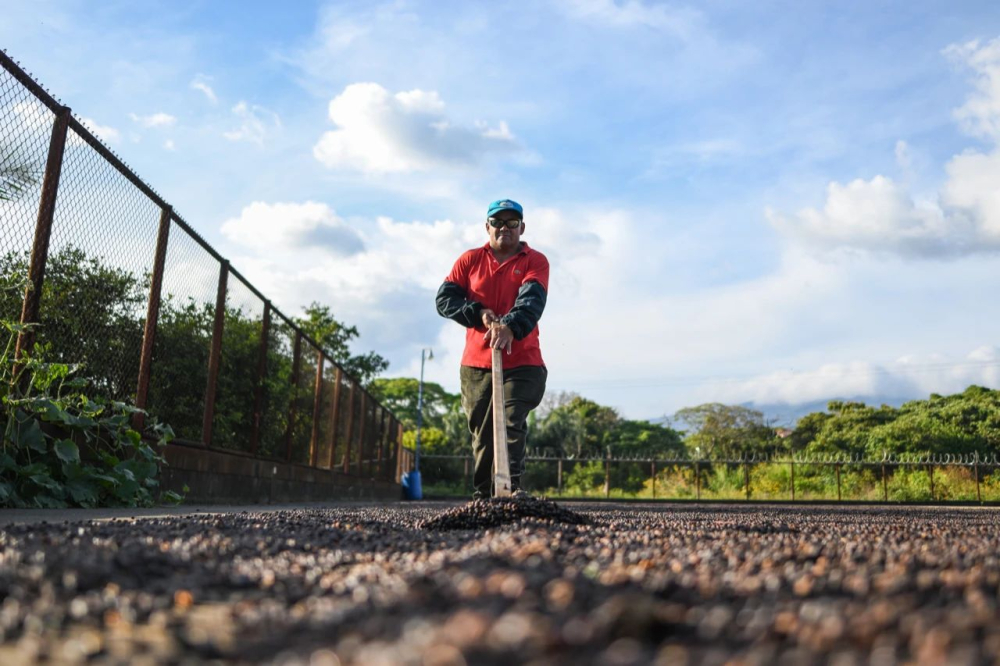
Generally speaking, the honey processing procedure includes: harvesting ripe red cherries → floating in water tanks to remove unripe and defective beans → using a pulper to remove the outer skin → retaining varying degrees of mucilage → spreading the parchment-covered beans on well-drained elevated drying beds, which must be regularly turned to ensure even drying. The sugars in the mucilage gradually penetrate the beans under sunlight, imparting sweetness and body to the coffee.
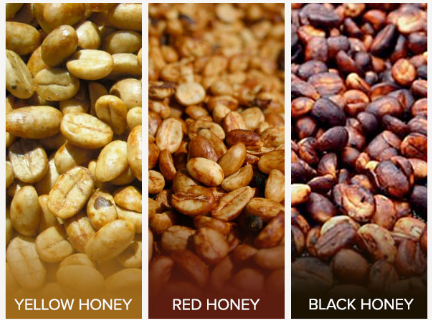
Depending on the proportion of mucilage retained and the processing conditions, honey processing can be divided into the following common grades:
Black Honey:Almost no mucilage is removed, with a retention rate close to 100%. The drying time is the longest, usually taking more than 14 days, and shading measures are required to prevent overly fast drying. The coffee processed with this grade of honey has the most intense sweetness, bold flavors, often with wine-like aromas, dark berries, and a rich creamy body — representing the top-tier expression of honey processing.
Red Honey:Typically around 25% of the mucilage is removed (this may vary slightly by farm), with a drying period of about 12 days, occasionally combined with some shading. Red honey processed coffee offers a balanced sweetness and fruity aroma, representing a classic style between washed and natural processes, and is currently the most commonly seen type of honey processing in the market.
Yellow Honey:About 60% of the mucilage is retained, though in practice around 40% is often removed. The drying time is shortened to about 8 days, and high-frequency turning (e.g., once per hour) is required. Yellow honey processed coffee tends toward bright acidity and citrusy notes, with a crisper mouthfeel.
White Honey:Retains 40–60% of the mucilage, though in practice it often involves removing most of it. The fermentation time is the shortest, and the overall process is closer to washed processing, yielding clearer flavors but with lower sweetness.
In addition to the above common grades, there is also an innovative processing method — raisin honey processing (also called Dried Cherry Honey or Raisin Honey) — which is gradually gaining attention in the specialty coffee community. This method involves naturally drying the coffee cherries on elevated beds for about three days until the fruit pulp dehydrates to a raisin-like state, then proceeding with pulping and subsequent honey processing steps. This approach not onlyretains 100% of the mucilage, but also adoptszero-water processing, significantly increasing operational difficulty and risk, and placing extremely high demands on drying time and environmental control.
Coffee processed via raisin honey processing typically exhibits exceptional floral and fruity aromas, clean acidity, and a sweet yet non-cloying aftertaste, with a delicate texture and distinct layers. It is reported that some Costa Rican farms have already released premium specialty beans processed with this method, receiving excellent market feedback.
If you’d like to try pour over brewing a Costa Rican black honey processed coffee at home, here are the recommended roasting and extraction parameters based on practical testing. Taking a black honey bean from the Diamond Series as an example, its roasting curve is as follows:
Bean inlet temperature:180°C
Turning point (yellowing):5’45”, 152°C
First crack:9’25”, 184.5°C
Development after first crack:1’50”, 197.4°C — out of roaster
For pour over brewing, it is recommended to use a Hario V60 filter cone with the following settings:
Water temperature:88–90°C
Coffee dose:15 grams
Brew ratio:1:15
Grind size:BG 6S (medium-fine grind, approximately equivalent to fine sugar granules)
Pour over technique:Start with a 30g bloom for 30 seconds, then pour in a small circular motion until reaching 124g for the first pour; when the water level is about to expose the coffee bed, continue pouring to 225g and stop. Remove the V60 when the water level is about to run low again. Total brew time is approximately 2’01”.
In terms of cupping flavor notes, this black honey coffee presentsnuts, fermented wine-like aromas, cream, caramel, and citrusamong other layers. When hot, distinct citrus acidity and wine notes can be perceived; as it cools, a creamy texture and caramel sweetness emerge. Overall, the cup is clean, balanced, and has a long, lingering finish.
In summary, Costa Rica’s honey processing method not only showcases the local producers' pursuit of quality and flavor excellence, but also allows consumers to experience an intense tropical essence in a single cup. Whether you're a beginner exploring pour over or a seasoned coffee enthusiast seeking unique flavors, honey processed coffee is definitely worth trying. Among them, the black honey grade, with its strongest sweetness and richest flavors, is a classic choice not to be missed.
The above content is compiled by CoffeeHunters, a coffee news website.


