








Introduction:Want to understand espresso-based coffee but don’t know where to start? This article will guide you through the entire espresso family—from the classic trio of Espresso, Ristretto, and Lungo, to milk-based drinks like lattes and cappuccinos, and on to creative specials such as Dirty and Mocha. We’ll break down the flavor profiles, brewing parameters, and key techniques for each drink, helping you choose with confidence based on your taste preferences and order without hesitation.
On a hot summer day, you might not be in the mood to dive into coffee origins or extraction curves, but when faced with a long menu of espresso drinks, do you still feel confused? This article will help you sort out the espresso “family,” starting from the most basic Espresso and extending to its variations like Ristretto and Lungo, as well as Doppio with double the dose, and various milk coffees and specials that blend milk with creative flavors—giving you a full understanding of their differences and charm in one go.
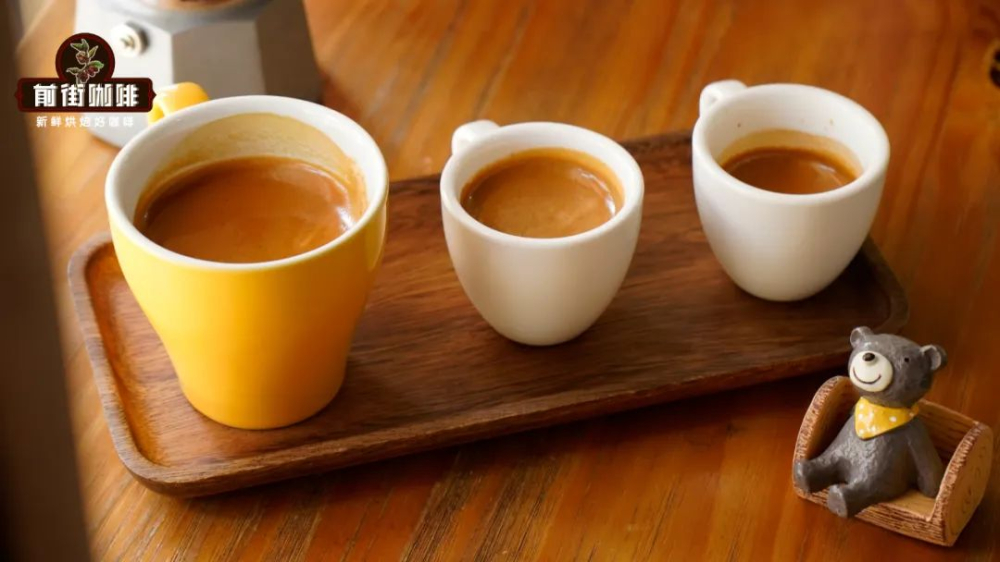
The soul of espresso-based coffee is undoubtedly the Espresso. But if you look deeper, you’ll find it has a few “close brothers”—Ristretto, Lungo, and Doppio, which uses double the dose but produces only one shot. From left to right, the image shows Lungo, Espresso, and Ristretto. Typically, a standard Espresso has a coffee-to-water ratio between 1:1.5 and 1:2.5—for example, using 20 grams of coffee grounds to extract 40 grams of espresso in 25–30 seconds. Ristretto focuses on extracting the essence of the first and middle stages of brewing; with the same 20 grams of coffee, the ratio narrows to 1:1 to 1:1.5, yielding about 28 grams of liquid in around 20 seconds. Its flavor is more concentrated but with a shorter aftertaste, often used as the base for Flat White. Lungo takes the opposite approach, extending brew time and increasing water volume to widen the ratio to 1:4 to 1:5. With 20 grams of coffee, it can yield about 100 grams of liquid in nearly a minute, resulting in a lighter taste that’s prone to over-extraction and bitterness. Additionally, Doppio differs from a regular Double Espresso—in this case, the barista uses double the dose but pulls only one shot, resulting in higher concentration and a thicker mouthfeel.
When it comes to black coffee, the Americano is arguably the most well-known representative. Simply add hot water to an Espresso to make this simple yet versatile coffee. Thanks to its approachable nature and flexibility for both hot and cold servings, it has long held a popular spot on espresso menus. The Australian-style Long Black also consists of Espresso and water, but the key difference lies in the ratio: Long Black is typically made in a 1:3 ratio, with a higher proportion of Espresso, resulting in a bolder flavor and is generally recommended only as a hot drink. In comparison, the Americano usually has a coffee-to-water ratio between 1:5 and 1:8, offering a crisper taste that suits those who prefer lighter coffee flavors.
Stepping into the world of milk coffee, the first drink that can’t be ignored is the Latte. In Italy, Latte simply means “milk,” so if you want to order a milk coffee, the correct term is “Caffe latte.” Outside of Italy, Latte generally refers to a milk coffee based on Espresso and paired with hot milk, commonly with a coffee-to-milk ratio of around 1:5 to 1:8. Before the Latte became popular, the Cappuccino was the mainstream milk coffee. Its standard formula is a 1:1:1 mix of coffee, milk, and milk foam, topped with a thick layer of foam that may even spill over the rim, delivering a double delight of rich coffee and velvety foam. The Macchiato, on the other hand, is a single shot of Espresso with just a spoonful of steamed milk foam added—a minimal amount of milk that adds a hint of creaminess to the bold Espresso. It sits between pure Espresso and a Cappuccino, ideal for those who want to experience the essence of coffee with a touch of softness.
In Australia, to cater to local tastes, the Latte has evolved into a more refined version—the Flat White. Its hallmark is thinner microfoam and more precise control of milk volume, resulting in a richer, bean-forward flavor, and it’s also only suitable for hot service. Another “smaller Latte” option—the Piccolo Latte—is served in a 3-ounce cup, combining a single shot of Espresso with a small amount of milk. It’s even richer than a regular Latte and is also a flexible choice for Australian baristas when cupping beans. Additionally, though not a traditional espresso drink, the Dirty has gained popularity for its visual appeal and aromatic performance. It’s made by pouring freshly brewed Espresso directly over ice-cold milk, creating a striking color contrast, and the intense flavor contrast upon the first sip makes it one of the summer’s viral drinks.
As for specialty espresso drinks, they are creative extensions designed to make Espresso’s intense, slightly bitter flavor more accessible to a wider audience. Taking the Latte as a base and adding chocolate-flavored syrup results in the classic Mocha Cafe. Another Italian classic, the Caffè Marocchino, starts with a shot of Espresso in a small cup, topped with a layer of cocoa powder, followed by milk foam or whipped cream, and finished with another dusting of cocoa powder. The rich cocoa aroma blends perfectly with the coffee, making it ideal for those who enjoy a balance of sweet and bitter. For a simpler way to enjoy the combination of Espresso and milk flavor, you can top a shot of Espresso with a dollop of whipped cream to create a Con Panna. Affogato, meanwhile, is a dessert-like coffee where Espresso is poured over ice cream, offering the dual pleasure of coffee and sweets. Adding a splash of liquor to Espresso creates a Caffè Corretto, giving the bold coffee an alcoholic twist, perfect for those who enjoy a flavor challenge. Also, the European-style Caffe Shakerato is made by shaking Espresso and syrup with ice in a cocktail shaker, then straining it into a martini glass. It retains the aroma of Espresso while adding a creamy foam and subtle sweetness, offering both visual and taste surprises.
The above content is compiled by CoffeeHunters, a coffee news website.


