








Introduction:Have you ever stared at a café menu full of unfamiliar terms and had no idea where to start? This article will take you deep into the world of espresso-based coffee, from base shots like Espresso and Ristretto, to classic milk coffees like Latte and Cappuccino, all the way to creative drinks such as Affogato and Mocha. We’ll not only break down their recipe logic and brewing parameters, but also provide flavor profiles and ordering tips—so the next time you walk into a café, you can confidently choose the cup that’s just right for you.
In the sweltering summer heat, let’s set aside coffee origins and brewing techniques for a moment and focus on a classic familiar to every coffee lover—espresso-based coffee. This coffee system originating in Italy is not only the prototype of many modern coffee drinks, but also encompasses a diverse range from intense single-origin brews to creative mixed beverages. This article will systematically introduce the main members of the espresso coffee menu, including the "three brothers" of espresso, common black coffees, the milk coffee family, and the creative world of Italian specialty drinks—helping you understand their differences, recipes, and best ways to enjoy them all in one go.

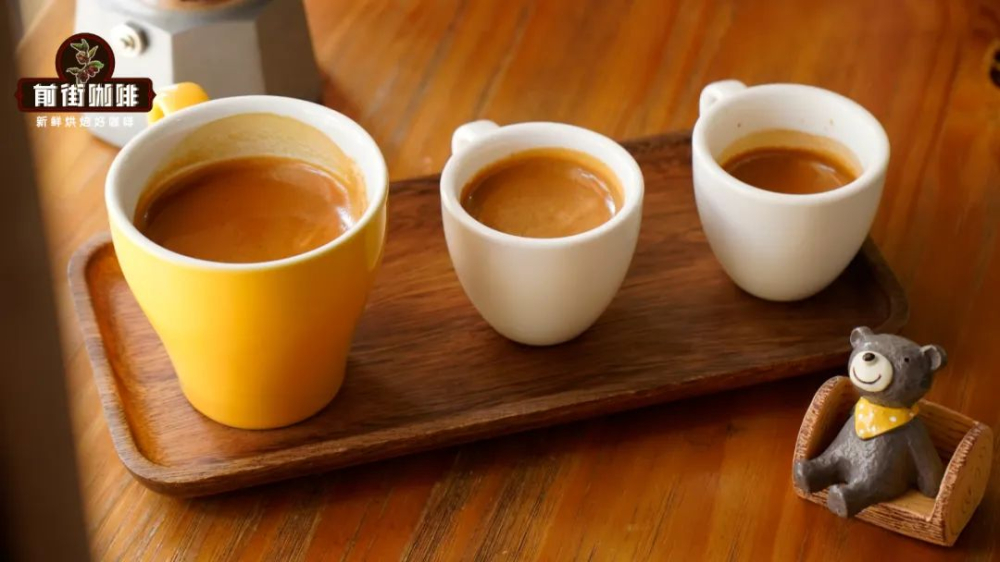
Let’s first look at the “three brothers” of espresso: Espresso, Ristretto, and Lungo. All three are based on highly concentrated coffee liquid, but they differ in extraction ratios and methods. A standard Espresso typically has a coffee-to-water ratio of 1:1.5 to 1:2.5—for example, about 40 grams of liquid extracted from 20 grams of coffee grounds in 25–30 seconds. Ristretto, on the other hand, extracts only the first and middle part of the shot, with a ratio of around 1:1 to 1:1.5. The same 20 grams of coffee yields approximately 28 grams of liquid, with the extraction time shortened to about 20 seconds. As a result, the flavor is more concentrated, sweetness is more pronounced, but the aftertaste is shorter. It is often used to make drinks like the Flat White that emphasize the pure taste of coffee. As for Lungo, it extends the extraction time and increases the water flow, achieving a coffee-to-water ratio of 1:4 to 1:5. From 20 grams of coffee, about 100 grams of liquid can be extracted, with the total time extended to nearly a minute. However, due to over-dilution, it tends to bring out bitter and astringent off-flavors, and the flavor profile is often inferior to that of a standard shot.
Beyond these three, there is also Doppio. This is not simply a “double Espresso,” but rather a shot made using double the amount of coffee grounds while still producing a single shot. Therefore, although the liquid weight is similar, the concentration is higher—making it ideal for those who prefer a stronger coffee flavor.
Moving on to the black coffee family, the most well-known is undoubtedly Americano, made by adding hot water to a single or double Espresso. The typical coffee-to-water ratio ranges from 1:5 to 1:8, resulting in a refreshing taste that is also great over ice, making it a daily choice for many. The Australian Long Black is also composed of Espresso and hot water, but its ratio is around 1:3, and the hot water is poured into the cup first before adding the Espresso. This method helps preserve the coffee crema, resulting in a richer mouthfeel and typically being offered only as a hot drink.
Turning to the milk coffee family, Latte is undoubtedly one of the most popular choices. In Italian, Latte means milk, so when ordering, you should say Caffe Latte to avoid confusion. The standard recipe consists of a coffee-to-milk ratio of about 1:5 to 1:8, along with a thin layer of milk foam, delivering a smooth texture with prominent milky notes. Cappuccino maintains the classic 1:1:1 ratio of coffee, steamed milk, and milk foam, with a generous layer of foam on top that may even rise above the rim of the cup, offering a balanced and layered flavor. Macchiato, meanwhile, features just a small dollop of milk foam added to an Espresso, symbolizing a “stained” or “marked” coffee. It has an intense flavor and is the go-to option for customers who prefer a purer coffee experience.
Flat White and Piccolo Latte are variations of the Latte. The former originates from Australia and uses thinner milk foam and a smaller total amount of milk, allowing the flavor of the coffee to shine more prominently—best enjoyed hot. The latter comes in a small 3-ounce cup, featuring a single shot of Espresso with a small amount of milk, making it perfect for those who want to focus intensely on the flavors of the beans. It too is only served hot. Additionally, Dirty is a popular iced coffee variation in recent years, characterized by pouring hot Espresso directly over cold milk to create a striking layered effect through temperature contrast. It has a bold flavor and a visually striking presentation.

Finally, let’s explore the creative world of Italian specialty coffee drinks. Mocha is a Latte with the addition of chocolate syrup or cocoa powder, combining the enjoyment of both coffee and dessert. Caffè Marocchino is made by layering Espresso, cocoa powder, and milk foam in a small cup, then finishing with a sprinkle of cocoa powder on top—small, delicate, and richly aromatic. Affogato is made by pouring Espresso over ice cream, functioning as both a coffee and a dessert, and is often categorized as a post-meal treat. Con Panna is simply an Espresso topped with whipped cream—simple yet bursting with creamy richness. Caffè Corretto is an Espresso with a splash of liquor, ideal for advanced drinkers who enjoy the combination of alcohol and coffee.
In addition, Caffe Shakerato is a European-style iced shaken coffee, made by shaking Espresso, syrup, and ice in a cocktail shaker, then straining it into a cocktail glass. It results in a refreshing drink with a strong Espresso aroma and a smooth foam, making it a great summer choice. These specialty drinks not only showcase the versatility of espresso-based coffee but also offer a more diverse drinking experience.
The above content is compiled by CoffeeHunters, a coffee news website.


