







Introduction:Gain an in-depth understanding of the official SCA Coffee Taster’s Flavor Wheel, mastering flavor characteristics ranging from sour, sweet, bitter, and salty to floral, fruity, and roasted notes. Learn how to use professional tools to describe the complex taste profiles of pour over coffee. This article breaks down the four major flavor categories and common defect flavors, along with practical training techniques, to help coffee enthusiasts build a personal flavor memory bank and enhance their taste discernment.
In the specialty coffee field, the SCA (Specialty Coffee Association)-certified Coffee Taster’s Flavor Wheel is like a “taste encyclopedia,” providing cuppers and coffee lovers with a precise reference standard for describing coffee flavors. This systematic tool helps you capture the hidden layers in pour over coffee more delicately—from bright floral and fruity notes to deep nutty and chocolatey aftertastes, and even identifying potential defect flavors.

The design logic of the flavor wheel is based on the fundamental classification of human taste, covering the four major flavor categories: sour, sweet, bitter, and salty, and extending to subcategories such as floral, fruity, nutty & cocoa, spicy, fermented, roasted characteristics, and defect flavors. Whether you are a beginner in pour over coffee or an enthusiast aiming to improve your sensory evaluation skills, understanding this classification framework is the key first step toward enhancing your flavor insight.
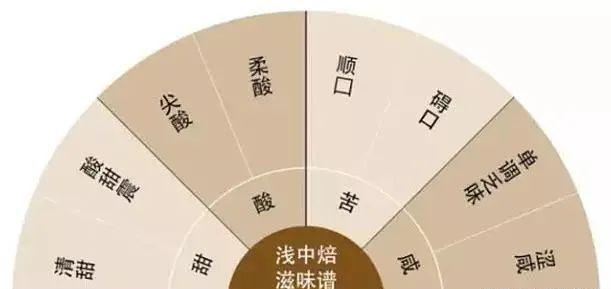
First, the basic taste expression of coffee is closely related to the degree of roasting. Light to medium roast coffees usually present a refreshing sour-sweet dominant profile because water-soluble low-molecular-weight acidic and sweet substances (such as citric acid and malic acid) are released earlier in the extraction process. In contrast, higher-molecular-weight bitter and salty substances (such as quinic acid and salts) are mostly released later, making them more prominent in dark roast coffees. It is worth noting that sweetness, although accounting for39%(data source: coffee chemistry research), is often masked by other tastes and requires training to be perceived acutely.
Breaking down the flavor wheel into the four major flavor categories allows for a clearer grasp of the flavor direction of coffee:
Sour Profileis the soul of light to medium roast coffee, originating from organic acids in coffee beans (such as chlorogenic acid and citric acid) and acetic acid and lactic acid produced by the degradation of sucrose. Moderate acidity can bring a lively mouthfeel, but over-fermentation or improper roasting may produce sharp and unpleasant sourness.
Bitter Profileis divided into smooth and harsh types: the former comes from natural components such as caffeine and trigonelline, while the latter is related to chlorogenic acid lactones, carbonized particles, or defective beans. The “strong yet not bitter” realm of dark roast is a reflection of the roaster’s skill.
Sweet Profilethough making up a high proportion, is often masked by sour and salty tastes. The caramelization reaction in medium roast coffee (such as toffee and honey aromas) can create a sweet sensation, while the balance of sugar and acidity in high-altitude washed beans is key to highlighting sweetness.
Salty Profileusually indicates that the coffee has oxidized or gone stale. When acidic and sweet organic compounds break down, the saltiness of inorganic salts emerges, which is an important indicator of freshness.

Delving into common flavor categories,Floral and Fruityare the most beloved positive characteristics: jasmine and rose floral notes are commonly found in Ethiopian natural process beans, bringing soothing aromatic layers; citrus (such as Yirgacheffe) and berries (such as Sidamo) showcase bright sour-sweet vibrations. Meanwhile,Nutty and Cocoaflavors (such as the roasted almond and dark chocolate notes in Brazilian beans) mostly stem from Maillard reactions in medium roasts, giving coffee a rich base.
When training sensory identification skills, it is recommended to build a “flavor memory bank” from life experiences: carefully taste fruits, flowers, or spices, and record their unique aroma and taste characteristics. For example, calibrating with scent bottles can accelerate learning, but combining it with daily observations (such as remembering the sour aroma of fresh lemons or the oily scent of roasted walnuts) is more effective. Additionally, pay attention to how brewing parameters (such as water temperature and grind size) affect flavor expression—too high a water temperature may amplify bitterness, while too coarse a grind can lead to prominent acidity.
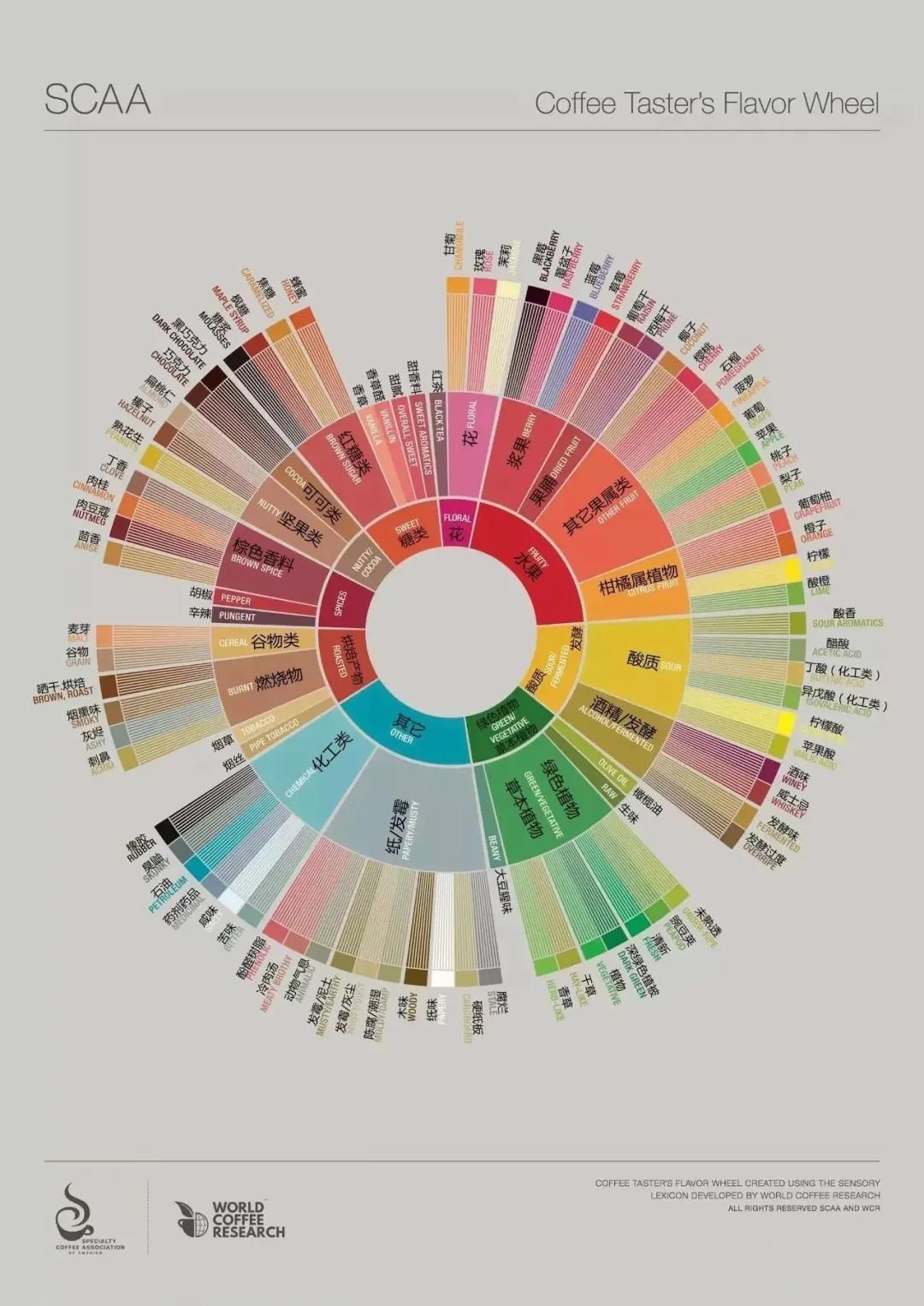
Understanding defect flavors is equally important:Over-fermentation(such as the moldy taste of overripe fruit),Stale(similar to damp bread), orPhenolic(such as chemical or medicinal odors) may all result from improper bean processing or storage. These negative characteristics can help you assess coffee quality and provide specific improvement suggestions during cupping.
In summary, the SCA Coffee Flavor Wheel is not only a professional tool but also a guide for every coffee enthusiast exploring the world of taste. Through systematic categorization, practical tasting exercises, and life observations, you will be able to more confidently describe the flavor profile of pour over coffee and enjoy a richer coffee experience.


The above content is compiled by CoffeeHunters, a coffee news website.


