







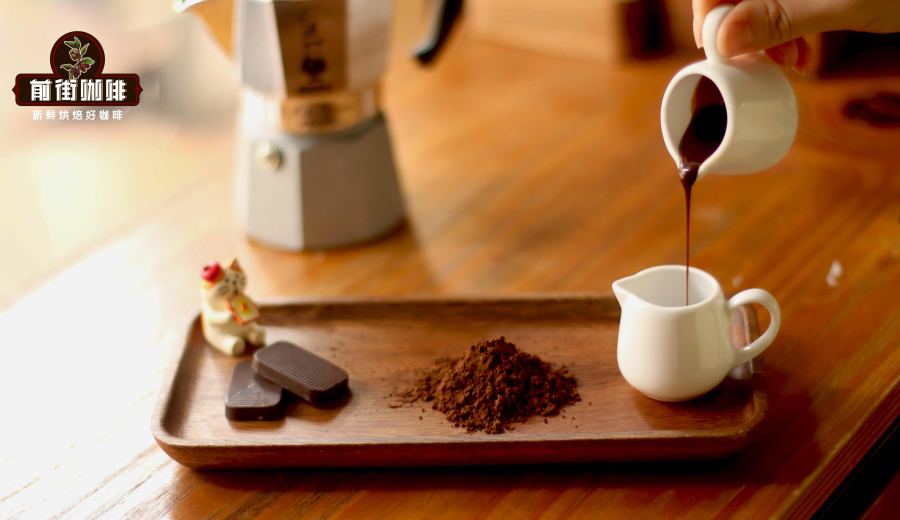
Introduction:The term "Mocha" often causes confusion in the world of coffee. It can refer to precious single-origin beans from Yemen’s ancient port, or it might simply be that chocolate-flavored latte you often order. This article will delve into the historical origins, regional characteristics, roasting and brewing essentials of both, unraveling the mystery of "Mocha," and sharing professional pour-over and espresso parameters to help you truly understand and appreciate the unique charm of these two types of "Mocha."
When people hear "Mocha," many immediately think of that comforting drink at coffee shops—a blend of espresso, steamed milk, and chocolate syrup. However, for true coffee enthusiasts, the word "Mocha" holds another layer of meaning—it refers to a traditional single-origin coffee bean from Yemen’s ancient port, carrying unique terroir and historical weight.
The stories behind these two types of "Mocha" are intertwined not only with the rise and fall of coffee trade but also reflect the evolution of global beverage culture. This article will comprehensively dissect the unique charm of Yemen’s Mocha Mattari—from its historical roots, growing environment, bean variety traits, roasting techniques, to practical extraction and brewing methods—while also exploring how modern espresso Mocha was born out of market demand, and what connections it shares with the original Yemeni Mocha.
The story of Yemeni Mocha begins with the ancient Red Sea port of Mocha in the 15th century. At that time, this port located at the southwestern tip of the Arabian Peninsula was a key hub in global maritime trade, much like Shanghai is today. Although coffee was not grown in the Mocha region itself, beans from high-altitude mountainous areas in central Yemen, such as Bani Matar, would converge here before being shipped to Europe by sea. Since people at the time only knew that this high-quality coffee came from the "port of Mocha," over time, this coffee became collectively known as "Mocha coffee."
As time passed, Mocha Port gradually fell into disuse due to silt accumulation, and the main export port has since shifted to Hodeida in the northwest. However, the name "Mocha" has endured, becoming a historically rich label in the world of coffee.
So why is it increasingly difficult to find authentic Yemeni Mocha coffee in the market or cafes nowadays? One reason is Yemen’s prolonged political instability, where civil war and economic sanctions have severely impacted coffee production and exports. The amount of Yemeni coffee that can be exported to the international market each year is extremely limited, making it all the more precious.
Consumers who have had the chance to taste Yemeni Mocha Mattari may be impressed by its unique packaging. Unlike the coarse burlap sacks commonly used in other regions, Yemeni coffee is often packed in fine-mesh cloth bags similar to flour sacks. This design helps the beans maintain moderate ventilation during transport, reducing the risk of moisture damage.
This coffee, grown at altitudes of approximately 1,300 to 1,900 meters, primarily consists of Typica and Bourbon varieties, and is mainly processed using traditional sun-drying methods. Notably, Yemen’s sun-drying process tends to be more rugged compared to Ethiopia’s: farmers often wait until the coffee cherries are fully ripe on the branch, even turning purplish-black, before harvesting. Many cherries are even collected after falling to the ground, contributing to the unique "wild" character and complex layers of Yemeni Mocha.
However, due to differences in farmers’ storage and processing methods, the flavor profile of each batch of Yemeni Mocha coffee may vary slightly. Before roasting, these green beans often emit distinct cocoa and dried fruit aromas. To highlight its rich body and cocoa notes, a medium roast is recommended to balance flavor intensity and enhance its inherent characteristics.

Since Yemeni Mocha green beans have low moisture content and inconsistent bean sizes, the initial drying stage during roasting requires careful control. It is suggested to set the roaster inlet temperature to 170°C, with the damper initially open to position 3. Once the beans turn light green or grayish-white, gradually adjust the damper to 4 to promote even drying. After the first crack, increase ventilation to the maximum (damper 5) to facilitate flavor development.
The recommended specific roasting profile is as follows: load beans at 170°C with damper 3. After one minute, slightly adjust the heat to 140°C, keeping the damper at 3. Around the 5-minute mark, when the temperature reaches 147.2°C and the beans turn yellow with fading grassy notes, reduce the heat to 110°C and adjust the damper to 4. Around the 8th minute, as the beans begin to show wrinkles and dark spots, and the toast-like aroma transitions to coffee notes—which signals the prelude to first crack—closely monitor the onset of first crack. First crack usually begins around 8 minutes and 23 seconds. At that point, lower the heat to 60°C and fully open the damper to maintain hot air circulation. It is recommended to drop the beans at 197.9°C after the first crack becomes dense, to lock in the optimal flavor window.
For brewing, it is recommended to use a Kono filter cone for pour-over. Its short rib design extends water-to-coffee contact time, helping to enhance body and flavor extraction. The suggested grind size is medium-coarse (approximately 70% through a #20 sieve), with water temperature controlled at 90°C, a coffee-to-water ratio of 1:15, and about 15 grams of coffee.
In practice, a staged extraction method can be employed: start with a 30-second bloom using 30 grams of water, followed by pouring in small circles to reach 125 grams for the first pour. After the water level drops, continue pouring to 225 grams. The total extraction time is about 2 minutes and 6 seconds. This approach effectively brings out the mid-palate layers and spicy finish of Yemeni Mocha.
In terms of flavor, this coffee often presents rich mid-palate complexity, with occasional subtle grape acidity in the aftertaste. Spices and chocolate notes linger long, delivering a rounded mouthfeel with a refreshing and sweet aftertaste, resembling the smooth texture of Middle Eastern milk tea. The cup bottom is often accompanied by a gentle malt sweetness.

So, what is the connection between the modern café favorite "espresso Mocha (Mocha)" and the ancient Yemeni Mocha? In fact, espresso Mocha is a classic drink that combines espresso, steamed milk, and chocolate syrup. It originated in 18th-century Europe. It is believed that as coffee exports from Mocha Port declined, genuine Yemeni Mocha became rare and expensive. To recreate its unique fusion of chocolate and coffee flavors, European baristas began adding unsweetened black chocolate or cocoa powder to espresso, creating a similarly flavored drink—that is, today’s espresso Mocha.
The standard method for making espresso Mocha today typically involves first extracting a double shot of espresso (it is recommended to use a dark roasted blend, such as a mix of Brazilian, Indonesian, and Vietnamese beans, to enhance body and crema), then stirring in about 30 grams of sweet chocolate syrup. Next, steam milk heated to 55–60°C (it is recommended to use fresh milk with high lactose content, with a milk foam thickness of about 1.5 cm—slightly thicker than a latte but not as thick as a cappuccino), and finally, pour and finish with latte art or simple decoration.
This combination not only satisfies the public’s preference for sweet, smooth textures but also, to some extent, continues the historical and flavor legacy carried by the name "Mocha."
The above content is compiled by CoffeeHunters, a coffee news website.


