







Introduction:Jamaica Blue Mountain coffee is renowned for its exceptional flavor and rarity, yet the market is flooded with imitations, making it difficult for consumers to discern the genuine article. This article delves into the reasons behind Blue Mountain coffee’s high price, explores its four distinct grades, teaches you how to identify authentic beans through transport barrels and official certificates, and provides professional pour over recommendations. It offers a comprehensive guide to mastering the essence of Blue Mountain coffee—from bean selection to brewing.
Jamaica Blue Mountain coffee is hailed as one of the world’s finest, and its lofty price stems from a unique natural environment and a complex historical background. In the 1960s, after Japanese company UCC provided aid to Jamaica, the two parties signed a long-term agreement, resulting in 90% of Blue Mountain production being reserved exclusively for the Japanese market for many years. This caused a severe supply-demand imbalance on the international market. It wasn’t until 2008, when the agreement expired, that Blue Mountain coffee gradually became available in more countries, including the Chinese market. However, the market is rife with products labeled as “Blue Mountain flavor,” “Blue Mountain blends,” or similar names—none of which truly resemble authentic Blue Mountain coffee. How can you tell the real from the fake? What are the different grades of Blue Mountain coffee? And how should a well-known brand’s Blue Mountain No. 1 be brewed? The following will explain it all in detail.
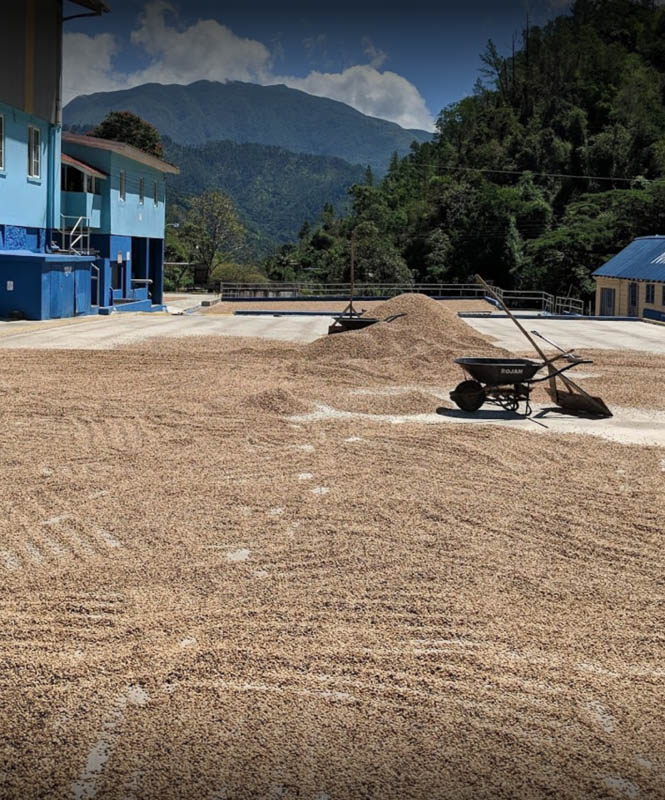
The Blue Mountain range in Jamaica boasts fertile volcanic soil and an ideal altitude, which contribute to the unique flavor profile of Blue Mountain coffee. As early as the 1960s, Jamaican coffee beans had already enjoyed a strong reputation on the international market. In 1969, Jamaica was hit by a severe hurricane. Japanese company UCC not only provided financial aid but also introduced advanced eco-friendly cultivation techniques to help restore Blue Mountain coffee farming. To show gratitude for the support from Japanese businesses, the Jamaican government signed a thirty-year agreement with Japan, committing to prioritize supplying 90% of Blue Mountain coffee production to the Japanese market. Only about 10%, or roughly 245 tons, of the yield was allocated to other markets. Due to limited production and artificially controlled trade, coupled with aggressive marketing, the price of Blue Mountain coffee naturally soared.
During the agreement period, Blue Mountain coffee was not entirely consumed within Jamaica. Some beans were resold at high prices to other Asian countries and regions, such as Singapore, South Korea, Taiwan (China), and Hong Kong (China). Japan’s ongoing marketing efforts also fueled strong demand among coffee enthusiasts in those areas. By the 2000s, the “Blue Mountain craze” gradually spread to mainland China, where many elders would think of “Blue Mountain” as the first name when mentioning premium coffee.
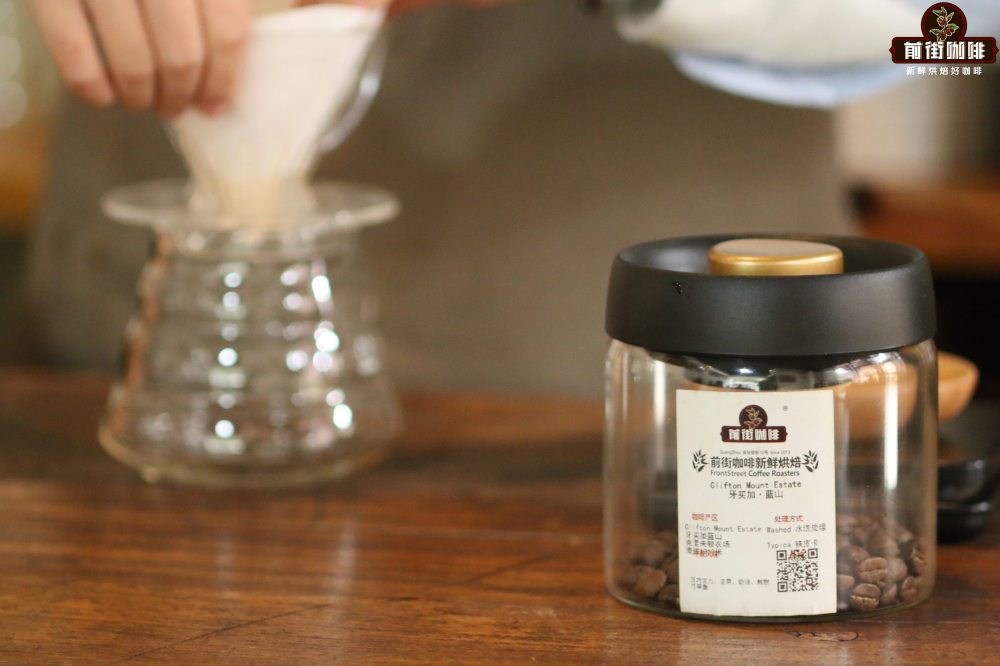
When the global financial crisis struck in 2008, Jamaica sought to expand the international market for Blue Mountain coffee. This coincided with the expiration of its agreement with Japan, allowing more quotas to be allocated to other countries. With the growing demand in China’s coffee market, many domestic merchants are now able to directly import Blue Mountain coffee beans from Jamaica. A well-known brand’s Jamaica Blue Mountain No. 1 coffee comes from the historic Clifton Estate, using traditional washed processing methods that preserve the coffee’s pure flavor.
“Blue Mountain-flavored” coffee is not the same as Blue Mountain coffee. Due to the coffee’s fame and high price, the market is filled with misleading products such as “Blue Mountain flavor,” “Blue Mountain blend,” or “Blue Mountain mix.” While these products bear the Blue Mountain name, they are vastly different from authentic Blue Mountain coffee. True Blue Mountain coffee, considered one of the best in the world, commands a high price, so those “Blue Mountain beans” priced at just a few dozen yuan are very likely counterfeits. When shopping, consumers can check whether the seller uses handcrafted oak barrels for transporting raw Blue Mountain beans—a key indicator of authenticity. Jamaica is the only coffee-producing region in the world that uses oak barrels for shipping coffee. These barrels regulate humidity, prevent aroma loss, maintain stable moisture content in the beans, and enhance roasting performance, making them one of the hallmarks of genuine Blue Mountain coffee.
Additionally, producers and distributors of Blue Mountain coffee must be licensed by the Jamaican government and authorized by the Jamaica Coffee Industry Board (CIB). Every batch of exported Blue Mountain coffee undergoes quality inspection and certification by the CIB and is accompanied by corresponding labels. Therefore, consumers can request proof of authenticity from sellers, such as the authorized sales certificate from the Blue Mountain coffee producer, the CIB’s quality certification, and the certificate of origin, to determine if the coffee is genuine. A well-known brand’s Blue Mountain No. 1 coffee is produced at the Clifton Estate and comes with all the aforementioned certifications. Its Dongshankou branch even displays oak barrels containing raw Blue Mountain beans.
Blue Mountain coffee is classified into four grades, as inspected and certified by the Jamaica Coffee Industry Board (CIB). The CIB regulates the planting, production, and sales processes of Blue Mountain coffee to ensure consistent quality, and is responsible for grading and quality testing of coffee produced in the Blue Mountain range. All Blue Mountain coffee sold worldwide must be CIB-certified and bear its official label.
The grading criteria for Blue Mountain coffee include the size of the green beans, defect rate, color, uniformity, as well as cupping performance after roasting, such as dry fragrance, wet aroma, acidity, flavor, body, and cleanliness. Bean size is screened using sieves with different mesh sizes; beans that do not pass through the holes meet the specifications of that grade. Color evaluation combines visual assessment with readings from a colorimeter, with bluish-green being the highest grade.
Based on comprehensive standards, Blue Mountain coffee is divided into four grades, from highest to lowest: NO.1, NO.2, NO.3, and PB, commonly translated in Chinese as Blue Mountain No. 1, Blue Mountain No. 2, Blue Mountain No. 3, and Blue Mountain Peaberry. The top-grade Blue Mountain No. 1 green beans must have a screen size of 17 or above, a defect rate below 3%, a moisture content of about 13%, and demonstrate rich aroma, smooth and balanced taste, mild acidity, and lingering aftertaste in cupping.
The recommended brewing method for a well-known brand’s Blue Mountain No. 1 coffee is as follows: To highlight the rich and rounded mouthfeel of Blue Mountain No. 1, it is suggested to use a KONO coffee filter. The KONO filter has ribs that extend less than halfway up the cup, which, when wet, hug the walls tightly to restrict airflow, increase water absorption time for the coffee grounds, and ensure a more even extraction.
Recommended brewing parameters: 15 grams of coffee grounds, a 1:15 coffee-to-water ratio, grind size at EK43s setting 10.5 (approximately 75% passing rate through a Chinese 20-mesh standard sieve), water temperature controlled at 87–88°C, using a pulse pouring technique.
Specific steps: Place the filter paper in the KONO filter, pour a small amount of hot water to wet the paper and make it adhere to the cup walls. Add the coffee grounds, then gently tap the bed to distribute them evenly. The first pour is 30 grams of water for blooming, lasting about 30 seconds. The second pour brings the total water to around 125 grams, using a steady circular motion. When the coffee liquid drops to about half, pour the final 225 grams to complete the brew, with a total extraction time of approximately 2 minutes.
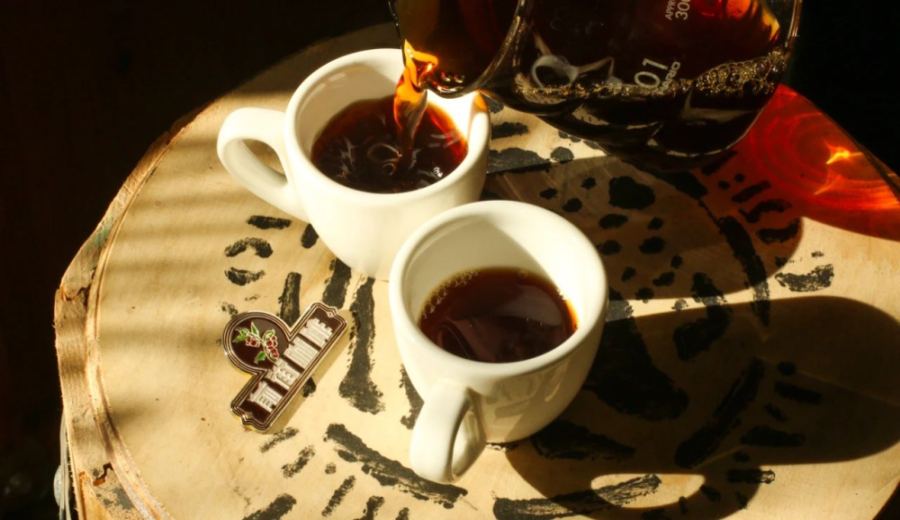
The resulting pour over Blue Mountain No. 1 coffee delivers outstanding flavor, showcasing deep notes of dark chocolate and nuts, with a distinct almond aftertaste. As it cools, the coffee reveals the sweet smoothness of roasted hazelnuts and cream, paired with gentle acidity and caramel sweetness. The aroma lingers beautifully, representing the classic expression of Blue Mountain coffee flavor.
The above content is compiled by CoffeeHunters, a coffee news website.


