







Introduction:For those who want to enjoy convenient yet flavorful coffee at home, instant coffee is a popular choice. But with the wide variety of products on the market, what’s the difference between freeze-dried and spray-dried methods? Which one suits you better? This article starts with the historical evolution of instant coffee, deeply analyzes how the two major production processes affect flavor, and includes hands-on testing of multiple popular instant coffee products to help you find the one that best matches your taste preferences.
For today’s busy professionals, coffee is almost a daily necessity, but buying it every day can be costly and time-consuming. Making a cup yourself becomes an economical and practical alternative. Among the many types of instant coffee, freeze-dried and spray-dried are the most common methods—but what sets them apart? How do their flavor profiles differ? This article will take you from the origins of instant coffee, analyze the technical characteristics of different production processes, and compare multiple popular brands on the market to help you find the one that suits you best.
The history of instant coffee dates back to 1901, when Japanese-American chemist Satori Kato and his team in Chicago first extracted powdered coffee from coffee liquid using vacuum drying technology, obtaining a patent in 1903. Later, during World War I, instant coffee became widely used in the U.S. military due to its portability and preservation advantages. By the 1930s, amid the dual pressures of Brazilian coffee surplus and the Great Depression, Nestlé collaborated with the Brazilian Coffee Research Institute to improve the production process and launched a more stable instant coffee product, which was then widely used by the military during World War II, laying the foundation for its global market presence.
Many people often consider “instant coffee” and “freeze-dried coffee” as two completely different beverages, but in fact, freeze-dried coffee is just one type of instant coffee. The biggest difference lies in the “drying method” used during production. The general production process for instant coffee is largely the same: first, green beans are selected and roasted to release flavor and aroma, then the roasted beans are ground into powder and brewed with water into concentrated coffee liquid. The key dividing line comes at the drying step of this coffee liquid.
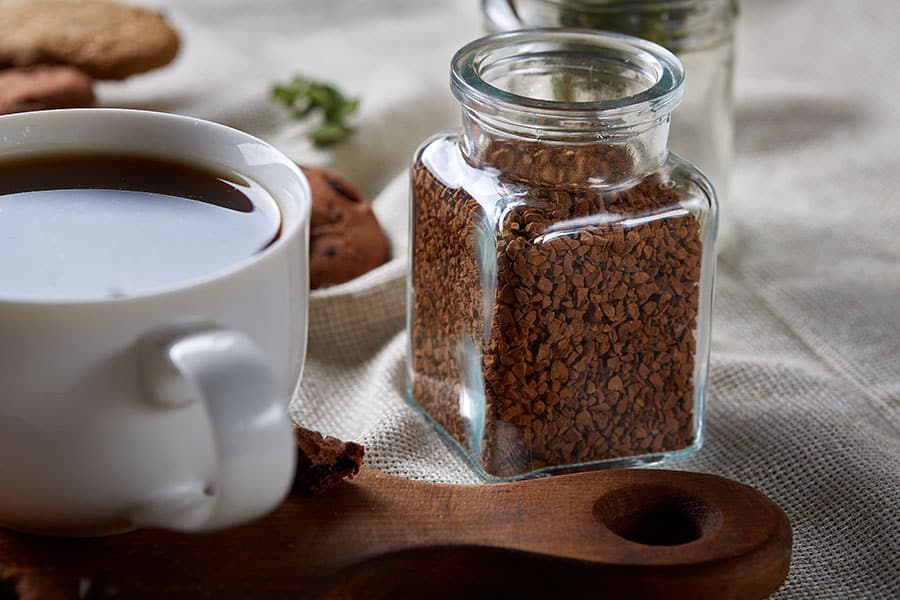
Currently, the mainstream instant coffee drying technologies fall into two main categories: “spray drying” and “freeze drying.” The former involves atomizing high-temperature coffee liquid into fine droplets through nozzles, then introducing them into a high-temperature drying chamber where moisture rapidly evaporates, leaving behind fine powdered coffee. This method is low-cost and highly efficient, but the high temperature can easily destroy the delicate flavors in coffee, resulting in products that often have a pronounced burnt bitterness and monotonous coffee taste—this is the dominant production method for cheap instant coffee packs on the market.
In contrast, “freeze-drying” technology may sound newer, but it has actually been used in the coffee field for decades. This method involves rapidly freezing highly concentrated coffee liquid, then crushing it and slowly heating it in a low-temperature, low-pressure vacuum environment at around 60°C, causing the ice to sublimate directly into water vapor to achieve dehydration. Because the entire process maintains well-controlled temperatures, it can significantly preserve the aromatic compounds and sweet-acid layers in coffee, so freeze-dried coffee usually offers a richer flavor profile and better mouthfeel, making it the favored “premium instant” option in recent years.
Freeze-dried coffee commonly comes in block or granular form, not only dissolving quickly but also making it easier to control the dosage—suitable for making a variety of drinks like lattes and oat milk coffee. In contrast, spray-dried instant coffee mostly consists of fine powder, which dissolves well but has a relatively simpler flavor, making it suitable for users who prioritize convenience and don’t have high flavor demands.
To help readers better understand the actual performance of commercially available instant coffee, we gathered representative products from five well-known brands and conducted hands-on comparisons of their flavor, mouthfeel, and suitability for different scenarios, providing concrete references.
Tim Hortons Dark Roast Mini Donut
This freeze-dried coffee has a dark roast profile, delivering an immediate strong burnt bitterness upon tasting, accompanied by subtle herbal notes, with a smoky finish. Even when mixed with milk, the bitterness remains prominent, making it suitable for users needing a strong pick-me-up. If you prefer a milder taste, it’s recommended to choose the medium roast product from the same series.
Yongpu Cold Brew UFO
Though the packaging is colorful, the contents are all made from the same formula. This variant is suitable for cold brew or making lattes, with clear and balanced flavors and a smooth, easy-drinking mouthfeel. When used as a latte base, the coffee flavor isn’t entirely masked by the milk, but the overall intensity is slightly less than versions from specialty cafés.
Eagles Coffee Specialty Cold Brew Blend
Includes multiple flavor combinations: the Yunnan small-seed variety leans toward bitter and astringent; the Small Jasmine Tea Coffee has a noticeable tea note, with jasmine aroma overpowering the coffee’s inherent character; the Colombian blend performs decently but has an overall lighter flavor; the Osmanthus Oolong Coffee has a slightly stronger coffee presence but is still dominated by tea aroma; the Rose flavor emphasizes aroma over coffee traits, resulting in an overall lighter impression.
Saturnbird
The design uses three colors to distinguish flavors: the red variant performs close to café-level when used in lattes but with slightly muted flavors; the black variant is ideal for cold brew, offering a rich and balanced mouthfeel; the gray variant, when paired with oat milk, achieves greater intensity than the red cup, suiting users who prefer a fuller body.
Lian Coffee Fresh Drip Espresso
This product emphasizes espresso-style flavors and can only be prepared with hot water—the brewed coffee visibly features “coffee crema,” making it suitable for latte art. When making lattes, the flavors are balanced and rich, but the aftertaste carries a unique savory note and slight saltiness, giving it a rather distinctive flavor profile.
Overall, freeze-dried coffee generally outperforms traditional spray-dried products in flavor retention and mouthfeel refinement, but it is also relatively more expensive. If you’re seeking a flavor experience closer to freshly ground coffee, the freeze-dried method is the better choice; however, if you prioritize convenience and basic caffeine boosting, spray-dried instant coffee still holds practical value.
Whichever you choose, remember: although instant coffee is convenient, it still cannot fully replicate the diversity and regional flavor characteristics of freshly ground coffee. If you have higher expectations for coffee flavor, you might start with a taste of instant and gradually explore the richer world of coffee.
The above content is compiled by CoffeeHunters, a coffee news website.


