








Introduction:Understanding the natural processing method of coffee beans is an essential step in exploring the world of coffee flavors. This article delves into the differences between natural, honey, and other mainstream processing methods—from their origins and steps to their flavor profiles—helping readers grasp the core characteristics of each method. At the same time, by comparing common approaches such as washed and honey processes, it offers a more comprehensive guide for bean selection, benefiting both beginners and advanced coffee enthusiasts.
In the world of coffee, processing methods are akin to winemaking techniques, playing a decisive role in shaping the final flavor. Among these, the natural process is the oldest and most natural method, having been used by coffee farmers in the Middle East as early as a thousand years ago. This method relies on sunlight to gradually dry the coffee cherries, allowing the sugars and flavor compounds in the pulp to seep into the seeds, thereby influencing the coffee’s aroma, sweetness, and body.
The traditional natural processing procedure usually takes 27 to 30 days, during which the coffee fruit is placed on drying beds and regularly turned to ensure even heat exposure, reducing the moisture content from an initial 60% down to about 12%. While this method is low-cost and simple in principle, changes in weather and improper management can lead to uneven fermentation or off-flavors. High-quality natural beans often exhibit rich fruity notes, wine-like aromas, and pronounced sweetness, with a bold and layered mouthfeel.
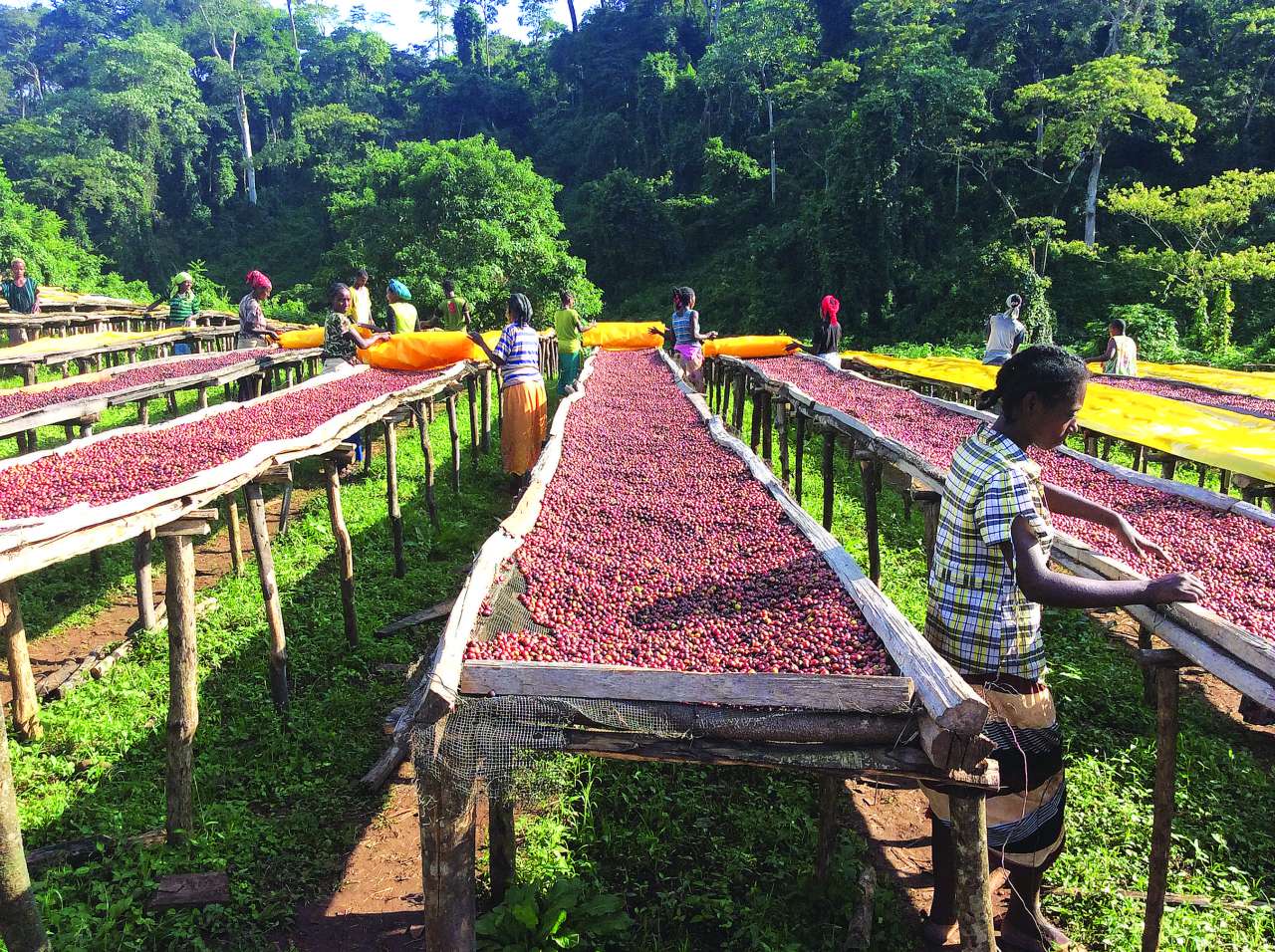
Natural drying is the core step of this method. Freshly harvested coffee cherries are spread out on drying beds and turned at regular intervals each day to promote uniform drying. This process lasts approximately three weeks until the bean and outer skin can be easily separated. Then, a hulling machine removes the external residues, and finally, high-quality green beans are sorted. This method is widely used in regions such as Yemen Mocha, Ethiopia Harrar, Brazil, and Indonesia’s Sulawesi, particularly in areas with dry climates and abundant sunlight.
In contrast to the natural process is the washed method, developed by the Dutch in the 18th century and mainly used in rainy regions. This method first uses a depulper to remove most of the fruit flesh, then soaks the parchment-covered beans in water tanks for fermentation to remove the remaining mucilage. During fermentation, underripe and defective beans are more buoyant and thus easier to remove, resulting in a cleaner, brighter acidity, and higher consistency in the final cup. However, this method may sacrifice some body, offering an overall profile that is clean and layered.
The steps of washed processing include: first rinsing with clean water to remove floaters, then using a pulper to remove the outer pulp; subsequently, the seeds enter fermentation tanks where natural fermentation for 16 to 36 hours removes the mucilage, followed by 1 to 2 weeks of sun drying to stabilize the moisture content at 12%, and finally, a hulling machine completes the process. Coffee beans processed this way often have a bluish-green hue and are commonly found in well-known regions such as Guatemala, Colombia, Blue Mountain, Kenya, and Panama.
The semi-natural method, also known as the wet-hulled or semi-washed method, is most distinguished by not reducing the moisture content to 11–12% during drying. Instead, it is first dried to 30–35% before the hard husk is removed, and then drying continues until it reaches a safe storage moisture level. This method often results in green beans with a dark green appearance, and the final cup tends to feature low acidity and a heavy body. Indonesia’s Mandheling is famous for this process, with a flavor profile that sits between natural and washed, combining sweetness with earthy notes.
The semi-washed process is similar to the washed method, but the key difference lies in the early removal of the hard outer husk, exposing the seed directly to the subsequent drying environment. This method is widely used in Indonesia and has also appeared in some Brazilian regions in recent years. During the process, the berries first have their outer skin and part of the pulp removed, then undergo a period of drying followed by re-moistening, and finally, special equipment is used to remove the pulp and seed. The entire process demands strict control over humidity and temperature.
The honey process, as the name suggests, originates from the sticky, honey-like mucilage layer in the coffee fruit. In this method, after removing the outer skin, the sugar-rich pulp is retained for sun drying, allowing the mucilage to gradually become sticky and release flavors under sunlight. Compared to the natural process, the honey process requires less time, yet it can still impart rich sweetness and fruity notes to the beans. Additionally, the final cup tends to be cleaner in flavor, often with a wine-like finish.
The main steps of the honey process include: first washing the coffee cherries and removing the outer skin, retaining the pulp for sun drying; during this period, constant turning is required to prevent mold, and once the pulp and mucilage are sufficiently dried, all external residues are removed at once. This method is currently well-developed in Central American countries such as Costa Rica and El Salvador, offering a balanced acidity and sweetness while preserving intense flavors.
The above content is compiled by CoffeeHunters, a coffee news website.


